
Cannabinoids and Stroke Recovery Science
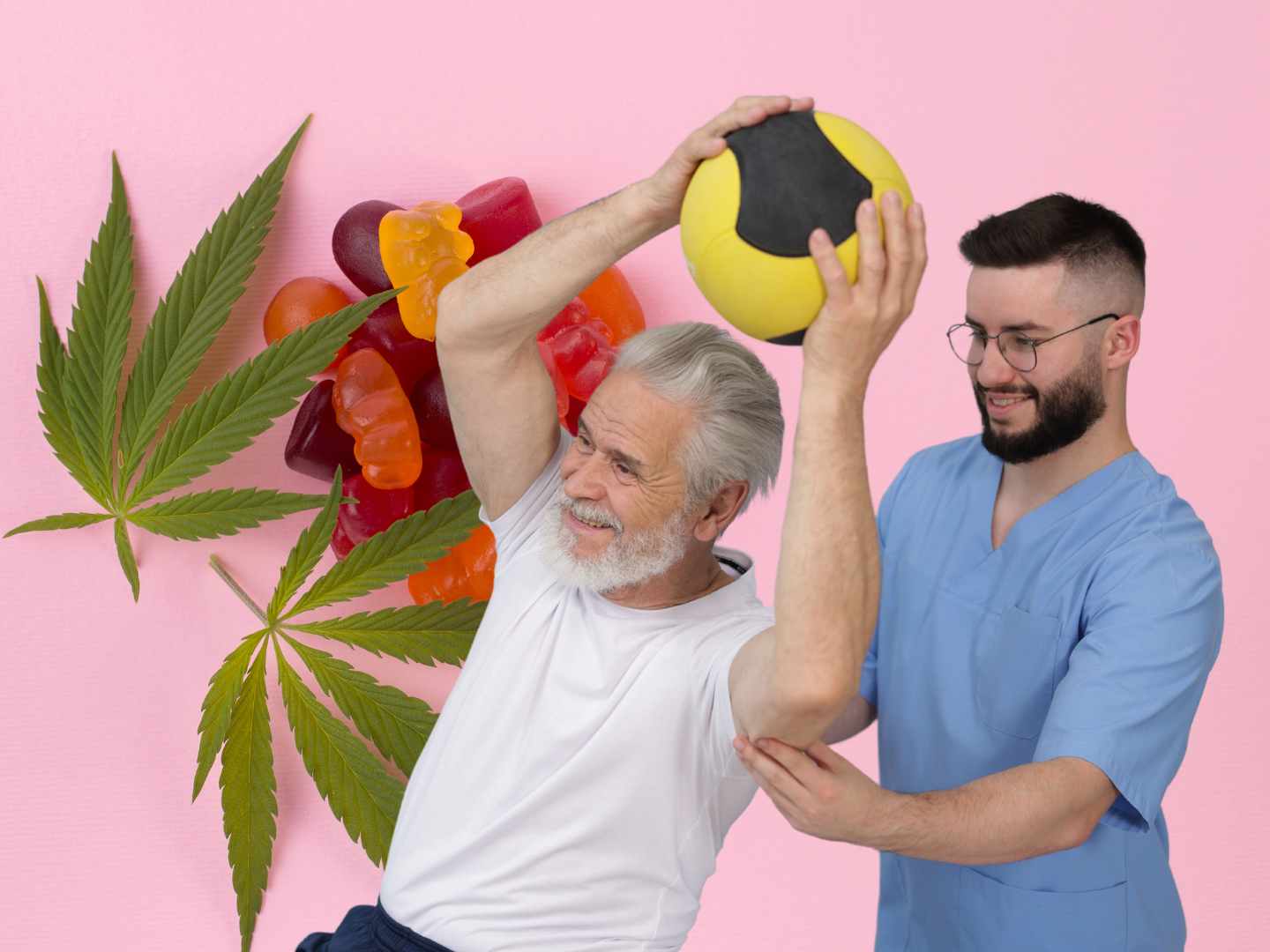
Cannabinoids influence multiple stroke-related pathways, including inflammation, oxidative stress, and blood–brain barrier integrity.
Preclinical evidence shows reduced brain injury markers and improved functional outcomes in animal stroke models.
These effects are mediated through the endocannabinoid system, which regulates neuroinflammation and cellular stress responses.
Animal data establishes biological plausibility, not clinical effectiveness in humans.
Cannabinoids remain investigational in stroke recovery and should not replace standard medical care.
Cannabinoids may support stroke recovery by reducing inflammation, oxidative stress, and brain injury in animal models. However, this evidence is preclinical, meaning there is no confirmed clinical proof that cannabinoids improve outcomes in human stroke patients.
Researchers recently published a meta-analysis in Frontiers in Neuroscience examining how medical cannabinoids affect outcomes in ischemic stroke, the most common type of stroke worldwide. This type of research is preclinical, meaning it synthesizes results from animal studies rather than human clinical trials, but it helps establish a mechanistic foundation for future therapies.
“Preclinical stroke research does not tell us what works in patients. It tells us what might be worth testing.”
Ischemic stroke occurs when a blood clot blocks blood flow to part of the brain. This interruption deprives neurons of oxygen and glucose, leading to a cascade of injury that includes inflammation, oxidative stress, and cell death. Stroke is not a single event. It is a multi-phase biological process that evolves over hours to days (https://www.ncbi.nlm.nih.gov/pmc/articles/PMC5306269/).
“Stroke is not just a blockage. It is a cascade of inflammation, oxidative damage, and neuronal loss.”
Despite advances in emergency care and rehabilitation, many patients experience long-term disability or cognitive impairment. This has driven interest in therapies that can protect brain tissue and improve recovery after the initial injury.
The study reviewed dozens of experiments in animal models of ischemic stroke to evaluate how cannabinoids influence measures of brain injury and recovery. Across studies, cannabinoids showed consistent effects across several biological domains:
• Reduction in brain swelling and water content, which are markers of acute injury
• Decreased inflammation and oxidative stress
• Improved cerebral blood flow and neurological function scores
• Enhanced blood–brain barrier integrity
“Cannabinoids do not act on a single pathway. They influence a network of processes that shape brain injury.”
These findings suggest cannabinoids may mitigate injury severity through multi-target effects rather than a single mechanism.
Cannabinoids interact with the endocannabinoid system, a signaling network that regulates inflammation, vascular tone, and cellular stress responses throughout the body. The endocannabinoid system influences neuroprotection by modulating immune signaling and reducing excitotoxic damage (https://www.ncbi.nlm.nih.gov/pmc/articles/PMC2828614/).
“The endocannabinoid system is not a passive pathway. It actively regulates how the brain responds to injury.”
Activation of cannabinoid receptors has been associated with reduced neuroinflammation, decreased oxidative stress, and improved neuronal survival in experimental models (https://www.ncbi.nlm.nih.gov/pmc/articles/PMC3579248/).
“Cannabinoids do not repair the brain directly. They alter the environment in which recovery occurs.”
It is essential to understand that these results come from animal research, not clinical trials in people. Animal models simplify complex human conditions, and stroke biology varies across species.
“Animal models create controlled conditions. Human stroke occurs in biological chaos.”
Factors such as blood flow dynamics, immune response, and timing of intervention differ significantly between experimental models and real-world patients. In clinical practice, stroke care focuses on rapid restoration of blood flow followed by rehabilitation.
The timing, dosing, and delivery of cannabinoids within this clinical window remain undefined.
At this stage, cannabinoids are not approved treatments for stroke prevention or recovery. No large-scale human trials have demonstrated improved outcomes, and there are no established dosing protocols.
“Biological plausibility is not clinical proof.”
That said, scientific interest in cannabinoids for neuroprotection continues to grow. Preclinical findings provide a rationale for future research, including controlled human studies that could determine clinical relevance.
Patients and caregivers should approach cannabinoid use with caution. These compounds should not replace established emergency treatments or rehabilitation strategies. Consultation with a clinician is especially important for individuals taking anticoagulants or cardiovascular medications.
This meta-analysis highlights that cannabinoids influence multiple systems relevant to stroke injury, including inflammation, oxidative stress, and vascular function. If these effects are confirmed in human trials, cannabinoids could become part of integrative approaches to brain recovery.
“Cannabinoids show potential in stroke biology. Their clinical role remains unproven.”
Until then, their role remains investigational, and the focus should remain on evidence-based stroke care.
Can cannabinoids help with stroke recovery in humans?
There is no strong clinical evidence showing that cannabinoids improve stroke recovery in humans. Current research is based on animal models, which suggest potential benefits but do not confirm real-world effectiveness.
How do cannabinoids affect the brain after a stroke?
Cannabinoids may influence inflammation, oxidative stress, and blood flow through the endocannabinoid system. These effects could support neuroprotection in theory, but clinical validation in humans is still needed.
Matthew Myro Rothman is Chief Science Officer and VP of Marketing at EM2P2 and CannaLnx, where he helps bridge medical cannabis, healthcare infrastructure, patient education, and emerging technology. A lifelong musician, writer, philosopher, and cannabis science expert, Matthew spent more than 15 years working in cultivation, consulting, and medical cannabis operations throughout California before returning to Ohio to help shape the future of intelligent cannabis medicine. He holds a graduate degree in Philosophy, Cosmology, and Consciousness from California Institute of Integral Studies and writes extensively on cannabis science, consciousness, wellness, and human performance.
Please note: You are not currently logged in. Only members can contribute comments. If you would like to contribute click the button below.
