
CBD as a Weapon Against Binge Drinking: What We’re Learning
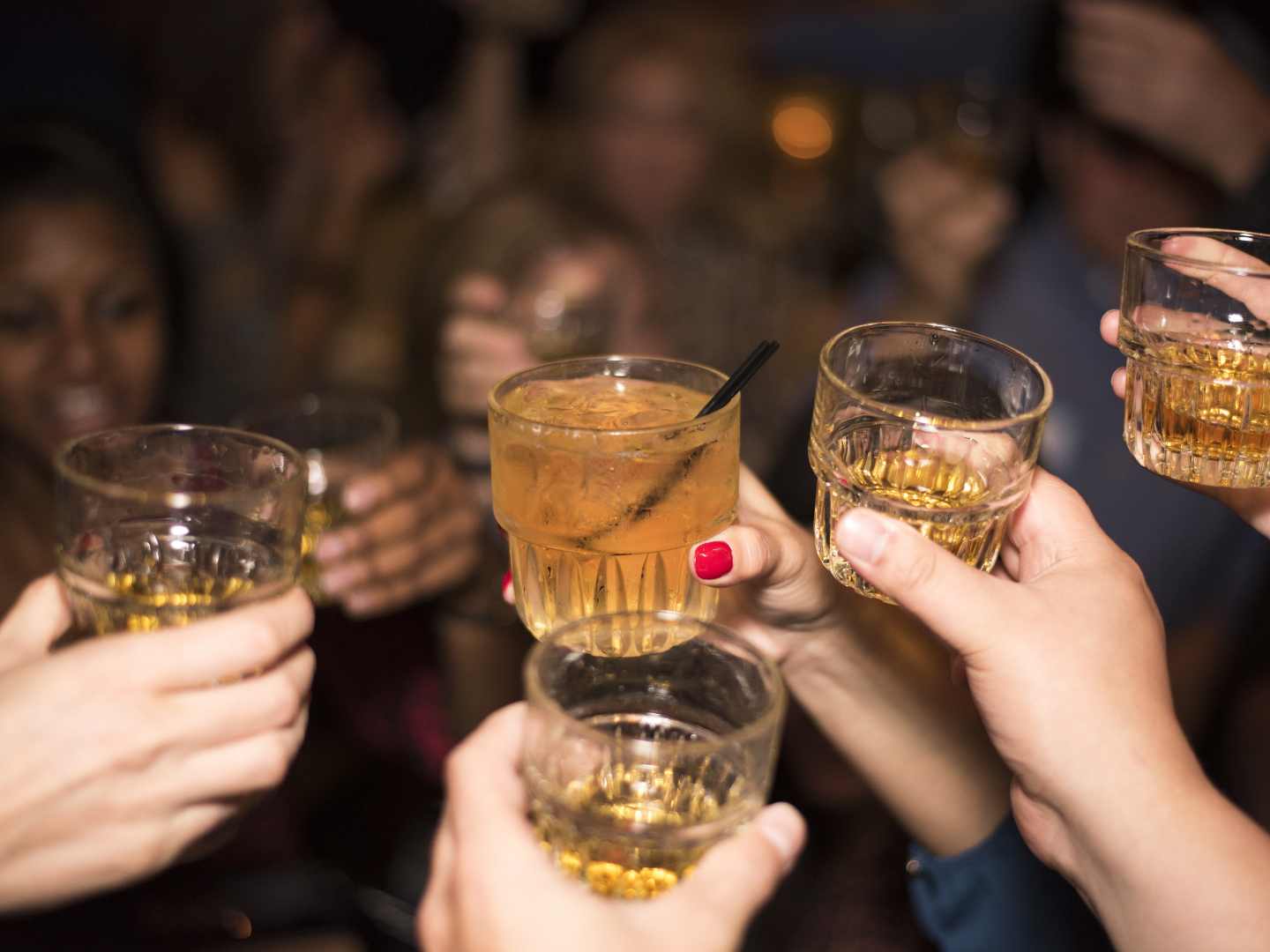
A new preclinical study found that CBD reduced binge-like alcohol consumption and blood alcohol levels without causing sedation or tolerance.
Alcohol Use Disorder (AUD) is not simply a behavioral problem. It is a neurobiological disorder involving reward circuitry, stress signaling, and compulsive reinforcement loops.
CBD appears to influence alcohol-related behavior through multiple pathways tied to craving, stress response, and reward regulation rather than simple intoxication suppression.
Human studies, including the ICONIC trial, suggest CBD may reduce alcohol craving and dampen reward-center activation triggered by alcohol cues.
Full-spectrum cannabinoid formulations may produce different outcomes than isolated CBD, making formulation quality and cannabinoid balance critically important.
CBD is emerging as a promising adjunctive tool for alcohol reduction, but it is not a standalone replacement for therapy, medical care, or behavioral intervention.
A new study published in the British Journal of Pharmacology found that CBD significantly reduced binge-like alcohol intake in mice without sedation, motor impairment, or tolerance buildup. Combined with emerging human evidence showing reduced alcohol craving and dampened brain reward responses, the findings strengthen the case for CBD as a potential adjunctive therapy in Alcohol Use Disorder.
I came across a study in the British Journal of Pharmacology that deserves serious attention. Researchers at the University of Sydney used a “drinking-in-the-dark” mouse model, designed to mimic binge drinking behavior in humans, to test whether CBD could reduce alcohol consumption.
The results were surprisingly strong.
CBD reduced alcohol intake in a dose-dependent manner while simultaneously lowering blood ethanol concentrations. Even more important, the mice showed no signs of sedation, impaired movement, or behavioral shutdown. The effects also persisted with repeated dosing over months, without evidence of tolerance.
That last point matters enormously.
“Tolerance is one of the biggest obstacles in addiction medicine because therapeutic benefit often fades as the brain adapts.”
In this case, the anti-drinking effects remained stable.
That immediately separates CBD from many traditional sedatives or pharmacologic interventions that eventually lose effectiveness or introduce dependency risks of their own.
And the findings do not exist in isolation.
Alcohol Use Disorder affects nearly 29 million adults in the United States alone according to the National Institute on Alcohol Abuse and Alcoholism (https://www.niaaa.nih.gov/publications/brochures-and-fact-sheets/alcohol-use-disorder). It is associated with profound neurological, psychiatric, cardiovascular, and social consequences.
“AUD is not merely excessive drinking. It is a chronic neurobiological disorder involving reward circuitry, stress signaling, and compulsive behavioral reinforcement.”
That distinction is critical because it reframes what successful treatment actually requires.
Reducing alcohol use is not simply about willpower. It often involves recalibrating neural systems tied to craving, anxiety, reward anticipation, emotional regulation, and relapse vulnerability.
This is exactly where CBD appears increasingly relevant.
The Sydney study hinted that CBD’s anti-drinking effects may involve the neuropeptide S receptor (NPSR), a signaling pathway associated with arousal, anxiety regulation, and stress responses. Blocking NPSR altered CBD’s effects, suggesting the mechanism extends beyond traditional CB1 or CB2 receptor activity.
“CBD is pharmacologically unusual because it does not operate through a single dominant pathway.”
Instead, CBD appears to influence multiple biological systems simultaneously, including serotonin signaling, inflammatory pathways, stress regulation, and reward processing.
That complexity may actually be one of its strengths.
Earlier reviews have already suggested CBD may reduce alcohol-seeking behavior, relapse risk, and stress-induced craving in preclinical addiction models (https://www.ncbi.nlm.nih.gov/pmc/articles/PMC6326553/).
Human evidence is also beginning to emerge.
One of the most important studies so far is the ICONIC trial, a double-blind randomized controlled study examining CBD in individuals with Alcohol Use Disorder. Researchers found that 800 mg of CBD reduced activation in the nucleus accumbens when participants were exposed to alcohol-related cues while also lowering subjective alcohol craving during stress exposure.
“The nucleus accumbens is not just a pleasure center. It is one of the brain’s primary engines of craving and reinforcement.”
Dampening hyperactivation in that region could become highly relevant in relapse prevention strategies.
The findings align with neuroimaging research showing addiction-related behaviors are strongly linked to dysregulated reward circuitry and stress responsiveness (https://pubmed.ncbi.nlm.nih.gov/33451250/).
Population-level observations add another interesting layer.
A Colorado-based observational study of heavy drinkers undergoing treatment found that cannabis use days were associated with reduced alcohol consumption, with participants consuming approximately 28% fewer drinks on those days. Infrequent cannabis users were also less likely to binge drink during cannabis-use periods.
Of course, observational studies come with limitations.
They cannot cleanly isolate CBD versus THC effects, behavioral substitution patterns, personality variables, or broader social factors.
Still, the pattern continues appearing often enough to warrant serious investigation.
And formulation matters tremendously.
“Cannabis is not a single drug. THC-dominant, CBD-dominant, and balanced formulations can produce profoundly different neurological outcomes.”
CBD-rich formulations appear more consistently associated with alcohol reduction than high-THC products, which may carry their own cognitive and psychiatric risks.
This is where nuance becomes essential.
CBD is not a magic anti-addiction molecule.
Human data remains limited. Long-term dosing standards are unclear. Drug interactions, liver metabolism considerations, and individualized responses still require careful medical oversight. According to the World Health Organization, CBD itself demonstrates a relatively strong safety profile with low abuse potential, but clinical supervision still matters, especially in vulnerable populations (https://www.who.int/publications/i/item/cannabidiol-(cbd)-critical-review-report).
And importantly, no cannabinoid intervention replaces therapy, behavioral treatment, social support, or comprehensive addiction care.
“Adjunctive therapy is not the same thing as standalone treatment.”
That distinction needs to remain front and center as cannabinoid medicine evolves.
Still, this new study pushes the field forward in a meaningful way.
Dose-dependent alcohol reduction.
No sedation.
No motor impairment.
No tolerance development.
Those are highly unusual findings in addiction pharmacology.
Combined with emerging human neuroimaging data and observational treatment outcomes, CBD is increasingly positioning itself as one of the more compelling non-addictive candidates in modern Alcohol Use Disorder research.
Not hype.
Not miracle-cure territory.
But definitely no longer fringe science either.
Emerging research suggests CBD may help reduce alcohol craving by influencing brain reward pathways, stress responses, and cue-triggered neural activation. Human trials like the ICONIC study have shown reductions in subjective craving and nucleus accumbens activation during alcohol-related exposure.
Current evidence suggests CBD-rich formulations may be more beneficial for alcohol reduction than THC-dominant products. THC can introduce additional psychiatric, cognitive, and dependency-related concerns, while CBD appears non-intoxicating and demonstrates lower abuse potential.
Matthew Myro Rothman is Chief Science Officer and VP of Marketing at EM2P2 and CannaLnx, where he helps bridge medical cannabis, healthcare infrastructure, patient education, and emerging technology. A lifelong musician, writer, philosopher, and cannabis science expert, Matthew spent more than 15 years working in cultivation, consulting, and medical cannabis operations throughout California before returning to Ohio to help shape the future of intelligent cannabis medicine. He holds a graduate degree in Philosophy, Cosmology, and Consciousness from California Institute of Integral Studies and writes extensively on cannabis science, consciousness, wellness, and human performance.
Please note: You are not currently logged in. Only members can contribute comments. If you would like to contribute click the button below.
