
A New Chapter in Cannabis Research

The NIH-funded Resource Center for Cannabis and Cannabinoid Research (R3CR) marks a major shift toward federally supported cannabis science in the United States.
The University of Mississippi, once the sole federally authorized cannabis cultivator, is now leading a national research modernization effort.
R3CR aims to reduce regulatory bottlenecks by helping researchers navigate DEA registration, compliance, study design, and cannabis quality standards.
Cannabis research has historically lagged because Schedule I classification severely restricted access, funding, and clinical trial infrastructure.
The center’s partnership with Washington State University and the U.S. Pharmacopeia signals a push toward standardized, replicable cannabis science.
While rescheduling remains stalled, this initiative suggests parts of the federal system are beginning to treat cannabis research as legitimate biomedical science.
The NIH-backed launch of the Resource Center for Cannabis and Cannabinoid Research (R3CR) represents one of the most important federal cannabis research developments in decades. By helping scientists navigate regulatory barriers and standardize cannabis studies, the initiative could accelerate serious clinical research in medicine, pharmacology, and public health.
For decades, the University of Mississippi occupied one of the strangest positions in American science.
It was simultaneously the center of federally sanctioned cannabis cultivation and a symbol of everything broken about cannabis research in the United States.
Now the script is changing.
With support from the National Institutes of Health, Ole Miss is launching the Resource Center for Cannabis and Cannabinoid Research (R3CR), a federally backed initiative designed to modernize cannabis science and help researchers navigate the labyrinth of regulatory barriers that have slowed the field for generations.
And honestly? It’s about time.
The center brings together the University of Mississippi, Washington State University, and the U.S. Pharmacopeia in what may become one of the most consequential collaborations in the history of American cannabis research.
“The biggest obstacle to cannabis science has not been lack of public interest. It has been structural restriction.”
That’s the real story here.
For years, cannabis researchers have faced an almost surreal regulatory environment. Because cannabis remains federally classified as a Schedule I substance under the Controlled Substances Act, scientists conducting research have often needed overlapping approvals from the DEA, FDA, institutional review boards, and state agencies before studies could even begin (https://www.dea.gov/drug-information/drug-scheduling).
Schedule I status carries a specific legal definition.
“A Schedule I substance is federally classified as having high abuse potential and no accepted medical use.”
That definition has long clashed with both public reality and emerging scientific evidence.
Millions of Americans already use medical cannabis under state programs, while peer-reviewed studies continue examining cannabinoids for chronic pain, epilepsy, PTSD, inflammation, neurodegeneration, cancer symptoms, and autoimmune conditions.
Yet the research pipeline itself has remained painfully slow.
The National Academies of Sciences acknowledged years ago that substantial evidence supports cannabis for chronic pain, chemotherapy-induced nausea, and multiple sclerosis spasticity, while also emphasizing the urgent need for more rigorous research (https://nap.nationalacademies.org/catalog/24625/the-health-effects-of-cannabis-and-cannabinoids-the-current-state).
That “need for more research” became a paradox.
Researchers needed more data.
But federal policy made obtaining that data extraordinarily difficult.
This new NIH-backed center is designed to ease that bottleneck.
R3CR will provide researchers with guidance on DEA registration, federal and state compliance, study design, cannabis handling protocols, quality standards, and technical support infrastructure. It will also create webinars, conferences, educational resources, and collaborative networks aimed at helping cannabis researchers operate more efficiently.
“Infrastructure is what transforms isolated studies into a legitimate scientific field.”
That may ultimately become the center’s greatest contribution.
Cannabis science has often operated like a patchwork ecosystem of disconnected researchers navigating shifting regulations individually. Standardization has been inconsistent. Product quality has varied. Human clinical trials have remained limited.
The involvement of the U.S. Pharmacopeia is particularly significant because it introduces pharmaceutical-level conversations around consistency, purity, formulation standards, and reproducibility.
“Cannabis research cannot mature without standardization.”
That includes cannabinoid concentrations, terpene profiles, dosing protocols, storage procedures, extraction methods, and contaminant testing.
Without those variables controlled, comparing studies becomes difficult and clinical translation becomes messy.
The center is being led by Mahmoud ElSohly, a longtime figure in cannabis research who oversaw the University of Mississippi’s federally authorized cannabis cultivation program for decades. Alongside him is Robert Welch, director of the National Center for Cannabis Research and Education.
Their challenge is not small.
They are attempting to help bridge the divide between an exploding medical cannabis landscape and a federal research system still operating under outdated drug-war architecture.
And the timing is fascinating.
The DEA continues reviewing cannabis rescheduling recommendations after the Department of Health and Human Services advised moving cannabis from Schedule I to Schedule III. HHS based that recommendation partly on accepted medical use evidence and evolving scientific understanding (https://www.hhs.gov/about/news/2023/08/30/hhs-recommendation-marijuana-reschedule.html).
But progress has slowed dramatically.
“The science surrounding cannabis is moving faster than the regulatory system designed to contain it.”
That tension now defines the entire industry.
On one side, cannabinoid science is rapidly expanding into immunology, neurology, pain medicine, psychiatry, oncology, sleep science, gastroenterology, dermatology, and aging research.
On the other side, federal scheduling still reflects policy assumptions built during the Nixon era.
And despite political resistance, scientific momentum continues building.
The NIH itself has increasingly funded cannabinoid-related research over the last decade, including studies involving pain modulation, epilepsy, inflammation, neuroprotection, addiction, and psychiatric disorders (https://nida.nih.gov/research-topics/cannabis-marijuana).
That trend matters because federal funding legitimizes research pathways that were once politically radioactive.
“Scientific legitimacy begins when institutions stop treating a subject like an exception.”
Cannabis is gradually entering that phase.
Not fully.
Not smoothly.
But measurably.
The R3CR initiative will not magically solve every problem facing cannabis research. It does not remove Schedule I restrictions. It does not instantly create large-scale randomized clinical trials. And it certainly does not erase decades of stigma overnight.
But it does something important:
It builds scaffolding.
And scaffolding is what allows serious scientific disciplines to scale.
For the first time, cannabis researchers may finally have access to the kind of centralized institutional support that other biomedical fields take for granted.
No more improvising through regulatory minefields alone.
No more fragmented standards.
No more pretending cannabis science belongs outside mainstream medicine.
“The future of cannabis research will be determined less by ideology and more by infrastructure.”
And that future just took a meaningful step forward.
R3CR is a new NIH-funded cannabis research hub led by the University of Mississippi in partnership with Washington State University and the U.S. Pharmacopeia. The center helps researchers navigate cannabis regulations, study design, compliance, and scientific standardization.
Cannabis has remained federally classified as a Schedule I substance, which created major barriers for researchers involving DEA registration, product sourcing, funding, and clinical trial approval. These restrictions significantly slowed scientific progress despite growing public and medical interest.
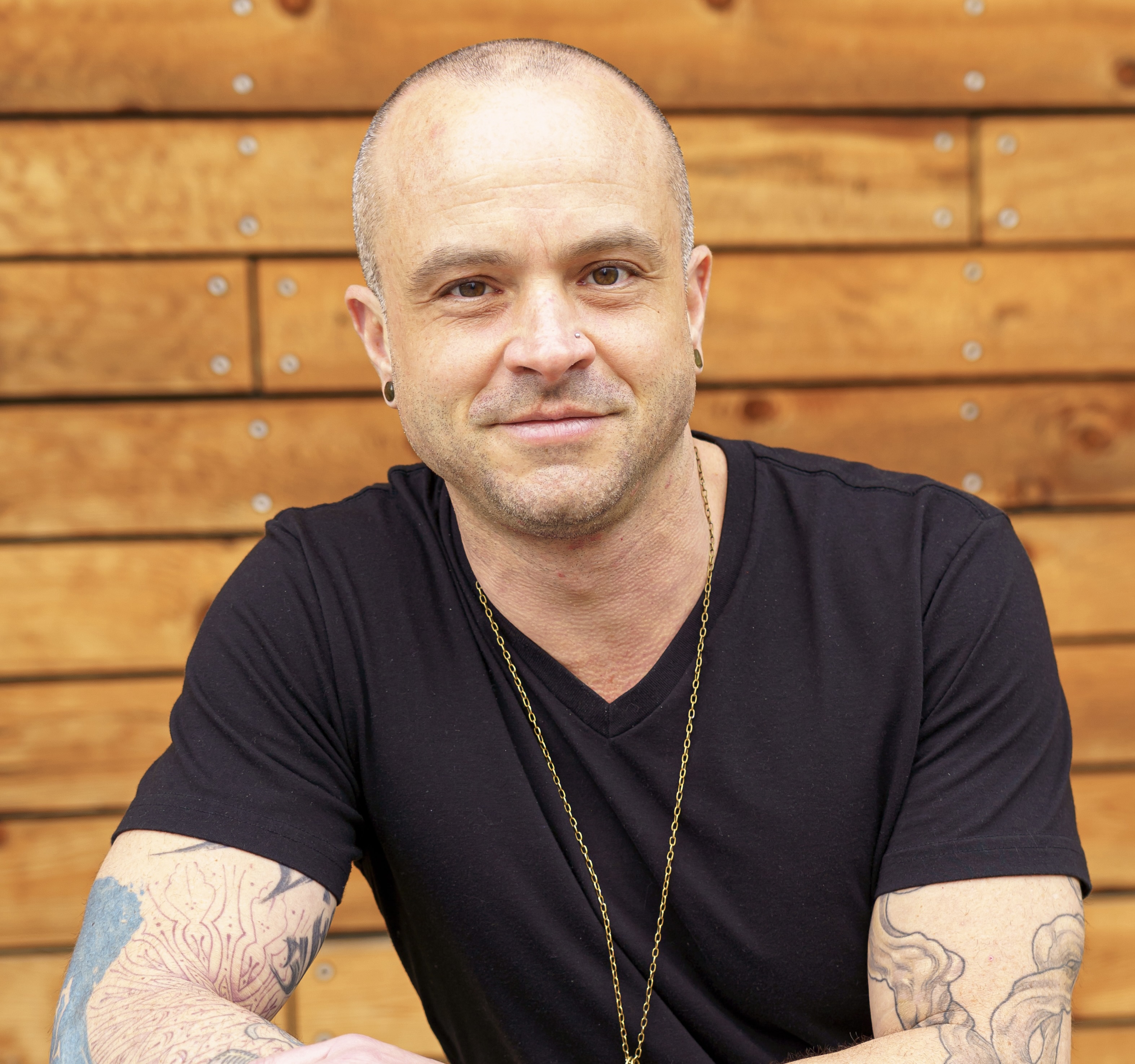
Matthew Myro Rothman is Chief Science Officer and VP of Marketing at EM2P2 and CannaLnx, where he helps bridge medical cannabis, healthcare infrastructure, patient education, and emerging technology. A lifelong musician, writer, philosopher, and cannabis science expert, Matthew spent more than 15 years working in cultivation, consulting, and medical cannabis operations throughout California before returning to Ohio to help shape the future of intelligent cannabis medicine. He holds a graduate degree in Philosophy, Cosmology, and Consciousness from California Institute of Integral Studies and writes extensively on cannabis science, consciousness, wellness, and human performance.
Please note: You are not currently logged in. Only members can contribute comments. If you would like to contribute click the button below.
