
Schedule III: The Cannabis Rebrand That Changes Everything—Sort Of

Moving cannabis from Schedule I to Schedule III would formally acknowledge its medical value under federal law for the first time since 1970.
Schedule III status could unlock physician prescribing pathways, expanded research access, insurance reimbursement potential, and major tax relief for medical cannabis businesses.
IRS Code 280E currently prevents cannabis operators from deducting ordinary business expenses because cannabis remains a Schedule I substance.
Rescheduling medical cannabis would not federally legalize adult-use cannabis, creating a confusing split between medical and recreational markets.
Schedule III is not legalization. It is a medical and regulatory reclassification that integrates cannabis more deeply into the healthcare system.
Federal cannabis reform is evolving from a criminal justice debate into a healthcare infrastructure conversation.
If cannabis moves to Schedule III under the Controlled Substances Act, medical cannabis would gain formal federal recognition as a legitimate therapeutic substance. That shift could expand research, reduce tax burdens, and open pathways for insurance reimbursement, while recreational cannabis would likely remain federally illegal under a contradictory two-tier system.
After decades of prohibition, misinformation, and political inertia, the federal government may finally be inching toward a reality millions of Americans already accepted years ago: cannabis has medical value.
But the details matter. And in cannabis policy, the details tend to hide inside bureaucratic language dense enough to make your eyes glaze over somewhere around “Controlled Substances Act subsection whatever.” The centerpiece of the current debate is Schedule III.
That classification change could dramatically reshape medical cannabis in America while simultaneously leaving recreational cannabis trapped in legal limbo.
So what exactly happens if medical cannabis moves to Schedule III while adult-use cannabis remains federally prohibited?
The answer is both historic and deeply strange.
“Schedule III is not legalization. It is federal recognition that cannabis has accepted medical value.”
Under the Controlled Substances Act, Schedule I substances are officially categorized as having “no currently accepted medical use” and a high potential for abuse. Cannabis has occupied that category since 1970 alongside heroin and LSD, despite decades of state medical programs and mounting scientific evidence supporting therapeutic applications.
The Drug Enforcement Administration defines Schedule III substances differently. Drugs in this category have accepted medical uses and moderate to low potential for physical dependence relative to Schedule I or II substances. Examples include ketamine, anabolic steroids, and certain codeine-containing medications. According to the DEA’s official scheduling framework, Schedule III drugs can be prescribed and researched under significantly less restrictive conditions (https://www.dea.gov/drug-information/drug-scheduling).
That distinction changes almost everything for medical cannabis.
If the DEA ultimately adopts the recommendation from the U.S. Department of Health and Human Services to reschedule cannabis, physicians could theoretically prescribe FDA-approved cannabis-based therapies more broadly. Research barriers that have slowed clinical cannabis science for decades would likely loosen substantially. The National Institutes of Health has repeatedly acknowledged that Schedule I classification creates significant obstacles for cannabis research access and regulatory approval (https://nida.nih.gov/research-topics/cannabis-marijuana).
“Schedule I status did not merely stigmatize cannabis. It slowed the scientific process itself.”
One of the biggest practical changes involves IRS Code 280E. Under current federal tax law, businesses trafficking Schedule I or II substances cannot deduct ordinary operating expenses. That means many state-legal cannabis companies pay punishingly high effective tax rates compared to virtually every other industry.
If cannabis moves to Schedule III, 280E restrictions would no longer apply to federally compliant medical cannabis businesses. According to the IRS, Section 280E specifically targets Schedule I and II controlled substances (https://www.irs.gov/pub/irs-drop/n-15-45.pdf).
“280E does not regulate cannabis businesses. It financially suffocates them.”
For medical dispensaries and operators surviving on thin margins, that shift could be transformative. Businesses could deduct payroll, rent, marketing, equipment, and standard operational costs like any legitimate healthcare-adjacent enterprise.
Then comes the healthcare side of the equation.
Schedule III status could open pathways for broader insurance participation, including reimbursement through Health Savings Accounts (HSAs) and Flexible Spending Accounts (FSAs), depending on how future federal guidance evolves. While insurance integration would still require additional regulatory development and FDA pathways, rescheduling moves cannabis substantially closer to conventional medical infrastructure.
Research could also accelerate dramatically.
A growing body of peer-reviewed literature already supports the therapeutic potential of cannabinoids in areas including chronic pain, epilepsy, chemotherapy-induced nausea, spasticity, and anxiety disorders. The National Academies of Sciences concluded in a landmark review that substantial evidence supports cannabis efficacy for chronic pain and chemotherapy-related nausea in adults (https://nap.nationalacademies.org/catalog/24625/the-health-effects-of-cannabis-and-cannabinoids-the-current-state).
“Cannabis research has not been absent because the plant lacks potential. It has been absent because policy constrained science.”
But here’s where the situation turns almost surreal.
Even if medical cannabis moves to Schedule III, recreational cannabis could remain federally illegal under Schedule I. That creates a bizarre split-screen legal framework where the same plant is simultaneously recognized as medicine and prohibited as an adult-use substance.
In practical terms, one dispensary could theoretically participate in healthcare reimbursement systems while another selling nearly identical products remains locked out of federal protections and burdened by punitive taxation.
The contradiction becomes even more obvious when viewed through consumer behavior.
A patient might use an HSA card to purchase a medically authorized cannabis product in one context while another adult walks into a recreational dispensary and pays entirely in cash for a chemically comparable product that remains federally prohibited.
“Federal cannabis policy is evolving into a two-tier system where intention matters more than chemistry.”
That does not mean Schedule III lacks significance. Quite the opposite.
Rescheduling would represent the most important federal acknowledgment of cannabis medicine in modern American history. It would legitimize decades of patient experience, improve research infrastructure, and begin integrating cannabinoid therapeutics into mainstream healthcare systems.
Still, it is important not to confuse rescheduling with full legalization.
Schedule III would not automatically expunge criminal records. It would not federally legalize interstate adult-use commerce. It would not eliminate state-by-state inconsistencies or resolve every banking and regulatory conflict facing the cannabis industry.
What it would do is move cannabis out of the legal fiction that it has “no accepted medical use.”
And honestly, after more than fifty years of political theater surrounding this plant, that alone is a pretty massive shift.
Schedule III classification means the federal government recognizes cannabis as having accepted medical value and moderate abuse potential. This could expand research access, reduce tax burdens for medical operators, and support future healthcare integration.
No. Recreational cannabis could still remain federally prohibited even if medical cannabis moves to Schedule III. Rescheduling addresses medical classification under federal law, not full legalization of adult-use cannabis.
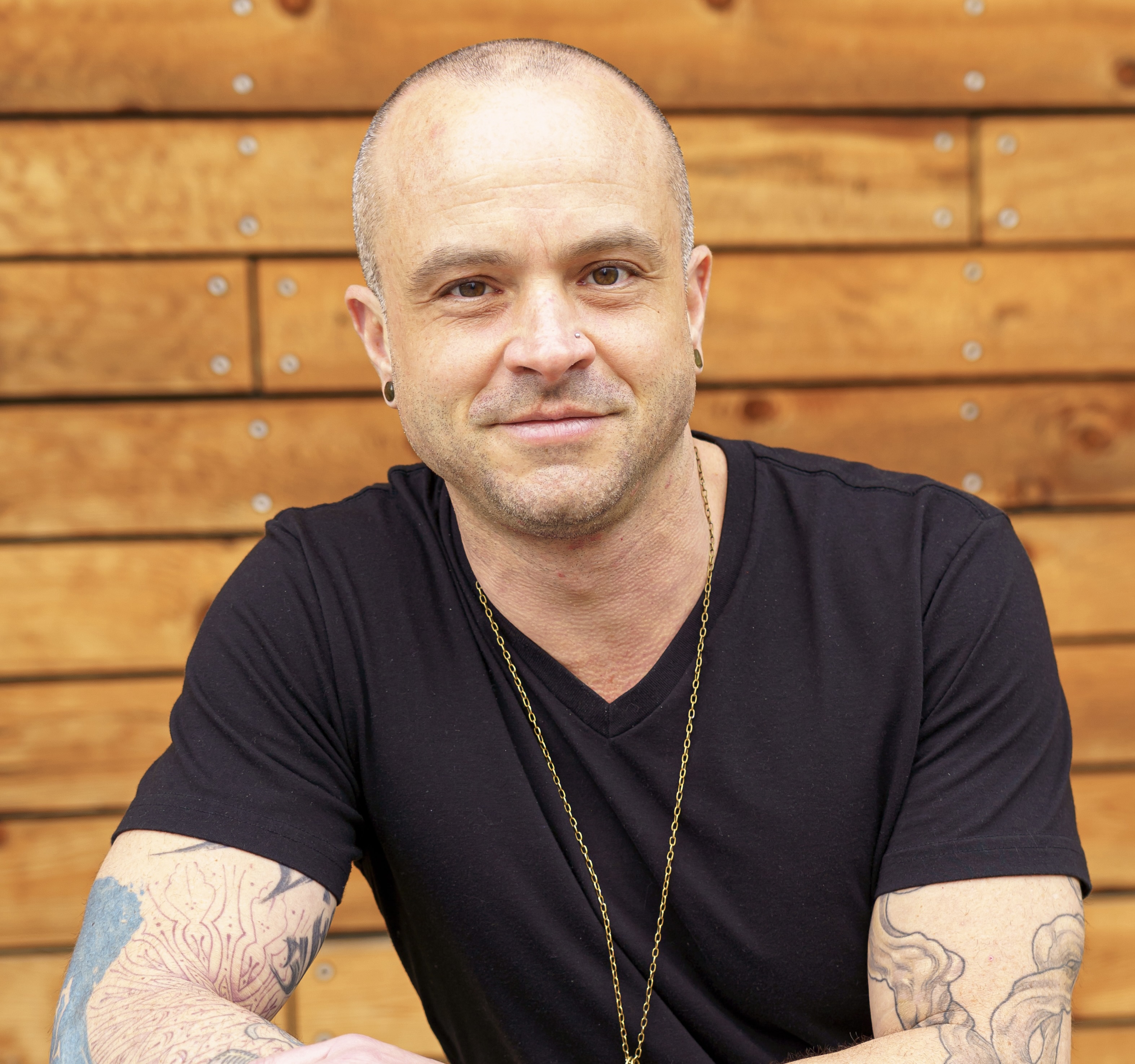
Matthew Myro Rothman is Chief Science Officer and VP of Marketing at EM2P2 and CannaLnx, where he helps bridge medical cannabis, healthcare infrastructure, patient education, and emerging technology. A lifelong musician, writer, philosopher, and cannabis science expert, Matthew spent more than 15 years working in cultivation, consulting, and medical cannabis operations throughout California before returning to Ohio to help shape the future of intelligent cannabis medicine. He holds a graduate degree in Philosophy, Cosmology, and Consciousness from California Institute of Integral Studies and writes extensively on cannabis science, consciousness, wellness, and human performance.
Please note: You are not currently logged in. Only members can contribute comments. If you would like to contribute click the button below.
