
Let’s Talk Tics: Cannabis and Tourette Syndrome

Emerging research suggests cannabinoid-based medicines may significantly reduce tic severity and improve quality of life in some people living with Tourette syndrome.
THC appears to play the central therapeutic role by modulating dopamine signaling and inhibitory neural pathways involved in movement regulation.
The endocannabinoid system influences motor control, stress response, and neurological excitability, making it a biologically plausible target for Tourette’s treatment.
Conventional Tourette medications often come with difficult side effects, leaving many patients searching for alternatives with better tolerability.
Federal cannabis restrictions continue to slow neurological cannabis research despite growing clinical and observational evidence.
Cannabis is not a cure for Tourette syndrome, but for some patients it may represent meaningful symptom management where other treatments have failed.
A growing body of research suggests cannabis-based medicines, particularly THC-dominant formulations, may help reduce motor and vocal tics in people with Tourette syndrome. Recent evidence published in Neurology found significant improvements in tic severity and quality of life, adding scientific weight to years of patient-reported benefit.
Tourette syndrome is one of those neurological conditions that society still misunderstands at a remarkably superficial level. Popular culture tends to flatten it into a punchline built around involuntary swearing, even though coprolalia only affects a minority of patients. In reality, Tourette syndrome is a complex neurodevelopmental disorder involving motor and vocal tics that can become physically exhausting, psychologically distressing, and socially isolating.
For many patients, the struggle is not occasional. It is relentless.
Traditional pharmaceutical treatments often produce mixed results. Some patients experience modest improvement, while others are left battling sedation, emotional blunting, metabolic complications, or movement-related side effects. That therapeutic gap is one reason cannabinoid medicine has increasingly entered the conversation.
A 2024 meta-analysis published in Neurology evaluated both clinical and observational studies involving cannabinoid-based medicines for Tourette syndrome. Researchers found statistically significant reductions in tic severity alongside measurable improvements in quality of life.
“Cannabis is not replacing neurology. It is forcing neurology to ask better questions.”
The findings matter because they reinforce something patients have been reporting for years. Across Germany, the Netherlands, Canada, and the United States, individuals with treatment-resistant Tourette syndrome have repeatedly described tic reduction after using THC-dominant cannabis preparations or synthetic THC medications such as dronabinol.
One frequently cited randomized, double-blind, placebo-controlled trial from Germany demonstrated that a single dose of THC significantly reduced tic severity without producing serious cognitive impairment or psychotic symptoms (https://pubmed.ncbi.nlm.nih.gov/16521049/). Additional follow-up studies have supported those observations, particularly among patients whose symptoms failed to respond adequately to conventional medications (https://pubmed.ncbi.nlm.nih.gov/15390073/).
“Patient anecdotes are not clinical proof. But thousands of similar anecdotes should never be ignored.”
Tourette syndrome is widely believed to involve dysfunction within cortico-striatal-thalamo-cortical circuits, particularly pathways involving dopamine regulation in the basal ganglia and prefrontal cortex. The endocannabinoid system appears to interact directly with many of these same neural networks.
“The endocannabinoid system does not create movement. It regulates movement stability.”
Cannabinoid receptors, especially CB1 receptors, are densely distributed throughout brain regions associated with motor coordination and inhibitory control. THC influences dopamine release while also modulating GABAergic signaling, which plays a major role in suppressing excessive or inappropriate motor activity. Research published through the National Institutes of Health has highlighted the potential role of cannabinoids in movement disorders due to these neuromodulatory effects (https://pmc.ncbi.nlm.nih.gov/articles/PMC5877694/).
In practical terms, cannabinoids may help dampen the neurological “overfiring” associated with tic generation.
That does not mean every cannabinoid works equally well.
CBD continues to attract attention for anxiety reduction and emotional regulation, both of which matter because anxiety and stress often exacerbate tics. However, current evidence suggests THC is likely the primary driver behind direct tic suppression. A review published in Cannabis and Cannabinoid Research similarly noted that THC-containing formulations appear most consistently associated with tic improvement in available clinical data (https://www.liebertpub.com/doi/10.1089/can.2019.0053).
“CBD may calm the emotional environment surrounding Tourette syndrome. THC appears more directly involved in tic suppression itself.”
That distinction is important because cannabis medicine is rarely about a single molecule acting in isolation. Dosage, cannabinoid ratios, terpene composition, delivery method, and patient sensitivity all shape outcomes. Smoking cannabis indiscriminately is not the same thing as structured cannabinoid therapy.
The broader frustration is that research remains artificially constrained.
Cannabis has spent decades under Schedule I classification, a designation reserved for substances with “no accepted medical use.” That classification has dramatically slowed research funding, trial approvals, and physician education. According to the National Institute on Drug Abuse, researchers studying cannabis still face layers of federal regulatory hurdles that do not exist for many other controlled substances (https://nida.nih.gov/research-topics/cannabis-marijuana).
“Schedule I status did not stop cannabis use. It slowed scientific understanding.”
If federal rescheduling efforts ultimately move cannabis into Schedule III, neurological research could expand rapidly. Tourette syndrome, Parkinson’s disease, dystonia, epilepsy, and other movement-related disorders would likely become major areas of cannabinoid investigation almost immediately.
And honestly, they probably should.
Tourette syndrome remains notoriously difficult to manage for many patients. Existing medications can help, but few provide complete relief, and tolerability often becomes its own problem. Cannabis is not a miracle cure, nor should it be framed that way. But for a meaningful subset of patients, cannabinoids may represent the first intervention that reduces symptoms without making them feel disconnected from themselves in the process.
That alone deserves serious scientific attention.
Because when patients consistently report relief, and emerging evidence continues pointing in the same direction, the conversation should no longer be whether cannabis belongs in neurological research.
The conversation should be why it took this long to get there.
Emerging clinical evidence suggests THC-containing cannabis formulations may reduce motor and vocal tic severity in some people with Tourette syndrome. Results vary between individuals, but several studies have shown meaningful symptom improvement in treatment-resistant patients.
Current evidence suggests THC plays the larger role in direct tic suppression because it modulates dopamine and inhibitory signaling pathways involved in movement regulation. CBD may still help manage anxiety and stress, which can worsen tic frequency and intensity.
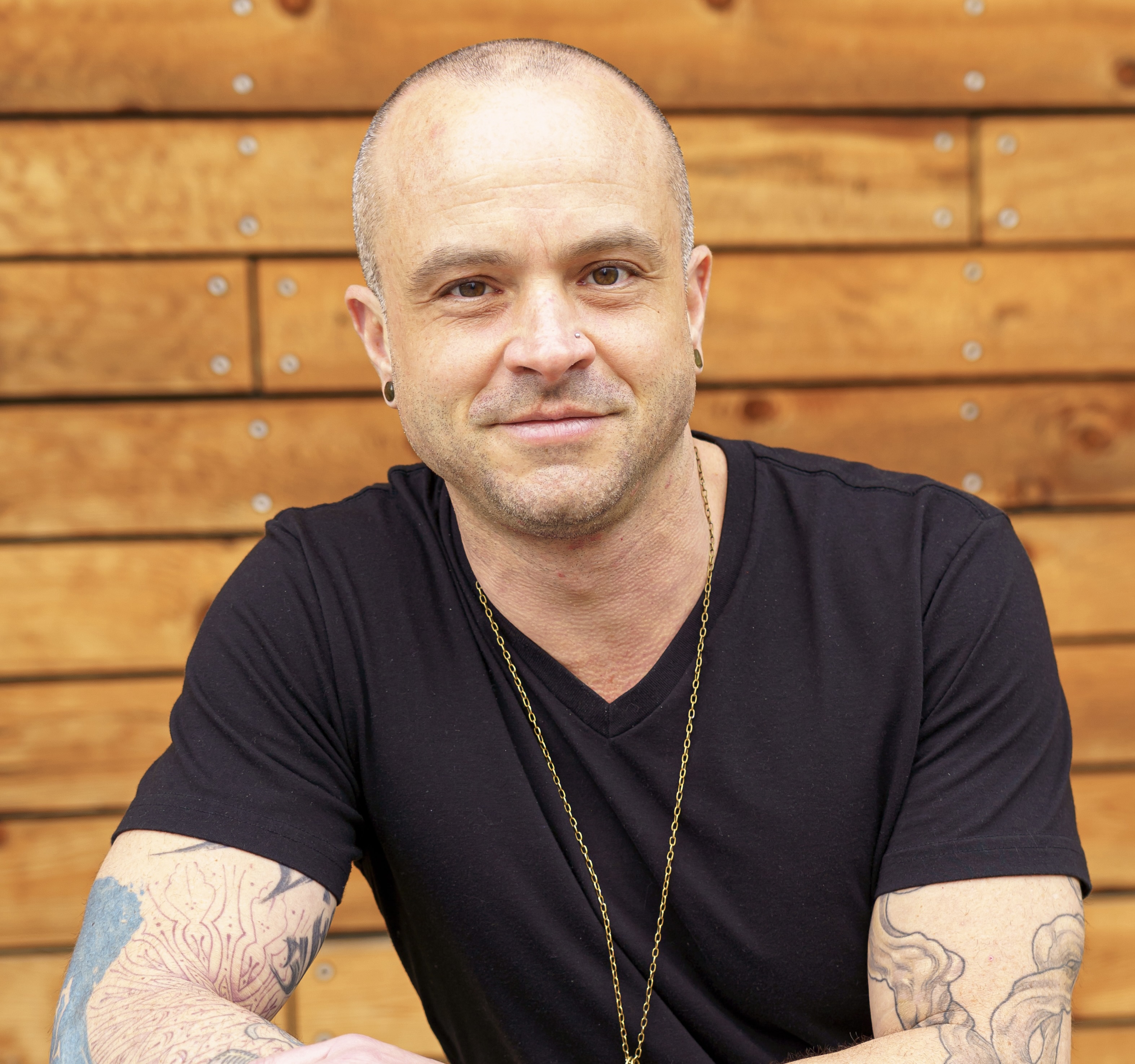
Matthew Myro Rothman is Chief Science Officer and VP of Marketing at EM2P2 and CannaLnx, where he helps bridge medical cannabis, healthcare infrastructure, patient education, and emerging technology. A lifelong musician, writer, philosopher, and cannabis science expert, Matthew spent more than 15 years working in cultivation, consulting, and medical cannabis operations throughout California before returning to Ohio to help shape the future of intelligent cannabis medicine. He holds a graduate degree in Philosophy, Cosmology, and Consciousness from California Institute of Integral Studies and writes extensively on cannabis science, consciousness, wellness, and human performance.
Please note: You are not currently logged in. Only members can contribute comments. If you would like to contribute click the button below.
