
Cannabis And Cellular Stress: The Difference Between A Mechanism And A Medicine
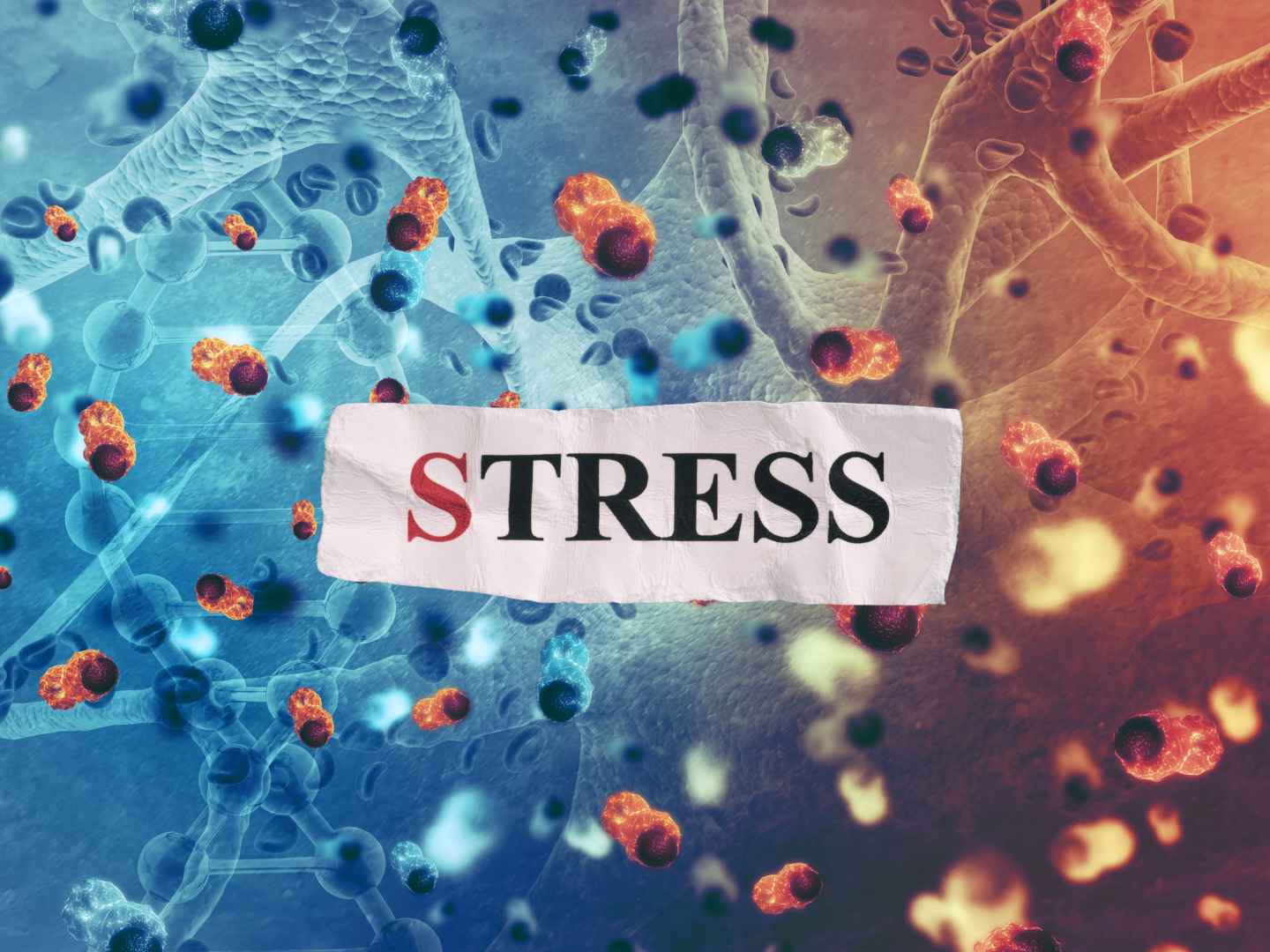
Cannabinoids can influence cellular processes involved in oxidative stress, inflammation, mitochondrial function, autophagy, and programmed cell death.
These effects are highly context-dependent. The same cannabinoid can produce different effects depending on cell type, concentration, receptor activity, and disease state.
Much of the most intriguing evidence comes from laboratory and animal research, particularly cancer and neurological models. That makes it biologically important, but not yet equivalent to demonstrated clinical benefit.
Apoptosis and autophagy are not inherently good or bad. They are normal cellular processes whose consequences depend on which cells are affected and under what circumstances.
The central challenge for cannabinoid medicine is translating molecular activity into clinically meaningful outcomes at realistic human doses.
Better clinical data must eventually connect specific cannabinoid exposures with product chemistry, dose, patient characteristics, and longitudinal outcomes.
Cannabinoids can influence the cellular systems that determine how cells respond to stress, damage, inflammation, and survival signals. But influencing a biological pathway is not the same as producing a therapeutic outcome, which is why the next frontier of cannabinoid science is translation from intriguing mechanisms to measurable effects in actual patients.
Your body is constantly deciding what to repair, what to recycle, what to protect, and occasionally what to remove.
Most of this happens without ceremony. Damaged proteins are dismantled. Cellular components are recycled. Immune signals rise and fall. Cells respond to oxidative stress. Some cells activate tightly regulated programs that ultimately lead to their own death.
Life, somewhat paradoxically, depends on knowing when not to preserve everything.
Cannabinoid research has become particularly interesting here because the endocannabinoid system intersects with several of these processes. Research has implicated cannabinoid signaling in inflammation, oxidative stress, mitochondrial function, apoptosis, and autophagy.
But this is also where cannabis science can outrun itself.
Seeing that a cannabinoid influences a pathway associated with disease does not establish that consuming cannabis will improve that disease in a person. The distance between those two statements is where much of biomedical science lives.
A biological mechanism explains how something might work. Clinical evidence tells us whether it actually helps patients.
Cannabinoid medicine needs both.
Cells need stress.
That may sound strange because we tend to use “stress” as another word for harm. Biologically, stress is better understood as a challenge to normal cellular balance.
One important source is oxidative stress.
Cells naturally generate reactive oxygen species, often abbreviated ROS, during metabolism. At controlled levels, these molecules participate in normal signaling. Problems can arise when their production overwhelms antioxidant defenses, potentially damaging proteins, lipids, DNA, and other cellular structures.
Oxidative stress is not the presence of reactive molecules. It is the loss of balance between their production and the cell’s ability to manage them.
Inflammation has a similar dual personality.
An inflammatory response can help fight infection and repair damaged tissue. Persistent or dysregulated inflammation, however, contributes to the biology of numerous diseases.
This distinction matters because the goal of medicine is rarely to eliminate a biological process. It is to restore appropriate regulation.
Cannabinoids are interesting partly because their effects frequently look more like modulation than a simple on-off switch.
One of the most fascinating examples is apoptosis.
Apoptosis is an organized program through which a cell participates in its own removal.
That sounds grim until you consider the alternative.
Multicellular organisms need ways to eliminate cells that are unnecessary, severely damaged, infected, or otherwise inappropriate. Apoptosis is therefore part of normal development and tissue maintenance.
Cancer makes this process especially important because malignant cells can acquire mechanisms that allow them to resist normal death signals. That is one reason researchers have investigated whether cannabinoids can influence apoptosis and related pathways in cancer cells.
Laboratory studies have reported that THC, CBD, and other cannabinoids can affect pathways involved in cell proliferation, oxidative signaling, autophagy, and apoptosis in certain cancer models. Researchers have also observed effects involving receptors and signaling systems beyond the classical CB1 and CB2 cannabinoid receptors.
Those findings are scientifically interesting.
They are not evidence that cannabis cures cancer.
Most of these mechanistic findings come from cultured cells or animal models, sometimes using concentrations and experimental conditions that do not map neatly onto human cannabis use.
Killing a cancer cell in a laboratory is a scientific clue, not a cancer treatment.
That sentence could save cannabinoid medicine from a remarkable amount of confusion.
Biology is stubbornly contextual.
Cannabinoids are sometimes described as antioxidants because compounds including CBD and THC can influence oxidative signaling and reduce markers of oxidative stress under certain experimental conditions.
Yet cannabinoids can also increase oxidative stress in particular cells and experimental settings.
That apparent contradiction is important.
In some cancer models, increasing reactive oxygen species may actually contribute to cannabinoid-induced cell death. In other contexts, reducing excessive oxidative signaling could theoretically help protect cells from injury.
The molecule has not changed. The biological environment has.
Context-dependent medicine means that the same molecular action can be helpful in one biological setting, irrelevant in another, and potentially harmful in a third.
This is why phrases such as “cannabis reduces inflammation” or “CBD is an antioxidant” are directionally interesting but clinically incomplete.
Which cannabinoid? At what concentration? In which tissue? Acting through which receptor or signaling pathway? In a healthy person or someone with disease? For how long?
Those questions are not scientific nitpicking.
They are the difference between pharmacology and folklore.
Cells also have recycling systems.
Autophagy is one of them. The term literally refers to “self-eating,” but the process is better understood as cellular recycling. Cells can break down damaged proteins, dysfunctional organelles, and other intracellular material, recovering useful components in the process.
Autophagy is cellular recycling, not simply cellular destruction.
Cannabinoid signaling has been linked experimentally to autophagy in several disease models, including cancer. That has generated considerable interest because dysfunctional autophagy is involved in many pathological processes.
But once again, the biology refuses to give us an easy slogan.
Autophagy can sometimes help damaged cells survive. In other circumstances, it can participate in pathways associated with cell death. In cancer, it can potentially suppress tumor formation in some settings while helping established tumor cells tolerate metabolic stress in others.
So saying a cannabinoid “promotes autophagy” tells us surprisingly little by itself.
We need to know what happens next.
Cannabinoid science has become very good at identifying mechanisms.
Translation remains harder.
For decades, researchers have documented remarkable interactions among cannabinoids, receptors, ion channels, inflammatory mediators, neurotransmitter systems, gene expression, oxidative signaling, and cellular survival pathways.
The sheer biological reach of the endocannabinoid system is part of what makes the field exciting.
It is also part of what makes overstatement so tempting.
A pathway involved in inflammation may also participate in immunity, metabolism, cancer biology, and normal cellular signaling. Manipulating that pathway therefore does not automatically produce a predictable therapeutic result.
The more biologically connected a system is, the less useful it becomes to describe its effects with a single word like “healing.”
What cannabinoid medicine needs now is not less mechanistic research. It needs a stronger bridge between mechanism and outcome.
That bridge is data.
If cannabinoid medicine becomes more deeply integrated into healthcare, we should eventually be able to connect specific exposures with clinical outcomes over time.
“Cannabis use” is not enough.
Researchers and clinicians need to know which cannabinoids were present, their concentrations and ratios, dose, route of administration, frequency, duration, reason for use, concurrent medications, diagnoses, adverse effects, and patient outcomes.
Certificates of Analysis could contribute product-level phytochemical information. Electronic Medical Records could contribute clinical context. Standardized patient-reported outcomes could tell us whether symptoms changed. Longitudinal systems could reveal whether those changes persisted.
Clinical evidence begins when molecular possibility meets measurable human outcomes.
That is particularly important for a plant containing hundreds of chemical constituents and products whose composition can differ dramatically.
Two patients may both report using “cannabis” while receiving profoundly different chemical exposures.
If we want to understand whether specific cannabinoid profiles influence inflammation, pain, neurological disease, immune function, or other conditions, those differences cannot remain invisible.
The cellular research surrounding cannabinoids gives us legitimate reasons to keep investigating.
Cannabinoids interact with biological systems involved in stress responses, inflammation, oxidative signaling, autophagy, and cell survival. Some of those interactions may eventually prove therapeutically useful. Some may matter only under narrow experimental conditions. Others may reveal risks we do not yet appreciate.
That uncertainty is not disappointing.
It is the beginning of better medicine.
The first era of cannabis research asked whether cannabinoids did anything biologically interesting.
Clearly, they do.
The more consequential era asks something harder: when does that biological activity become clinically useful, for which patient, at what dose, with which chemical profile, and at what cost to the rest of the system?
That is the question that turns an interesting molecule into medicine.
Cannabinoids interact with some of biology’s most fundamental systems, including inflammation, oxidative signaling, autophagy, and programmed cell death. But molecular activity should be the beginning of a medical claim, not the end of one. The future of cannabinoid medicine depends on connecting mechanisms observed in laboratories with specific products, doses, patients, and longitudinal clinical outcomes. Cannabis does not become more credible by making its science sound simpler than it is. It becomes more credible when healthcare develops the infrastructure to learn where these mechanisms actually matter in human beings.
Cannabinoids can modulate inflammatory pathways in laboratory, animal, and some human research, but their effects depend on the cannabinoid, dose, tissue, disease state, and route of administration. This does not mean cannabis universally reduces inflammation or that it should be considered a treatment for every inflammatory condition.
Laboratory and animal studies have shown that cannabinoids including THC and CBD can promote apoptosis, autophagy, or other antiproliferative effects in certain cancer models. These findings have not established cannabis as a cancer treatment in humans, and patients should not substitute cannabis for evidence-based cancer therapy.
https://pubmed.ncbi.nlm.nih.gov/36768835/
https://pubmed.ncbi.nlm.nih.gov/32074976/
https://pmc.ncbi.nlm.nih.gov/articles/PMC6304621/
https://doi.org/10.3390/ijms26010152
https://www.cancer.gov/about-cancer/treatment/cam/patient/cannabis-pdq
Matthew Myro Rothman is Chief Science Officer and VP of Marketing at EM2P2 and CannaLnx, where he helps bridge medical cannabis, healthcare infrastructure, patient education, and emerging technology. A lifelong musician, writer, philosopher, and cannabis science expert, Matthew spent more than 15 years working in cultivation, consulting, and medical cannabis operations throughout California before returning to Ohio to help shape the future of intelligent cannabis medicine. He holds a graduate degree in Philosophy, Cosmology, and Consciousness from California Institute of Integral Studies and writes extensively on cannabis science, consciousness, wellness, and human performance.
Please note: You are not currently logged in. Only members can contribute comments. If you would like to contribute click the button below.
