
Cannabis, Cognition, And The Brain’s Long Memory
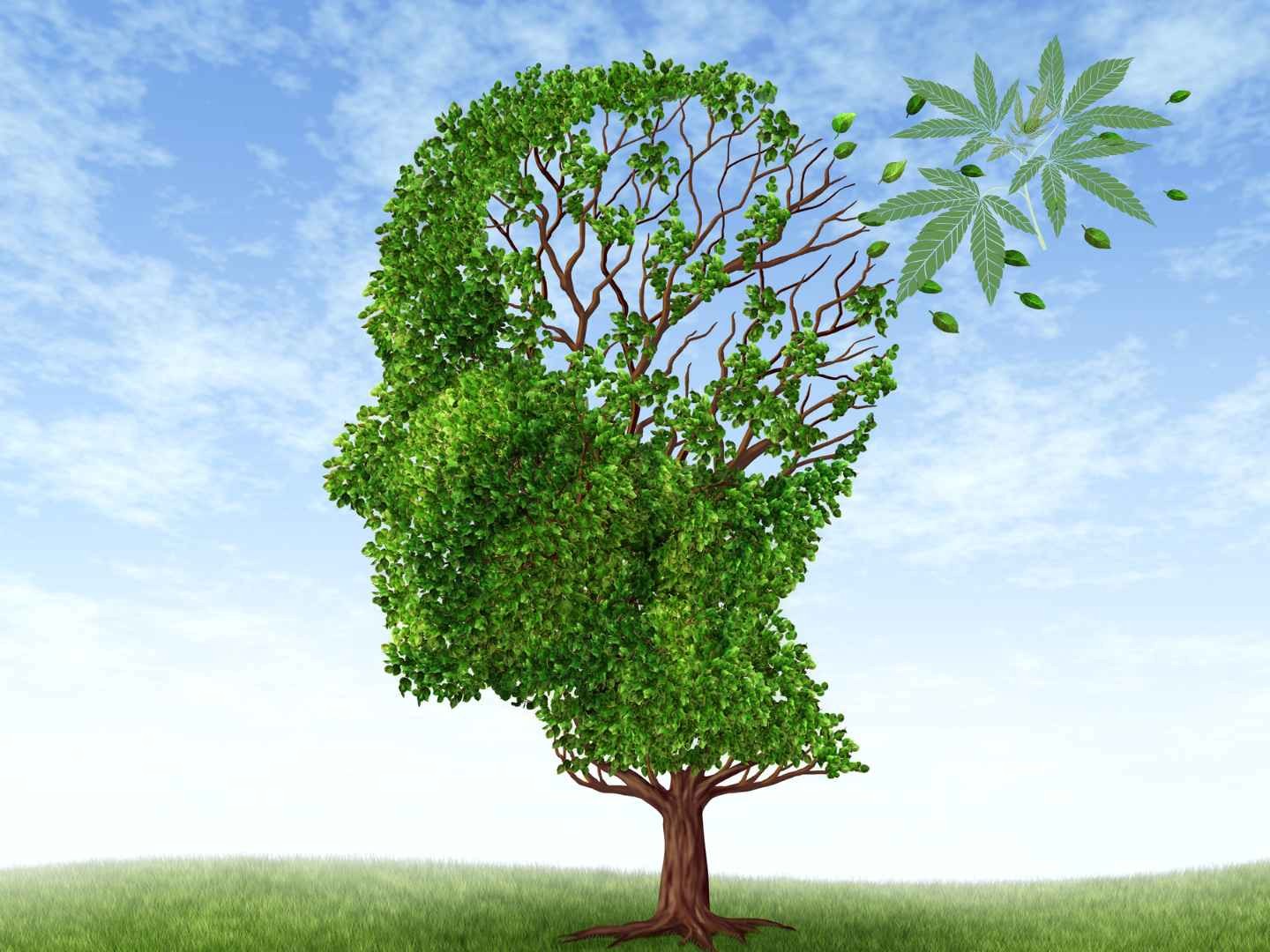
New research in older adults challenges the assumption that a history of cannabis use necessarily predicts worse cognitive performance later in life.
Cannabis use was associated with better performance in several cognitive domains in a large UK Biobank analysis, but longer duration of use was also associated with slower processing speed.
These findings show association, not causation. They do not demonstrate that cannabis protects against dementia or improves cognition.
“Cannabis exposure” is an unusually crude variable because products can differ dramatically in THC, CBD, minor cannabinoids, terpenes, dose, frequency, and route of administration.
The next scientific challenge is not simply determining whether someone used cannabis. It is determining what they used, why they used it, and what happened over time.
If cannabinoid medicine is going to mature within healthcare, longitudinal clinical and phytochemical data will matter far more than broad categories such as “user” and “non-user.”
Does cannabis use cause cognitive decline as people age? Current evidence does not support such a simple conclusion. Large observational studies in older adults suggest that cannabis use may have a more complicated relationship with cognition, with some measures showing no disadvantage or even better performance, while certain patterns of longer exposure may be associated with worse outcomes.
For decades, the relationship between cannabis and memory seemed almost self-explanatory.
THC can acutely impair memory, attention, and other cognitive functions. From there, it is easy to make an intuitive leap: if cannabis can temporarily disrupt cognition, perhaps years of cannabis use inevitably leave an aging brain worse off.
But acute impairment and long-term cognitive trajectory are not the same biological question.
That distinction matters.
A 2025 analysis of 67,713 dementia-free adults aged 60 and older in the UK Biobank complicates the familiar narrative. Researchers examined attention, executive function, processing speed, visual memory, and working memory in relation to past and current cannabis use.
Former cannabis users performed better than never-users across all five cognitive domains measured. Current users also performed better on working memory. Yet the picture became less reassuring when researchers looked more closely at patterns of exposure. Among former users, longer duration of cannabis use was associated with slower processing speed, including over time.
That is not a verdict for cannabis.
It is something scientifically more interesting: a contradiction worth investigating.
The emerging question is no longer whether cannabis is simply good or bad for cognition, but which patterns of cannabis exposure are associated with which cognitive outcomes, in which people, and over what period of time.
That is a much harder question. It is also a much better one.
Cannabis can affect cognition in the short term.
THC activates cannabinoid CB1 receptors, which are widely distributed throughout the brain, including regions involved in memory, attention, learning, and executive function. Acute intoxication can therefore interfere with some of the very processes researchers measure when studying cognition.
But the aging brain has a history.
Its condition at 65 reflects decades of genetics, cardiovascular health, sleep, education, social engagement, physical activity, medications, alcohol and other drug exposure, metabolic health, stress, disease, and countless other influences.
Cannabis becomes one variable inside that much larger system.
This helps explain why observational studies of older adults can produce findings that seem counterintuitive. People who have used cannabis may differ from people who have never used it in ways that are difficult to completely remove statistically.
The researchers themselves raise this possibility. Better cognitive performance among cannabis users could reflect characteristics such as greater social engagement or a more active lifestyle rather than a beneficial effect of cannabis itself.
There are also biological hypotheses worth investigating. Cannabinoids interact with signaling systems involved in inflammation, neuronal activity, stress responses, and other processes relevant to brain aging. But biological plausibility is not clinical proof.
A plausible mechanism tells us where to look. It does not tell us what we will find in patients.
That distinction becomes especially important when Alzheimer’s disease enters the conversation.
Nothing in these findings demonstrates that cannabis prevents Alzheimer’s disease.
That sentence deserves to be uncomplicated.
Alzheimer’s disease develops through a complex interaction of aging, genetics, vascular health, metabolic factors, abnormal protein accumulation, neuroinflammation, and other processes that remain incompletely understood. Cognitive test performance is relevant to brain health, but performing better on a working-memory task is not the same thing as having a lower risk of developing Alzheimer’s disease.
There is another intriguing piece of this puzzle.
A separate UK Biobank analysis examined brain MRI data from nearly 20,000 dementia-free adults aged 60 and older. Cannabis users had smaller total brain, white matter, gray matter, and cortical gray matter volumes than non-users in cross-sectional analyses. Those associations were stronger among current users and people reporting heavier, earlier, or longer exposure.
If we stopped there, the story would sound ominous.
But longitudinal analysis produced almost the opposite signal. Cannabis use was associated with slower declines in total brain and cortical gray matter volume over time.
Again, this does not establish neuroprotection. The researchers explicitly called for validation.
What it does establish is that the biology refuses to fit neatly inside either side of the cultural argument.
When cross-sectional and longitudinal data point in different directions, the scientifically responsible response is not to choose your favorite result. It is to improve the question.
This may be the most important lesson.
Imagine studying cardiovascular health by dividing people into two groups: those who “consume beverages” and those who do not.
Coffee, whiskey, green tea, soda, and water would disappear into the same variable.
Cannabis research still does something surprisingly similar.
A cannabis product might contain predominantly THC, substantial CBD, varying minor cannabinoids, dozens of terpenes, or very different ratios among them. Products may be inhaled, vaporized, eaten, or taken sublingually. Dose may range enormously. One patient may use cannabis occasionally for sleep while another uses high-potency THC multiple times each day.
Calling both people “cannabis users” is epidemiologically convenient and clinically primitive.
Cannabis is not a single exposure. It is a family of chemically diverse exposures delivered through different routes, doses, frequencies, and contexts.
That definition becomes increasingly important as cannabis moves closer to medicine.
Healthcare does not ordinarily ask whether a patient “uses pharmaceuticals” and stop there. It records the drug, dose, formulation, frequency, indication, response, adverse effects, and changes over time.
Cannabinoid medicine eventually needs the same resolution.
This is where the cognitive question becomes an infrastructure question.
If we genuinely want to know how cannabis affects aging brains, we need longitudinal data capable of connecting what a patient consumed with what happened afterward.
That means linking clinical information with product information.
For cannabinoid medicine, a useful longitudinal record could eventually include diagnosis, symptoms, medications, dose, frequency, route of administration, adverse effects, patient-reported outcomes, cognitive measures, and changes in treatment. Certificates of Analysis could add another layer by documenting cannabinoid and terpene composition rather than treating every product as interchangeable.
None of this guarantees that clean causal answers suddenly appear. Real-world medicine is messy.
But it gives researchers something far more valuable than a checkbox asking whether someone has ever used cannabis.
Longitudinal healthcare data turns exposure into a story: what the patient used, what changed, and what happened next.
That is where EMRs, standardized phytochemical data, interoperable healthcare systems, and carefully collected patient outcomes become scientifically interesting. Their value is not merely administrative. They allow medicine to remember.
And memory is precisely what cannabis research currently lacks.
The UK Biobank findings should not encourage anyone to start using cannabis to preserve cognition.
They should encourage better research.
Large population studies are excellent at finding signals. They are less capable of explaining why those signals exist, especially when the exposure itself contains enormous chemical and behavioral variability.
The next generation of research should be able to ask more precise questions.
Does age change the cognitive response to THC? Does CBD meaningfully modify that relationship? Do cannabinoid ratios matter? Does intermittent exposure differ from chronic exposure? Are certain cognitive domains more sensitive than others? Do sleep improvement, pain reduction, medication substitution, or social factors indirectly influence cognitive outcomes?
And perhaps most importantly, are there identifiable groups of patients for whom particular cannabinoid profiles produce meaningfully different long-term outcomes?
Personalized cannabinoid medicine will not emerge from finding one cannabis product that works for everyone. It will emerge from learning which chemical profiles, doses, and delivery methods fit which patients.
We are nowhere near answering all of those questions.
But that may be exactly why these studies matter.
They weaken an old certainty without replacing it with a new one. Cannabis does not appear to fit comfortably into a simple story of inevitable cognitive harm in older adults, yet neither do the data justify claims of cognitive protection.
That uncomfortable middle ground is often where science becomes most productive.
The real opportunity is not to decide whether cannabis is good or bad for the aging brain. It is to build healthcare systems capable of discovering when, how, and for whom its effects change.
Cannabis and cognition may ultimately teach us something larger about cannabinoid medicine. Broad categories such as “use” and “non-use” were sufficient when the primary question was whether cannabis was dangerous. They are inadequate for determining how specific products affect specific patients over decades. If cannabinoid medicine is going to participate meaningfully in mainstream healthcare, its data must become as sophisticated as its questions. The future of cannabis research may depend less on finding another interesting association and more on building the clinical memory required to understand what that association means.
Cannabis, particularly THC, can impair memory and attention during acute intoxication. However, current observational research in older adults does not show that a history of cannabis use inevitably leads to worse long-term cognitive performance. Effects may depend on dose, duration, age, product composition, and individual health factors.
There is currently no convincing clinical evidence that cannabis prevents Alzheimer’s disease. Laboratory findings and observational studies have generated hypotheses about cannabinoids, inflammation, neurobiology, and brain aging, but these findings should not be interpreted as evidence that cannabis prevents or treats Alzheimer’s disease.
https://pmc.ncbi.nlm.nih.gov/articles/PMC12726434/
https://doi.org/10.1002/alz70860_105630
https://pmc.ncbi.nlm.nih.gov/articles/PMC11715716/
https://pubmed.ncbi.nlm.nih.gov/38409714/
https://www.nia.nih.gov/health/alzheimers-and-dementia/what-alzheimers-disease
Matthew Myro Rothman is Chief Science Officer and VP of Marketing at EM2P2 and CannaLnx, where he helps bridge medical cannabis, healthcare infrastructure, patient education, and emerging technology. A lifelong musician, writer, philosopher, and cannabis science expert, Matthew spent more than 15 years working in cultivation, consulting, and medical cannabis operations throughout California before returning to Ohio to help shape the future of intelligent cannabis medicine. He holds a graduate degree in Philosophy, Cosmology, and Consciousness from California Institute of Integral Studies and writes extensively on cannabis science, consciousness, wellness, and human performance.
Please note: You are not currently logged in. Only members can contribute comments. If you would like to contribute click the button below.
