
The Hidden Half Of Cannabis: What Hemp Roots May Teach Us About Medicine
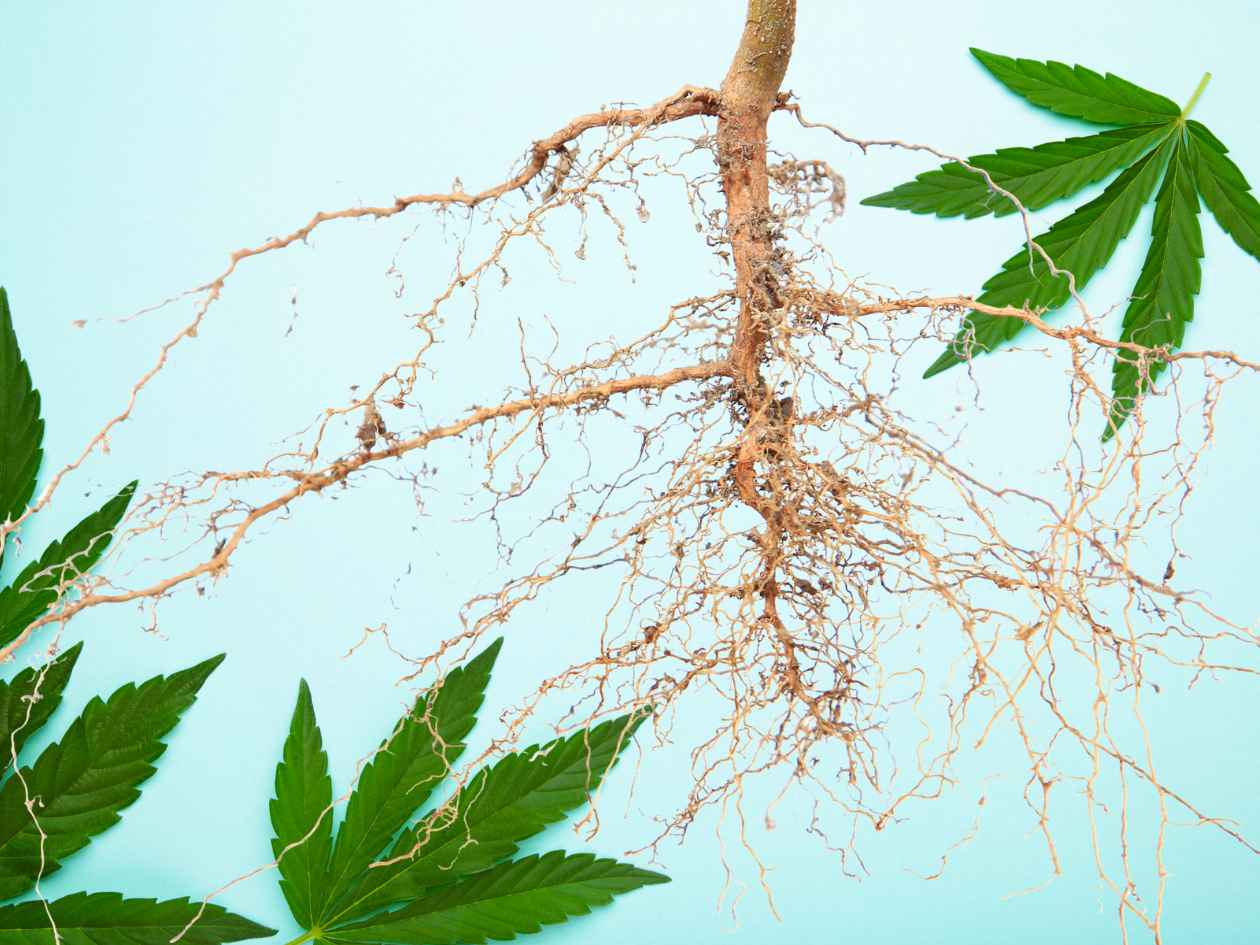
USDA-supported researchers isolated four neolignans from hemp roots, including dadahols A and B, and found that some showed cytotoxic activity against pediatric cancer cell lines in laboratory experiments.
The research does not show that hemp roots treat cancer in humans. It identifies previously underexplored plant compounds that may justify further investigation.
Cannabis medicine has historically concentrated on cannabinoids found primarily in flowers and leaves, but the plant produces many biologically active compounds outside that familiar chemical territory.
The study illustrates a larger lesson: cannabis should not be scientifically reduced to THC, CBD, and a handful of terpenes.
Whole-plant research does not mean assuming every plant compound is therapeutic. It means investigating the plant's full chemistry before deciding which molecules deserve clinical development.
The next frontier in cannabinoid medicine may include compounds that are not cannabinoids at all.
Researchers have identified previously underexplored compounds called neolignans in hemp roots that showed moderate cytotoxic activity against several pediatric cancer cell lines in laboratory testing. The discovery is not evidence that hemp roots treat cancer, but it suggests that some of cannabis's medically interesting chemistry may exist far outside the cannabinoids that have dominated research for decades.
Most cannabis research begins above ground.
Flowers receive the attention because that is where cannabinoids such as THC and CBD are concentrated. Terpenes followed. Then came growing interest in minor cannabinoids like CBG, CBC, THCV, and dozens of molecules that spent years sitting quietly behind the marquee names.
The roots, meanwhile, were largely agricultural leftovers.
That makes a recent study involving scientists from the USDA Agricultural Research Service and the University of Illinois College of Medicine Peoria particularly interesting. Researchers isolated compounds from industrial hemp roots and tested them against several pediatric cancer cell lines.
What they found does not justify headlines about cannabis curing childhood cancer.
It does justify a much bigger question.
What else have we ignored because we decided too early which parts of cannabis mattered?
Hemp roots are not simply weaker versions of cannabis flowers.
They have a substantially different chemical profile. Flowers are famous for cannabinoids. Roots contain relatively little of those compounds and instead produce other classes of phytochemicals.
In the USDA-supported research, scientists noticed previously uncharacterized chemical peaks while analyzing hemp root material. After several years of isolation and structural analysis, the team identified four related compounds classified as neolignans.
Two were identified as dadahol A and dadahol B.
A phytochemical is simply a biologically produced chemical from a plant, not a synonym for cannabinoid.
That distinction is important because cannabis science has spent decades operating under an understandable bias. Cannabinoids produce some of the plant's most obvious pharmacological effects, so cannabinoids became the center of the research universe.
But plants do not organize their chemistry around our regulatory categories.
The researchers tested hemp-root fractions and purified compounds against laboratory-grown neuroblastoma, hepatoblastoma, and Hodgkin lymphoma cell lines. Dadahol A showed the strongest cytotoxic activity among the purified compounds tested.
Cytotoxicity means a substance damages or kills cells under the conditions of an experiment.
That is interesting.
It is also very far from a cancer treatment.
This is where scientific restraint becomes essential.
The study was performed on cancer cells in laboratory culture. No children were treated with hemp-root compounds. There was no clinical trial. Researchers do not yet know whether dadahol A can safely reach therapeutically useful concentrations in the human body, how it is metabolized, whether it selectively affects cancer cells, or what toxicity it might have in healthy tissue.
A compound killing cancer cells in a dish tells us that biology noticed the molecule. It does not tell us that medicine can use it.
Many compounds demonstrate cytotoxicity in laboratory experiments and never become drugs. Some are too toxic. Others cannot reach the necessary tissue. Some are rapidly metabolized. Others work beautifully in isolated cells and poorly inside the staggering complexity of a living organism.
The researchers themselves acknowledge that the underlying mechanisms remain unknown. Future work will need to examine how these compounds affect processes such as cell-cycle regulation, apoptosis, necrosis, and intracellular signaling pathways.
That is exactly where the science should go next.
Early research is valuable not because it gives us permission to act, but because it tells us which questions are worth spending years answering.
The deeper lesson may extend well beyond hemp roots.
Modern cannabis culture tends to divide the plant into familiar categories. THC gets assigned intoxication. CBD gets assigned wellness. Terpenes get aroma and perhaps modulation of effects. Minor cannabinoids occupy the increasingly crowded supporting cast.
But Cannabis sativa produces hundreds of chemicals spanning multiple classes.
Roots, stems, leaves, seeds, and flowers each have different metabolic jobs. It should not surprise us that they also contain different chemistry.
Other research has identified fatty acids, terpenoids, triterpenes, sterols, and additional compounds in cannabis roots. Previous laboratory studies have also reported cytotoxic effects from hemp-root extracts against certain adult cancer cell lines.
None of this means every forgotten molecule is medicine.
Whole-plant science is not the belief that the entire plant is therapeutic. It is the decision not to discard chemistry before investigating it.
That is a much more defensible version of the phrase "whole plant."
In cannabis conversations, whole-plant thinking sometimes drifts toward philosophy. Science gives us a better formulation. The plant should first be treated as a chemical ecosystem. Then each component can earn, or fail to earn, its therapeutic relevance through evidence.
Research priorities are shaped by history.
For most of the modern era, cannabis research developed under unusual legal and regulatory restrictions. Scientists understandably concentrated on the molecules most closely associated with cannabis itself, particularly THC, followed later by CBD.
Commercial markets reinforced the same pattern.
Consumers bought flower. Extractors processed flower. laboratories quantified cannabinoids in flower. Breeders optimized plants around cannabinoid content. The scientific and commercial spotlight pointed in roughly the same direction.
Roots had very little reason to appear on stage.
The USDA work demonstrates what happens when that spotlight moves.
Researchers did not begin with a famous cannabis molecule and ask what it might do. They noticed unfamiliar chemistry, isolated it, identified it, and then asked whether it displayed biological activity.
That sequence matters.
Discovery science begins when we allow the data to tell us what is interesting instead of deciding in advance what deserves attention.
It is a useful lesson well beyond cannabis.
Finding an interesting molecule is only step one.
The next challenge is translation.
Researchers will need to reproduce the findings, isolate larger quantities of the compounds, investigate mechanisms, test additional cancer models, evaluate effects on healthy cells, study pharmacokinetics and toxicity, and eventually determine whether animal studies are justified.
Only much later would human trials enter the conversation.
Pediatric oncology raises the bar even higher, as it should. Children are a particularly vulnerable population, and experimental therapies require extremely careful evaluation of risk, dose, toxicity, and interaction with established cancer treatments.
That means nobody should be making hemp-root preparations at home because of this research.
The discovery is exciting precisely because nobody needs to inflate it.
A previously underused agricultural material contained molecules that scientists had barely explored in cannabis. Those molecules affected cancer cells under controlled laboratory conditions. Now researchers have somewhere new to look.
That is plenty.
There is also a longer-term implication for medical cannabis.
If clinically useful compounds eventually emerge from roots, stems, minor metabolites, or other neglected parts of Cannabis sativa, our current language may become increasingly inadequate.
"THC percentage" already tells us remarkably little about the pharmacological complexity of a cannabis product.
Even Certificates of Analysis generally focus on a relatively narrow set of cannabinoids, terpenes, contaminants, and safety markers. That makes sense for today's market. It may not describe tomorrow's medicine.
The chemistry we measure determines the patterns we are capable of discovering.
As cannabis moves deeper into healthcare, phytochemical characterization may need to become richer. Clinical records could eventually connect far more detailed chemical fingerprints with diagnoses, medications, responses, adverse events, biomarkers, and longitudinal outcomes.
This is how a plant containing hundreds of compounds becomes something medicine can actually learn from.
Not by assuming everything matters.
By building systems capable of discovering what does.
There is something wonderfully humbling about finding useful questions in a root that agriculture had largely treated as waste.
Cannabis has been cultivated for thousands of years, studied intensely for decades, commercialized at enormous scale, and discussed with almost absurd enthusiasm.
And we are still discovering its chemistry.
That should make us cautious about declaring what the plant can do.
It should also make us cautious about declaring that we already know what it is.
The future of cannabis medicine may certainly involve THC, CBD, and the cannabinoids we are only beginning to understand.
But some of its most interesting molecules may be sitting in places we have barely bothered to look.
The hemp-root study is important not because it discovered a new cancer treatment, but because it exposed how incomplete our map of cannabis chemistry remains. Researchers found neolignans in an overlooked part of the plant and showed that some affected pediatric cancer cells in laboratory experiments. Whether those molecules ever become therapeutically useful remains unknown. The larger lesson is harder to ignore: cannabis medicine should not be confined to the compounds we already recognize. Scientific progress often begins by widening the frame, measuring what we previously ignored, and allowing unfamiliar chemistry to earn our attention through evidence.
There is currently no evidence that hemp roots treat cancer in humans. Researchers have identified compounds from hemp roots that showed cytotoxic effects against pediatric cancer cell lines in laboratory experiments, but extensive preclinical and clinical research would be required before any therapeutic use could be established.
Hemp roots contain relatively low levels of cannabinoids compared with flowers and can contain other phytochemicals including neolignans, fatty acids, terpenoids, triterpenes, and related compounds. Recent USDA-supported research identified four neolignans and found that dadahol A showed notable cytotoxic activity in several pediatric cancer cell lines.
https://pubmed.ncbi.nlm.nih.gov/40818965/
https://pmc.ncbi.nlm.nih.gov/articles/PMC12357354/
https://www.sciencedirect.com/science/article/pii/S2352554123003030
Matthew Myro Rothman is Chief Science Officer and VP of Marketing at EM2P2 and CannaLnx, where he helps bridge medical cannabis, healthcare infrastructure, patient education, and emerging technology. A lifelong musician, writer, philosopher, and cannabis science expert, Matthew spent more than 15 years working in cultivation, consulting, and medical cannabis operations throughout California before returning to Ohio to help shape the future of intelligent cannabis medicine. He holds a graduate degree in Philosophy, Cosmology, and Consciousness from California Institute of Integral Studies and writes extensively on cannabis science, consciousness, wellness, and human performance.
Please note: You are not currently logged in. Only members can contribute comments. If you would like to contribute click the button below.
