
A Quieter Mind: What CBD Can and Cannot Tell Us About Depression
.jpg)
CBD is being studied for anxiety, stress, sleep, and mood-related effects, but current evidence does not establish it as an effective treatment for major depressive disorder.
Much of the specifically antidepressant evidence for CBD comes from animal and laboratory research, making the gap between biological plausibility and clinical proof especially important.
CBD interacts with multiple signaling systems, including the endocannabinoid and serotonin systems, but describing it simply as restoring an "imbalance" oversimplifies both depression and cannabinoid biology.
Depression is not a single chemical deficiency. It is a heterogeneous disorder involving interacting biological, psychological, environmental, and social factors.
The overlap between depression, anxiety, sleep disruption, and stress may help explain why some people report feeling better with CBD even when a direct antidepressant effect has not been demonstrated.
Better cannabinoid medicine requires more than promising mechanisms. It requires standardized products, precise dosing information, clinical guidance, and longitudinal patient outcomes.
CBD has promising biological mechanisms and early evidence for effects on anxiety and stress, but there is not yet strong clinical evidence that CBD treats depression itself. Its most interesting role may be in helping researchers understand interconnected symptoms while better trials determine where those effects translate into meaningful psychiatric care.
Depression has endured its share of overly tidy explanations.
For decades, one of the most familiar was the idea of a "chemical imbalance," particularly a deficiency in serotonin. It offered an intuitively satisfying picture: something in the brain is too low, medication raises it, and the system returns to normal.
The biology has turned out to be considerably more interesting.
Depression is not one broken chemical pathway. Genetics, stress physiology, neural circuitry, sleep, inflammation, environment, trauma, social conditions, and neurotransmitter systems can all contribute. Two people can meet the diagnostic criteria for major depressive disorder while experiencing substantially different versions of the illness.
Depression is not a single malfunction. It is a common destination that the brain and body can reach by many different roads.
That complexity is exactly what makes cannabidiol, or CBD, scientifically interesting.
It is also why we should be careful about what we claim it can do.
CBD does not simply "boost" one neurotransmitter.
Unlike THC, CBD has relatively little direct activity at the classical CB1 and CB2 cannabinoid receptors. Instead, researchers have identified interactions with a much broader collection of molecular targets, including serotonin 5-HT1A signaling, transient receptor potential channels, adenosine signaling, and mechanisms affecting the body's own endocannabinoids.
That makes CBD pharmacologically unusual.
The endocannabinoid system is a regulatory network that helps coordinate how other biological systems respond to changing conditions.
It participates in processes including stress responses, pain, appetite, sleep, immune activity, memory, and emotional processing. This does not mean that manipulating the endocannabinoid system automatically corrects depression. It means the system intersects with several biological processes that are relevant to psychiatric health.
Preclinical research makes that intersection particularly intriguing.
Animal studies have reported antidepressant-like behavioral effects after CBD administration and have explored possible mechanisms involving serotonin signaling, neuroplasticity, and brain regions involved in mood and stress. Laboratory research has also generated hypotheses involving inflammatory and stress-related pathways.
These are legitimate scientific signals.
They are not yet clinical proof.
A mechanism explains how something could work. A clinical trial determines whether that mechanism actually helps patients.
CBD and depression remain separated by that important gap.
This is where the conversation needs to become more precise.
CBD has been studied in humans for several psychiatric symptoms and disorders, with anxiety receiving considerably more attention than depression. Some controlled studies have reported reductions in anxiety under particular circumstances, while other trials and reviews have found mixed results.
Evidence specifically demonstrating that CBD treats major depressive disorder is much more limited.
That distinction can easily disappear in everyday conversation. Someone with depression may also experience anxiety, insomnia, chronic stress, or pain. If CBD improves one of those problems, the person may genuinely feel better.
But feeling better while living with depression is not necessarily the same as treating the underlying depressive disorder.
Both outcomes matter. They simply answer different questions.
Symptom relief and disease treatment are related concepts, but they are not interchangeable evidence.
This becomes especially important in mental healthcare, where symptoms interact constantly. Poor sleep can worsen mood. Anxiety can produce exhaustion and avoidance. Chronic pain can increase depression risk. Depression itself can disrupt sleep, motivation, appetite, and cognition.
Improving one part of that network may improve someone's overall experience without CBD functioning as an antidepressant in the conventional clinical sense.
That possibility deserves research rather than exaggeration.
CBD's psychiatric evidence is currently more developed around anxiety than depression.
Small clinical studies have investigated CBD in situations including social anxiety and experimentally induced stress. Results have generated legitimate interest, although dosing has varied widely and the evidence base remains too limited to support sweeping conclusions.
This may nevertheless offer a useful way to think about CBD's potential role.
Depression and anxiety frequently coexist. When they do, the conditions can reinforce one another. Anxiety interferes with sleep and concentration. Avoidance reduces social contact and rewarding activity. Persistent physiological arousal becomes exhausting. That exhaustion can deepen depressive symptoms.
Reducing anxiety could therefore improve the experience of depression without directly treating depression itself.
That sounds like a subtle distinction, but medicine advances through exactly these kinds of distinctions.
The question becomes not simply, "Does CBD work for depression?"
A more useful question might be, "Which symptoms improve, in which patients, at which doses, and does that improvement meaningfully alter the course of depression?"
Now we have something science can actually test.
There is another problem hiding in plain sight.
CBD is often discussed as though every bottle, gummy, capsule, tincture, and inhaled product represents the same intervention. They do not.
Products can differ in dose, formulation, route of administration, absorption, additional cannabinoids, terpenes, contaminants, and accuracy of labeling. Prescription cannabidiol used in medicine is not interchangeable with an arbitrarily selected retail CBD product.
A cannabinoid cannot become a reliable clinical intervention until we can reliably describe what the patient actually took.
This is particularly important in psychiatry because CBD can interact with medications through hepatic drug-metabolizing enzymes. "Natural" does not mean pharmacologically inactive, and patients using antidepressants or other medications should discuss CBD use with a qualified clinician rather than assuming the combination is inconsequential.
The larger issue is one cannabinoid medicine will repeatedly encounter as it moves closer to mainstream healthcare.
Clinical guidance requires reproducibility.
If one patient improves while taking 25 milligrams of one formulation and another does not improve after taking 300 milligrams of a chemically different product, recording that both patients "used CBD" tells us surprisingly little.
Product chemistry, Certificates of Analysis, dose, timing, concurrent medications, symptoms, and outcomes all become clinically relevant data.
This leads to a broader opportunity.
Psychiatric treatment already involves substantial individual variation. Finding an effective antidepressant can require multiple medications, dose adjustments, psychotherapy approaches, lifestyle changes, and months of observation.
Cannabinoids introduce another layer of variability.
That does not make personalization impossible. It makes good data more important.
Personalized medicine is not endless experimentation. It is organized learning from variation.
Imagine connecting cannabinoid formulation and dose with standardized depression and anxiety scores, sleep measures, adverse effects, medication changes, clinician observations, and longitudinal outcomes inside interoperable health records.
Patterns could begin to emerge.
Perhaps certain patients with depression and prominent anxiety respond differently from those whose dominant symptoms involve anhedonia or psychomotor slowing. Perhaps sleep improvement mediates some reported mood benefits. Perhaps particular doses help while others do not. Perhaps CBD ultimately proves clinically unimpressive for depression.
All of those results would be useful.
Healthcare should be capable of learning from success and failure with equal enthusiasm.
There is nothing disappointing about uncertainty when uncertainty is accurate.
CBD has plausible mechanisms, substantial public interest, an established prescription role in certain seizure disorders, and enough psychiatric research to justify further investigation. What it does not yet have is compelling evidence establishing it as a treatment for depression.
That should not end the conversation.
It should improve it.
Cannabinoid medicine does not need every interesting molecule to become a miracle. It needs mechanisms converted into hypotheses, hypotheses converted into trials, and patient experiences converted into structured evidence.
The quieter revolution may not be discovering that CBD treats depression.
It may be learning how to ask sufficiently precise questions that, someday, we can finally know.
CBD and depression illustrate a larger challenge for cannabinoid medicine: biological plausibility moves much faster than clinical certainty. Early research gives us good reasons to investigate CBD's effects on anxiety, stress signaling, neuroplasticity, and other processes connected to mental health, but it does not yet establish CBD as an antidepressant. The path forward is not louder claims. It is better measurement. Standardized cannabinoid products, precise dosing, medication data, validated symptom measures, and longitudinal health records could transform scattered patient experiences into evidence capable of producing real clinical guidance.
There is currently insufficient clinical evidence to conclude that CBD effectively treats major depressive disorder. Animal and laboratory research suggests possible antidepressant-related mechanisms, while human research has provided more evidence for potential anxiety and stress effects than for depression itself.
CBD can affect liver enzymes involved in metabolizing some medications, creating the potential for drug interactions. People taking antidepressants or other prescription medications should discuss CBD with a physician or pharmacist before combining them.
https://pubmed.ncbi.nlm.nih.gov/28917362/
https://pubmed.ncbi.nlm.nih.gov/31866386/
https://pubmed.ncbi.nlm.nih.gov/33998900/
https://pubmed.ncbi.nlm.nih.gov/32827809/
https://www.nccih.nih.gov/health/cannabis-marijuana-and-cannabinoids-what-you-need-to-know
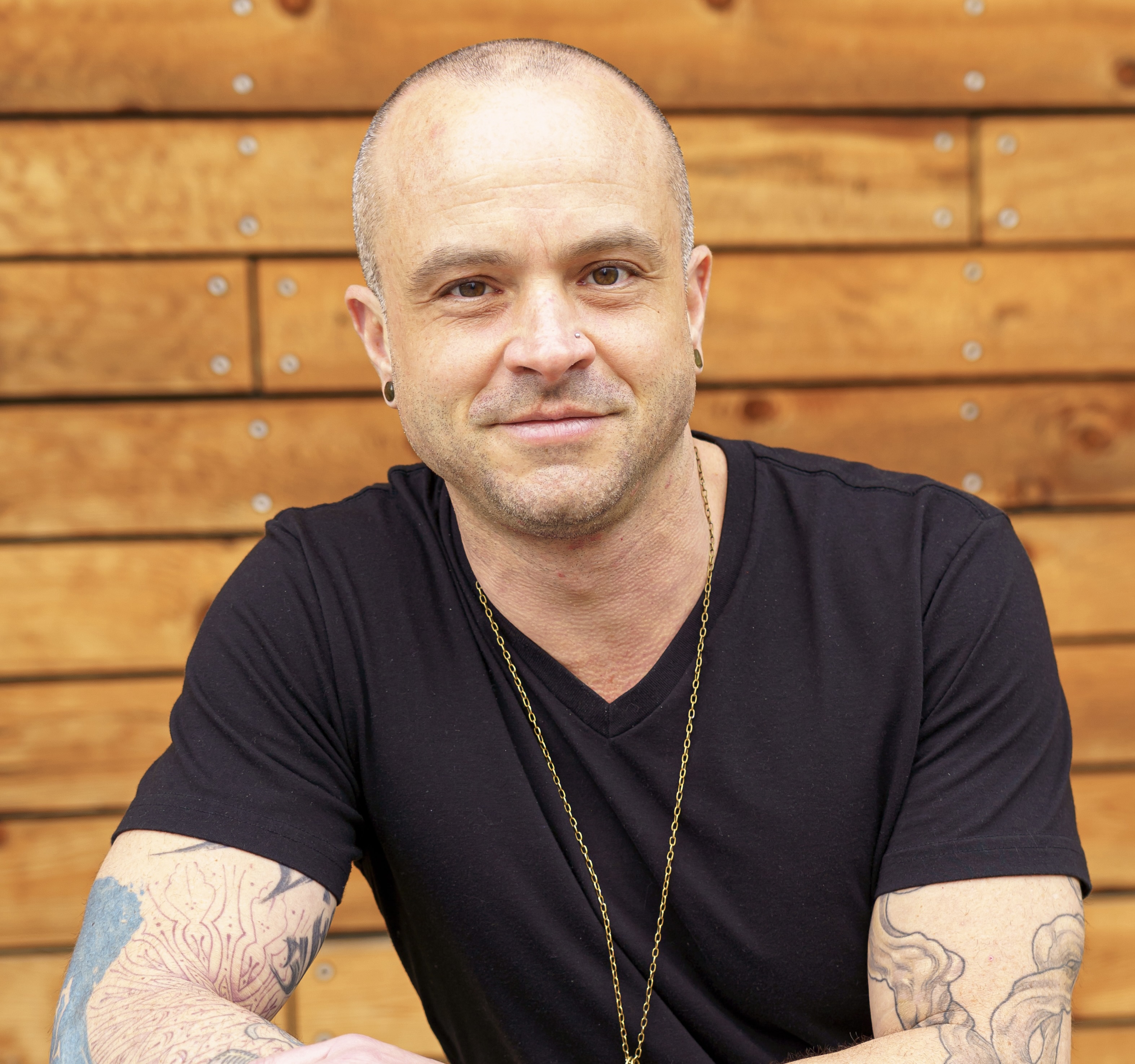
Matthew Myro Rothman is Chief Science Officer and VP of Marketing at EM2P2 and CannaLnx, where he helps bridge medical cannabis, healthcare infrastructure, patient education, and emerging technology. A lifelong musician, writer, philosopher, and cannabis science expert, Matthew spent more than 15 years working in cultivation, consulting, and medical cannabis operations throughout California before returning to Ohio to help shape the future of intelligent cannabis medicine. He holds a graduate degree in Philosophy, Cosmology, and Consciousness from California Institute of Integral Studies and writes extensively on cannabis science, consciousness, wellness, and human performance.
Please note: You are not currently logged in. Only members can contribute comments. If you would like to contribute click the button below.
