
Cannabis, Prostate Cancer, and the Quiet Language of the Body
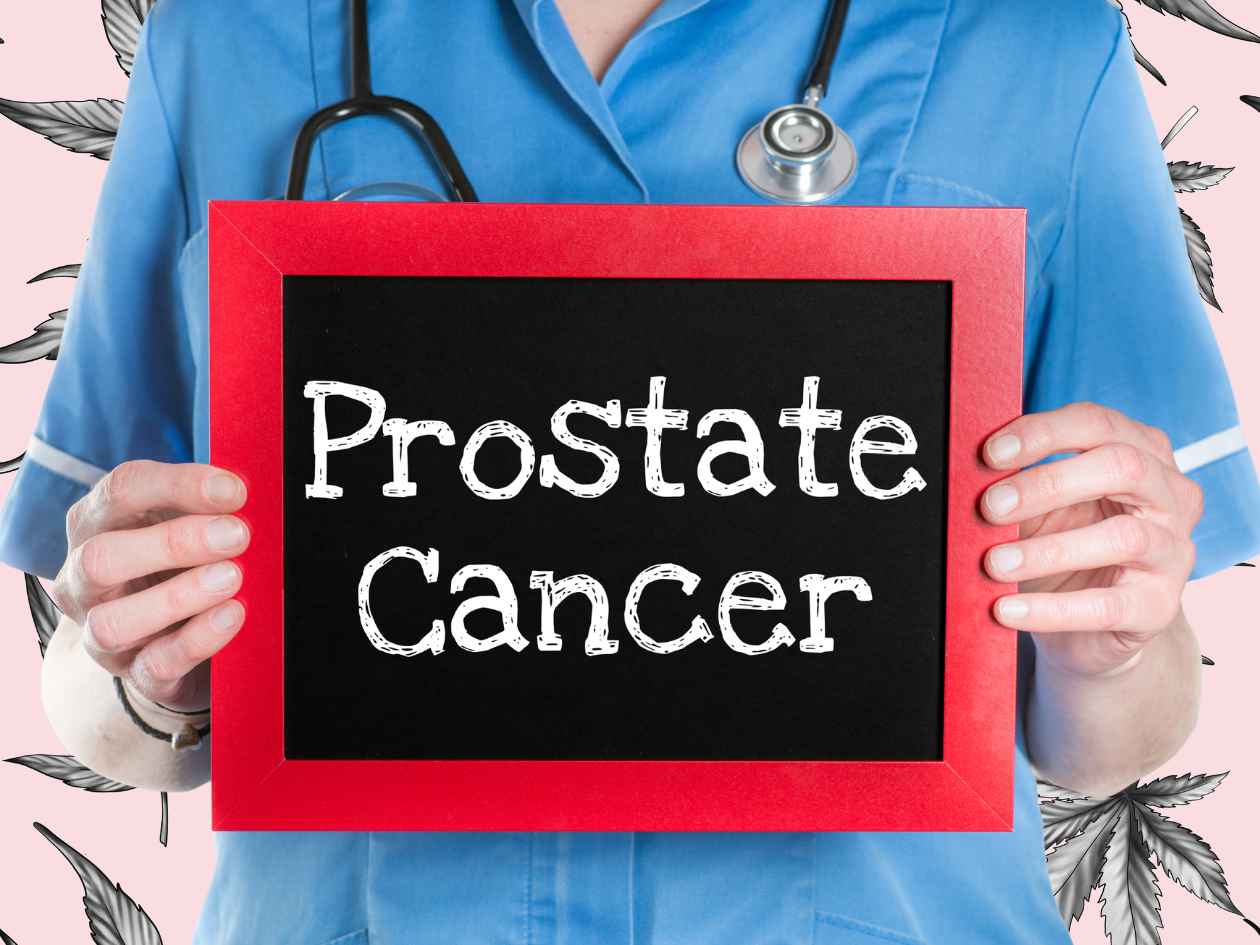
A new prospective study of 90 men with prostate cancer found that cannabinoid use was associated with improved pain, emotional well-being, and several measures of disease response.
Patients receiving cannabis alongside chemotherapy had a higher likelihood of remission or tumor reduction on PET/CT imaging, but the study was observational rather than randomized.
The findings are intriguing because they extend beyond symptom management, but they do not establish cannabis as a treatment for prostate cancer.
In cancer medicine, a biological signal is not the same thing as clinical proof. The value of an early signal is that it tells us where better research should look next.
Cannabis research increasingly exposes an infrastructure problem: without standardized products, phytochemical data, dosing records, and longitudinal outcomes, promising observations are difficult to translate into clinical guidance.
The future of cannabinoid medicine depends less on making bigger claims and more on building better ways to learn from patients.
Cannabis has not been proven to treat prostate cancer, but a 2026 prospective study found associations with improved pain, emotional well-being, and potentially favorable tumor-related outcomes in men using cannabinoids alone or alongside chemotherapy. The findings should be treated as a signal worth investigating, not evidence that cannabis can replace established cancer treatment.
Prostate cancer creates an unusual problem for cannabis medicine.
For years, the conversation around cannabis and cancer has largely occupied two very different camps. One focuses on supportive care: pain, nausea, appetite, sleep, anxiety, and quality of life. The other asks a much larger question: can cannabinoids influence the biology of cancer itself?
The first question has at least some clinical evidence behind it. The second remains largely unanswered in humans.
A new prospective study involving 90 men with prostate cancer makes that boundary considerably more interesting.
The researchers followed patients for six months.
Participants were divided into three groups: chemotherapy alone, cannabis alone, and chemotherapy combined with cannabis. Researchers measured prostate-specific antigen, or PSA, PET/CT imaging, pain, and quality-of-life measures at baseline, three months, and six months.
Some of the results were fairly consistent with what we already know about why people with cancer use cannabis. Cannabis use, either alone or alongside chemotherapy, was associated with greater reductions in pain and improvements in emotional well-being compared with chemotherapy alone. Improvements were also reported in self-care and usual activities.
But then things became more interesting.
PSA declined faster in the cannabis-containing groups, although final PSA values were comparable across the treatment groups. PET/CT analysis also found a higher likelihood of remission or tumor reduction in the group receiving both chemotherapy and cannabis.
That is the kind of finding that deserves attention.
It is also exactly the kind of finding that deserves restraint.
A biological signal is evidence that something interesting may be happening. It is not yet evidence that we understand why it is happening.
This distinction matters enormously.
The study prospectively followed patients, but it was not a randomized controlled trial. Patients were not randomly assigned to standardized cannabis interventions under conditions designed to isolate cannabis as the cause of the observed differences.
That leaves room for confounding variables.
The cannabis products themselves may have differed. Doses, cannabinoid ratios, routes of administration, treatment histories, disease characteristics, lifestyle factors, and other variables can all influence outcomes.
Even the PSA findings require nuance. The cannabis groups experienced faster declines, but ultimately reached values comparable with the other treatments. That is interesting, but it does not mean cannabis produced superior long-term disease control.
The imaging results are arguably more provocative, particularly in the combined cannabis and chemotherapy group. But provocative is not synonymous with proven.
Current American Society of Clinical Oncology guidance remains appropriately conservative. Clinicians should not recommend cannabis or cannabinoids as cancer-directed treatment outside a clinical trial. Evidence for many supportive-care uses also remains limited, although cannabinoids have stronger evidence in certain situations such as refractory chemotherapy-induced nausea and vomiting.
Cannabis can be clinically useful without being a cancer cure, and those two ideas should never be confused.
That distinction protects patients while leaving room for scientific curiosity.
There are reasons researchers keep asking these questions.
The endocannabinoid system is a signaling network involving endogenous cannabinoids, cannabinoid receptors, enzymes, and related molecular pathways. The endocannabinoid system is best understood as a regulatory network, not simply the biological machinery responsible for the effects of cannabis.
Components of this system are found throughout the nervous and immune systems and in many peripheral tissues.
Laboratory and preclinical research has explored cannabinoid signaling in cancer-related processes including proliferation, apoptosis, inflammation, angiogenesis, and cellular migration. Researchers have also investigated cannabinoid receptors and related signaling pathways in prostate cancer models.
But this is where language becomes important.
Cell culture and animal findings can identify mechanisms worth investigating. They cannot tell us whether consuming a particular cannabis product will slow prostate cancer in a human being.
Mechanism tells us what biology might permit. Clinical trials tell us whether medicine can reliably use it.
The new prostate cancer study sits somewhere between those worlds. It moves the conversation beyond a petri dish by observing outcomes in actual patients, but it still does not provide the experimental control necessary to establish causation.
That makes it less of an answer than a bridge.
There is another complication hiding inside almost every cannabis study.
Cannabis is not one intervention.
Calling something "cannabis therapy" can conceal enormous chemical diversity. THC and CBD concentrations can vary substantially, but so can minor cannabinoids, terpenes, metabolites, dose, frequency, delivery method, and exposure over time.
Imagine conducting nutrition research while recording only that participants ate "food."
We would immediately recognize the problem.
Yet cannabinoid medicine often asks researchers and clinicians to interpret outcomes without sufficiently detailed information about what patients actually consumed.
In cannabinoid medicine, the product is part of the clinical data.
This is where Certificates of Analysis become more than compliance documents. A sufficiently detailed COA can provide a chemical fingerprint of the product a patient used. Connect that fingerprint with dose, route of administration, diagnosis, medications, symptoms, laboratory values, imaging, and longitudinal outcomes, and cannabis research becomes far more informative.
Instead of asking whether "cannabis" helped prostate cancer patients, we can eventually ask better questions.
Which cannabinoid profiles were associated with which outcomes? Did THC:CBD ratios matter? Did particular minor cannabinoids or terpene patterns appear repeatedly among responders? Did outcomes differ according to dose, treatment stage, chemotherapy regimen, genetics, or other clinical variables?
That is where personalization begins.
Personalized medicine is sometimes described as finding the perfect treatment for one person.
I think that misses something important.
Personalized medicine is not about inventing a different medicine for every patient. It is about learning which treatment characteristics repeatedly fit which patient characteristics.
To do that, healthcare needs memory.
A patient can purchase cannabis today, report improvement three months later, undergo imaging six months later, and have a meaningful clinical outcome a year after that. Unless those events can be connected, healthcare learns almost nothing from the experience.
Electronic medical records, standardized product information, COAs, patient-reported outcomes, laboratory data, imaging, and clinical guidance therefore become part of the scientific problem.
This is healthcare interoperability in its most practical form.
Healthcare interoperability turns isolated clinical events into longitudinal evidence.
That matters particularly for cannabis because conventional pharmaceutical research begins with a standardized molecule. Cannabis medicine often begins with tremendous chemical variability and asks us to discover patterns within it.
The infrastructure therefore has to become unusually good at remembering what happened.
The prostate cancer findings are exciting precisely because they should generate questions rather than declarations.
Why did the combined cannabis and chemotherapy group show different imaging outcomes? Were particular cannabinoid formulations associated with those results? Were there differences in dose or duration? Could cannabinoids influence treatment tolerance, indirectly affecting outcomes? Are particular prostate cancer phenotypes more responsive to cannabinoid signaling than others?
Those questions require randomized trials.
They also require better real-world data.
Cancer medicine has spent decades learning that tumors bearing the same name can behave very differently depending on their molecular characteristics. Cannabinoid medicine may eventually discover the mirror image of that lesson: products carrying the same name can behave very differently depending on their phytochemical characteristics.
The future question may therefore be much more interesting than whether cannabis "works" for prostate cancer.
It may be which cannabinoids, in which combinations, at which doses, alongside which treatments, for which patients, produce outcomes worth pursuing.
That is a considerably harder question.
It is also finally becoming a question science may be able to answer.
The most important thing about an intriguing cannabis study is not permission to make a larger claim. It is permission to ask a better question. Early prostate cancer data suggests cannabinoids may deserve investigation not only for symptom management but also for their possible relationship with disease outcomes. Proving that relationship will require randomized trials, standardized product data, and longitudinal clinical records capable of connecting what patients use with what happens next. Cannabis medicine will mature when healthcare can stop asking whether "cannabis works" and begin identifying which chemical profiles, doses, patients, and clinical circumstances reliably produce meaningful outcomes.
There is currently insufficient evidence to conclude that cannabis or cannabinoids treat prostate cancer. A 2026 prospective study found associations between cannabinoid use and several favorable outcomes, including pain reduction and some tumor-response measures, but randomized controlled trials are needed to determine whether cannabinoids caused those effects.
Some patients use cannabis or cannabinoids during chemotherapy for symptoms such as nausea, pain, appetite changes, or sleep problems. ASCO recommends clinician-patient discussion because effectiveness varies by symptom, cannabis can cause side effects and drug interactions, and evidence remains limited for many supportive-care uses.
https://pubmed.ncbi.nlm.nih.gov/41939176/
https://pubmed.ncbi.nlm.nih.gov/38478773/
https://pmc.ncbi.nlm.nih.gov/articles/PMC11730458/
https://www.cancer.gov/about-cancer/treatment/cam/hp/cannabis-pdq
https://www.cancer.gov/about-cancer/treatment/cam/patient/cannabis-pdq
Matthew Myro Rothman is Chief Science Officer and VP of Marketing at EM2P2 and CannaLnx, where he helps bridge medical cannabis, healthcare infrastructure, patient education, and emerging technology. A lifelong musician, writer, philosopher, and cannabis science expert, Matthew spent more than 15 years working in cultivation, consulting, and medical cannabis operations throughout California before returning to Ohio to help shape the future of intelligent cannabis medicine. He holds a graduate degree in Philosophy, Cosmology, and Consciousness from California Institute of Integral Studies and writes extensively on cannabis science, consciousness, wellness, and human performance.
Please note: You are not currently logged in. Only members can contribute comments. If you would like to contribute click the button below.
