
Finding Calm in a Loud System: Where Cannabis May Fit in Autism and ADHD
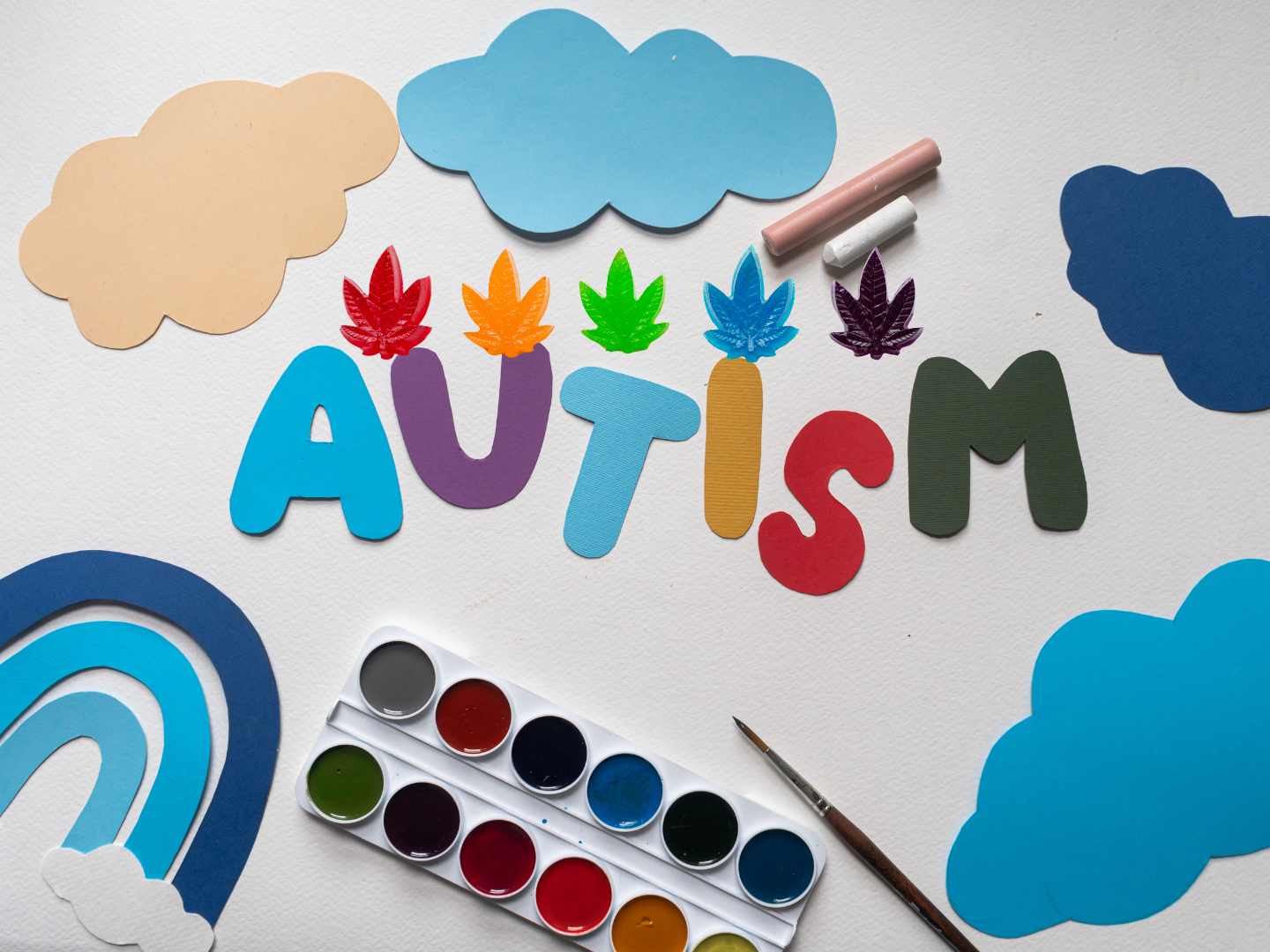
Autism and ADHD are often rooted in challenges with nervous system regulation rather than isolated behavioral symptoms.
The endocannabinoid system helps regulate stress response, emotional signaling, sensory processing, and neural communication.
CBD-rich cannabis may help reduce emotional intensity, anxiety, and hyperactivity by supporting regulatory balance within the nervous system.
Improved emotional regulation can create downstream benefits for focus, transitions, and social interaction.
CBD is not a cure for autism or ADHD, but it may serve as a supportive tool within a broader care framework.
Neurodiversity is not simply a collection of deficits. It reflects differences in how the nervous system processes and responds to the world.
Emerging research suggests CBD-rich cannabis may help support emotional regulation, anxiety reduction, and nervous system balance in individuals with autism and ADHD. Rather than suppressing personality or behavior, CBD appears to influence regulatory pathways that help reduce internal overload and improve day-to-day stability.
There are moments when the world feels too sharp. Sounds land harder than they should. Emotions rise faster than they can be processed. Focus slips not because of a lack of effort, but because the internal system is already overloaded.
For many individuals on the autism spectrum, this is not an occasional experience. It is a baseline. And for those who also carry traits of ADHD, the picture becomes even more layered. Attention drifts. Impulses surface quickly. Emotional responses can feel disproportionate to the moment.
What ties all of this together is not a single symptom, but a shared challenge in regulation.
Autism is often discussed in terms of social communication and sensory sensitivity. ADHD is framed around attention and impulsivity. But beneath those labels sits a common thread.
“The nervous system is not failing. It is working harder than it should to maintain balance.”
Sensory input can become overwhelming. Emotional responses can escalate quickly. The ability to shift from one state to another, from agitation to calm, from distraction to focus, can feel inconsistent at best.
For patients and caregivers, this creates a daily reality that is less about isolated symptoms and more about managing an ongoing state of internal intensity.
Research increasingly points toward dysregulation in stress signaling, neurotransmission, and sensory processing pathways in both autism and ADHD. Studies have also explored the role of the endocannabinoid system in regulating these functions, including emotional response and neural communication (https://www.ncbi.nlm.nih.gov/pmc/articles/PMC6354384/).
“The endocannabinoid system does not eliminate stimulation. It regulates how intensely the body responds to it.”
CBD interacts with the endocannabinoid system, which plays a role in regulating mood, stress response, inflammation, and neural signaling. This system functions as part of the body’s broader regulatory architecture, helping maintain physiological balance across multiple systems. According to research published in Frontiers in Pharmacology, the endocannabinoid system influences emotional regulation, anxiety processing, and stress adaptation (https://www.frontiersin.org/articles/10.3389/fphar.2020.00125/full).
In individuals with autism, particularly those with overlapping ADHD traits, that regulatory range can be difficult to maintain.
What is emerging from recent research is the possibility that CBD-rich cannabis oil may help soften some of the edges of this experience. Not by changing who someone is, but by reducing the intensity of the signals moving through the system.
Hyperactivity may become more manageable. Emotional swings may feel less abrupt. Anxiety, which often sits just beneath the surface, may begin to ease. Clinical observations and preliminary studies have reported improvements in anxiety, aggression, sleep, and hyperactivity in some autistic patients using cannabinoid-based therapies (https://pubmed.ncbi.nlm.nih.gov/34043900/).
“CBD is not designed to suppress personality. It may help reduce the friction between the nervous system and the outside world.”
This distinction matters.
The goal is not to create a different person. It is to allow the existing person to move through the world with less internal strain.
One of the more profound effects reported in this area is not necessarily improved focus, but improved emotional regulation.
For individuals on the spectrum, emotional responses can arrive quickly and with force. Frustration can escalate into distress. Small disruptions can feel disproportionately large. When emotional regulation improves, even slightly, the entire day can unfold differently.
“Emotional regulation is not separate from cognitive function. It shapes the conditions under which focus, learning, and social interaction become possible.”
CBD appears to support this by influencing pathways related to stress and mood regulation. Research suggests cannabidiol may affect serotonin signaling and neural circuits involved in anxiety and emotional processing (https://www.ncbi.nlm.nih.gov/pmc/articles/PMC4604171/).
It may create a buffer, a bit more space between stimulus and response. That space is where choice lives.
And once choice becomes more accessible, other improvements often follow. Social interactions become less overwhelming. Transitions feel less abrupt. Attention, while still variable, becomes easier to anchor.
It is important not to separate autism and ADHD too rigidly.
Many individuals experience both, and the interplay between them can amplify challenges. Hyperactivity and inattention from ADHD can compound sensory and emotional sensitivities from autism, creating a feedback loop that is difficult to interrupt.
“Attention is not just a focus problem. It is often a regulation problem.”
By addressing regulation at a systems level, CBD may influence both sets of symptoms simultaneously. The goal is not to target attention in isolation, but to create a more stable internal environment where attention has a chance to settle.
This represents a subtle but important shift in perspective.
Rather than asking how to control behavior, the more useful question may be how to reduce the nervous system burden that contributes to the behavior in the first place.
As with any intervention, this is not without complexity.
The use of CBD in children requires careful consideration, appropriate dosing, and medical oversight. Individual responses vary, and what is supportive for one person may not produce the same effect for another. The American Academy of Pediatrics continues to recommend caution while acknowledging growing interest and ongoing research into cannabinoid therapies for pediatric neurological conditions (https://publications.aap.org/pediatrics/article/142/3/e20181857/38625/Medical-Cannabis-for-Children-State-of-the-Art).
It is also not a standalone solution. Behavioral support, structured environments, occupational therapy, and other therapeutic interventions remain essential components of care.
“CBD may complement supportive therapies, but it does not replace the need for comprehensive care.”
What this line of research ultimately invites is a more compassionate way of understanding neurodiversity.
Rather than viewing autism and ADHD purely through the lens of deficits, there is an opportunity to recognize the underlying regulatory differences and explore ways to support them. Not to suppress individuality, but to reduce unnecessary strain.
Cannabis, particularly CBD-rich formulations, enters this conversation as a potential tool for supporting balance. Not perfect. Not universal. But meaningful for some.
When the nervous system is constantly navigating intensity, even small shifts toward stability can have a profound impact.
CBD may offer one such shift. Not by forcing change, but by supporting the body’s own capacity to regulate. For individuals with autism, especially those with overlapping ADHD traits, this can translate into a quieter internal experience, one where emotions are more manageable, attention is more accessible, and daily life feels a little less overwhelming.
That is not a cure.
It is something more practical.
It is relief.
Emerging research suggests CBD may help support emotional regulation, anxiety reduction, hyperactivity, and stress response in some individuals with autism and ADHD. Effects vary from person to person, and CBD is generally considered a supportive tool rather than a standalone treatment.
CBD interacts with the endocannabinoid system, which helps regulate mood, stress signaling, sensory processing, and neural communication. By supporting these regulatory pathways, CBD may help reduce internal overload and improve emotional stability for some individuals on the spectrum.

Matthew Myro Rothman is Chief Science Officer and VP of Marketing at EM2P2 and CannaLnx, where he helps bridge medical cannabis, healthcare infrastructure, patient education, and emerging technology. A lifelong musician, writer, philosopher, and cannabis science expert, Matthew spent more than 15 years working in cultivation, consulting, and medical cannabis operations throughout California before returning to Ohio to help shape the future of intelligent cannabis medicine. He holds a graduate degree in Philosophy, Cosmology, and Consciousness from California Institute of Integral Studies and writes extensively on cannabis science, consciousness, wellness, and human performance.
Please note: You are not currently logged in. Only members can contribute comments. If you would like to contribute click the button below.
