
Cannabidiol in Neurology: A Scientific Review
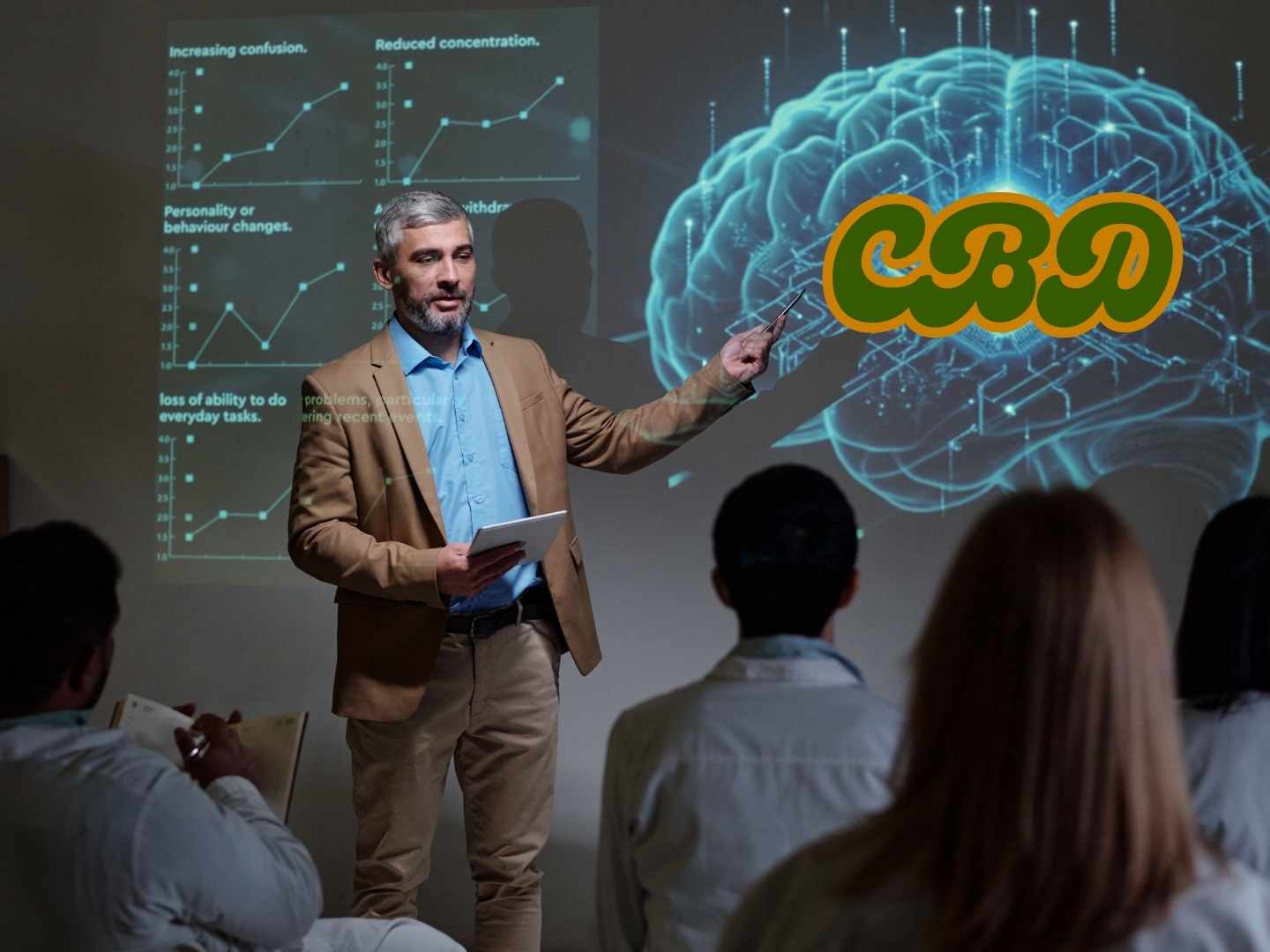
CBD has proven clinical efficacy in specific epilepsy syndromes, making it one of the few cannabinoids with regulatory approval in neurology.
Its broader neurological potential comes from anti-inflammatory and neuroprotective mechanisms, but most evidence remains preclinical.
CBD does not treat neurological disease directly. It modulates pathways like inflammation, oxidative stress, and neuronal signaling.
Clinical confidence varies sharply by condition, with strong evidence in epilepsy and emerging evidence elsewhere.
Patients should approach CBD as a targeted tool in some cases and an investigational option in others.
CBD is clinically proven to reduce seizures in certain epilepsy syndromes and is approved for that use. For other neurological conditions like Alzheimer’s, Parkinson’s, or stroke, CBD shows anti-inflammatory and neuroprotective effects in early research, but there is not yet enough clinical evidence to confirm it as a treatment.
This article is a scientific review of existing research on cannabidiol (CBD) and how it may affect neurological conditions. It brings together both clinical and preclinical evidence on CBD’s therapeutic potential in disorders such as epilepsy, multiple sclerosis, Alzheimer’s disease, Parkinson’s disease, stroke, chronic pain, and other neurological challenges .
“CBD is not a neurological treatment by default. It is a compound that interacts with systems that influence neurological disease.”
This is not a single clinical trial, but a synthesis of what science has learned so far about CBD in brain and nervous system-related conditions.
CBD is one of the major cannabinoids found in the Cannabis sativa plant. Unlike THC, CBD does not produce intoxication or impaired cognition.
“CBD is non-intoxicating, but that does not mean it is neurologically inactive.”
This distinction matters because it allows CBD to be explored as a therapeutic compound without the cognitive side effects associated with THC.
The most established use of CBD in neurology is in certain forms of epilepsy. A purified, pharmaceutical-grade CBD product has been approved for treating seizures in conditions like Lennox-Gastaut syndrome and Dravet syndrome. Clinical trials show that CBD significantly reduces seizure frequency in treatment-resistant epilepsy (https://www.nejm.org/doi/full/10.1056/NEJMoa1611618).
“Epilepsy is not just one of many uses for CBD. It is the clearest example of confirmed clinical efficacy.”
This is one of the strongest cases where cannabinoids have moved from theory to standard medical use.
The review examines a range of neurological disorders and the evidence behind CBD’s use.
Clinical evidence shows that CBD can significantly reduce seizures in some treatment-resistant forms of epilepsy. This is supported by multiple randomized controlled trials and regulatory approvals.
“CBD does not broadly calm the brain. It reduces seizure activity through specific neurochemical pathways.”
In laboratory and animal studies, CBD and combined cannabinoid formulations reduce inflammation and protect nerve cells. These mechanisms help explain why cannabinoid-based medicines are used to manage spasticity in multiple sclerosis patients (https://www.ncbi.nlm.nih.gov/pmc/articles/PMC2828614/).
CBD influences immune signaling and neuroinflammation, which are central to disease progression.
Preclinical research suggests that CBD reduces oxidative stress and inflammation associated with Alzheimer’s pathology. These effects are tied to its ability to influence neuroinflammatory and antioxidant pathways (https://www.ncbi.nlm.nih.gov/pmc/articles/PMC3579248/).
“Neurodegeneration is not just cell death. It is a process driven by inflammation and oxidative stress that compounds like CBD may influence.”
Some early clinical work suggests CBD could help with behavioral symptoms, but there is no conclusive evidence that it slows cognitive decline.
CBD has been studied for its potential effects on movement symptoms and quality of life in Parkinson’s disease. Small studies suggest possible benefits, but larger trials are needed.
“Early signals in Parkinson’s research are suggestive, not definitive.”
The review also discusses preclinical evidence showing CBD may have anti-inflammatory and neuroprotective effects in stroke and traumatic brain injury models. These findings establish biological plausibility but do not confirm clinical benefit in humans.
For patients interested in CBD and neurological health, clarity matters more than enthusiasm.
CBD is well supported clinically for certain epilepsy syndromes but is not a confirmed treatment for most other neurological diseases . Preclinical evidence suggests anti-inflammatory and neuroprotective effects, but laboratory models do not consistently translate into human outcomes. This gap between mechanistic promise and clinical proof is a known limitation in biomedical research (https://www.ncbi.nlm.nih.gov/pmc/articles/PMC6073917/).
“Mechanism is not medicine. Biological plausibility does not guarantee patient benefit.”
Some cannabinoid formulations are used to manage symptoms such as spasticity in multiple sclerosis and behavioral symptoms in dementia, though more research is needed.
Overall, CBD is generally considered to have a favorable safety profile. Common side effects include somnolence, gastrointestinal discomfort, and fatigue.
CBD interacts with liver enzymes, particularly cytochrome P450 systems, which are responsible for metabolizing many medications (https://www.ncbi.nlm.nih.gov/pmc/articles/PMC7055953/).
“CBD does not act in isolation. It interacts with the body’s metabolic systems and can influence how other drugs are processed.”
Higher doses have been associated with liver enzyme changes in some clinical studies, making monitoring important in certain patients.
Where clinical trials exist, such as in epilepsy, confidence in CBD’s therapeutic effects is supported by high-quality evidence and regulatory approval.
“Clinical confidence comes from human trials, not laboratory results.”
In other neurological conditions, the research is promising but still emerging. Preclinical findings provide direction, not confirmation.
Cannabidiol shows real therapeutic potential in certain neurological conditions, especially seizures. For other brain health areas like Alzheimer’s, Parkinson’s, or stroke recovery, existing research provides encouraging biological insights but not definitive clinical guidance .
“CBD is a validated therapy in epilepsy and an investigational tool everywhere else in neurology.”
Collaboration with clinicians, careful monitoring, and clear expectations about what science currently supports are essential when considering CBD as part of a neurological care plan.
Is CBD effective for neurological diseases beyond epilepsy?
CBD shows potential in conditions like Alzheimer’s, Parkinson’s, and multiple sclerosis through anti-inflammatory and neuroprotective effects. However, strong clinical evidence is limited, so it is not yet considered a confirmed treatment for these conditions.
Is CBD safe for long-term neurological use?
CBD is generally well tolerated, but it can interact with medications and affect liver enzymes. Long-term safety depends on dose, formulation, and individual health factors, so medical guidance is important.

Matthew Myro Rothman is Chief Science Officer and VP of Marketing at EM2P2 and CannaLnx, where he helps bridge medical cannabis, healthcare infrastructure, patient education, and emerging technology. A lifelong musician, writer, philosopher, and cannabis science expert, Matthew spent more than 15 years working in cultivation, consulting, and medical cannabis operations throughout California before returning to Ohio to help shape the future of intelligent cannabis medicine. He holds a graduate degree in Philosophy, Cosmology, and Consciousness from California Institute of Integral Studies and writes extensively on cannabis science, consciousness, wellness, and human performance.
Please note: You are not currently logged in. Only members can contribute comments. If you would like to contribute click the button below.
