
Low-Dose Cannabinoid Extract in Clinical Use
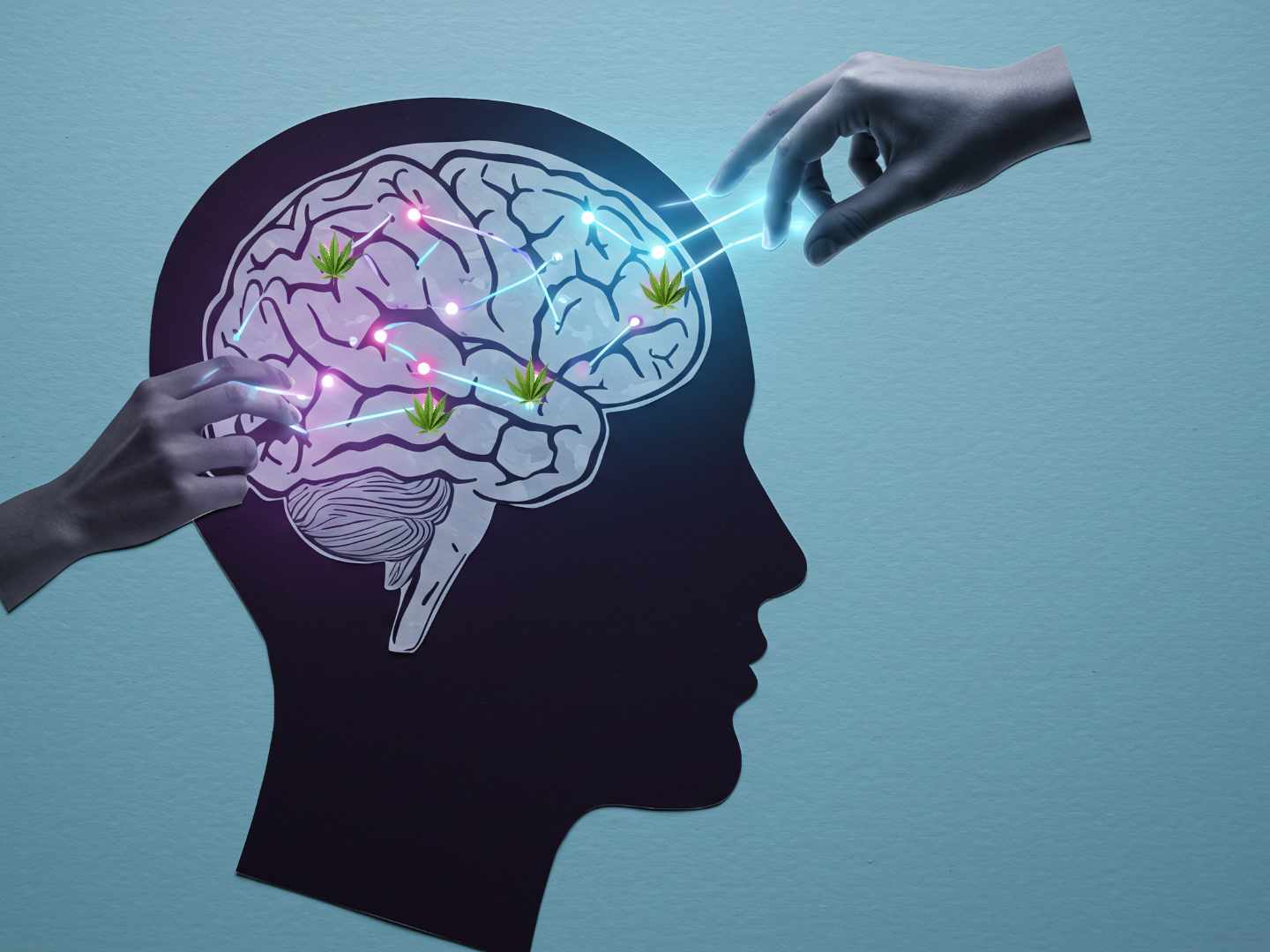
A Phase 2 randomized, placebo-controlled trial found cognitive improvement signals with a low-dose THC-CBD extract over 26 weeks.
Balanced cannabinoid formulations may influence cognition and neuropsychiatric symptoms through endocannabinoid system modulation.
The study’s design addresses common weaknesses in cannabinoid research, including short duration and lack of controls.
Improvements in MMSE scores suggest potential cognitive effects, but do not confirm real-world functional benefit.
These findings represent early clinical evidence and require validation in larger Phase 3 trials.
A Phase 2 clinical trial found that a low-dose THC-CBD extract improved cognitive scores over 26 weeks compared to placebo. While promising, these results are preliminary and need confirmation in larger, more diverse studies before clinical conclusions can be drawn.
Cannabinoids are moving beyond cultural narrative into controlled clinical investigation. A recent Phase 2 randomized, double-blind, placebo-controlled trial evaluated a low-dose THC-CBD balanced extract in adults with neurological and neuropsychiatric symptoms.
“Cannabinoid research is no longer anecdotal. It is entering the domain of controlled clinical science.”
This shift matters because it introduces rigor into a field often criticized for inconsistency and lack of standardization.
In this trial, participants received a daily oral dose of a balanced THC-CBD extract over 26 weeks. Researchers assessed cognitive performance and symptom-related outcomes relevant to neurodegenerative and neuropsychiatric conditions.
Available summaries indicate that participants receiving cannabinoids showed statistically significant improvements on the Mini-Mental State Examination compared to placebo by week 26 .
“The MMSE is a global cognitive screening tool. Improvement suggests change, not necessarily full functional recovery.”
Safety outcomes were generally favorable, with adverse event rates comparable to placebo.
This study stands out for several reasons.
First, it examines a low-dose balanced formulation rather than isolated high-dose THC. This matters because THC and CBD interact pharmacologically, influencing each other’s effects through the endocannabinoid system.
“Balanced cannabinoid formulations are not additive. They are interactive.”
Second, the 26-week duration allows observation of sustained effects rather than short-term responses. Many cannabinoid studies are limited to acute or short-duration outcomes.
Third, the methodology meets gold-standard clinical criteria. Randomized, double-blind, placebo-controlled trials remain relatively rare in cannabinoid research.
“These design elements transform data from suggestive to interpretable.”
Improvement in MMSE scores suggests cannabinoids may influence cognitive processes such as attention, orientation, and memory. However, interpretation requires caution.
“Statistical significance is not the same as clinical significance.”
Cognition is multifaceted. A change in a global score does not necessarily translate to meaningful improvements in daily functioning. Additionally, replication is essential before findings can be generalized.
“Early clinical signals indicate possibility. They do not establish therapeutic certainty.”
The endocannabinoid system regulates neurotransmission, inflammation, synaptic plasticity, and stress response. These processes are central to both cognitive function and neuropsychiatric conditions (https://www.ncbi.nlm.nih.gov/pmc/articles/PMC3997295/).
“The endocannabinoid system does not generate cognition. It regulates the systems that support it.”
CBD has been studied for anti-inflammatory, anxiolytic, and neuroprotective effects, while THC influences neural signaling through CB1 receptor activation (https://www.ncbi.nlm.nih.gov/pmc/articles/PMC4604171/).
“THC influences neural activity. CBD modulates the environment in which that activity occurs.”
Their combination at low doses may produce synergistic effects, potentially enhancing therapeutic benefit while minimizing psychoactivity.
Cannabinoids influence neurotransmitter systems, including glutamate and GABA, which are critical for cognitive processing (https://www.ncbi.nlm.nih.gov/pmc/articles/PMC6312155/).
For patients, this study provides cautious optimism.
A low-dose THC-CBD formulation may influence cognitive outcomes in certain populations. However, these findings do not establish cannabinoids as a standard treatment for neurodegenerative or neuropsychiatric conditions.
“Cannabinoids may support cognitive processes. They are not established cognitive therapies.”
Individual response varies based on dose, ratio, metabolism, and underlying condition. What works in one context may not translate to another.
This trial sets a foundation for future work.
Larger studies are needed to confirm these findings across diverse populations. Standardized formulations must be used to ensure reproducibility. Objective biomarkers should complement clinical scales to clarify mechanisms.
“Clinical progress depends on replication, not single-study outcomes.”
Long-term safety and functional outcomes remain critical areas of investigation.
As cannabinoid science evolves, rigor and transparency will determine whether these compounds transition from experimental tools to established therapies.
Do THC and CBD improve cognitive function?
Early clinical evidence suggests low-dose THC-CBD combinations may influence cognitive scores, but there is no definitive proof they improve real-world cognitive function. More large-scale studies are needed.
Is a balanced THC-CBD extract safe for long-term use?
In this study, safety outcomes were comparable to placebo over 26 weeks. However, long-term safety depends on dose, individual health status, and formulation, so medical guidance is recommended.
Matthew Myro Rothman is Chief Science Officer and VP of Marketing at EM2P2 and CannaLnx, where he helps bridge medical cannabis, healthcare infrastructure, patient education, and emerging technology. A lifelong musician, writer, philosopher, and cannabis science expert, Matthew spent more than 15 years working in cultivation, consulting, and medical cannabis operations throughout California before returning to Ohio to help shape the future of intelligent cannabis medicine. He holds a graduate degree in Philosophy, Cosmology, and Consciousness from California Institute of Integral Studies and writes extensively on cannabis science, consciousness, wellness, and human performance.
Please note: You are not currently logged in. Only members can contribute comments. If you would like to contribute click the button below.
