
Cannabis Compounds Show Promise Against Ovarian Cancer Cells
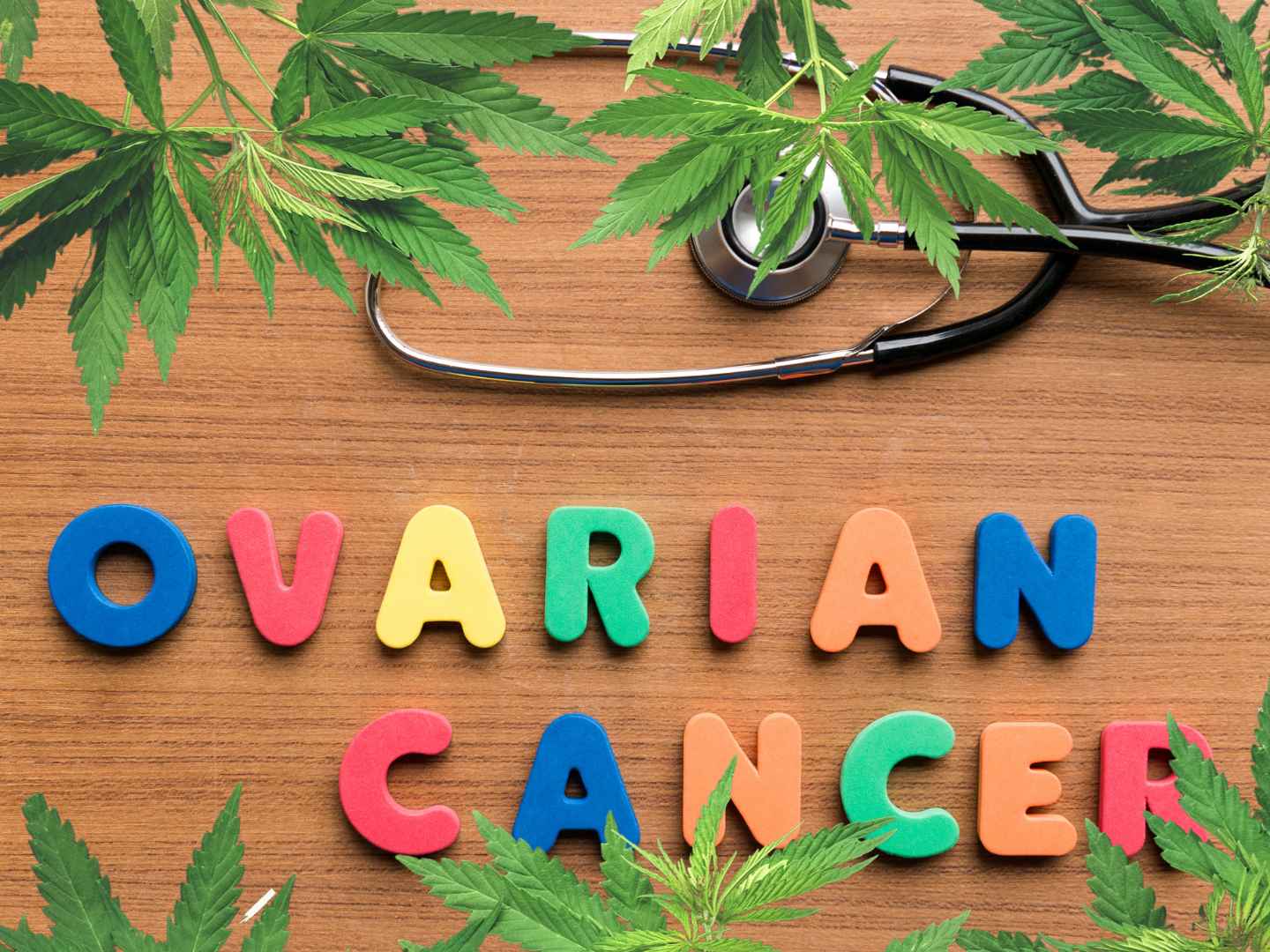
CBD and THC reduce ovarian cancer cell growth and increase cancer cell death in laboratory models.
The combination of CBD and THC shows stronger effects than either compound alone, suggesting synergistic interaction.
Cannabinoids appear to disrupt survival signaling and reduce cancer cell migration, both critical for tumor progression.
These findings are preclinical, meaning they demonstrate biological activity but not proven treatment in humans.
The research highlights a potential future role for cannabinoids as adjuncts in oncology, not standalone therapies.
CBD and THC can slow ovarian cancer cell growth and trigger cell death in lab studies, especially when used together. However, these effects have only been observed in isolated cells, and there is no clinical evidence yet that cannabinoids treat ovarian cancer in humans.
Ovarian cancer remains one of the most difficult cancers to detect early and treat effectively. It often resists chemotherapy and carries high recurrence rates. That clinical reality is what led researchers to explore whether cannabis-derived compounds could influence cancer cell behavior.
“What happens in cancer is not just growth. It is dysregulated survival signaling that refuses to turn off.”
A recent study examined how cannabidiol and delta-9-tetrahydrocannabinol affect ovarian cancer cells in controlled laboratory conditions.
Researchers tested CBD and THC on two human ovarian cancer cell lines, including one resistant to platinum-based chemotherapy. They also examined effects on healthy cells to assess selectivity.
The results showed that exposure to CBD or THC reduced cancer cell colony formation, meaning fewer cells survived and reproduced. When used together in a one-to-one ratio, the effects were more pronounced.
“CBD and THC do not just inhibit growth. They alter the internal signaling that allows cancer cells to survive.”
Combined treatment slowed proliferation, increased cancer cell death, and reduced the ability of cancer cells to migrate and invade surrounding tissue .
Importantly, these effects occurred with minimal impact on healthy cells at comparable concentrations, suggesting a degree of selective activity.
Cancer progression depends on signaling pathways that promote survival, replication, and resistance to cell death. Cannabinoids appear to interact with these pathways at multiple levels.
“Cancer cells persist because survival signals remain active. Disrupt those signals, and vulnerability emerges.”
Research suggests cannabinoids can influence pathways related to apoptosis, or programmed cell death, and inhibit signaling cascades that support tumor growth (https://www.ncbi.nlm.nih.gov/pmc/articles/PMC4791144/).
The study also showed reduced migration and invasion of cancer cells, which are essential steps in metastasis.
“Metastasis is not random spread. It is a coordinated process driven by cellular mobility and signaling.”
If these effects translate beyond the lab, they could inform strategies aimed at limiting cancer progression.
This work aligns with a growing body of preclinical research showing cannabinoids can affect tumor biology. Studies across multiple cancer types indicate that cannabinoids may induce apoptosis, inhibit angiogenesis, and reduce tumor growth under controlled conditions (https://www.ncbi.nlm.nih.gov/pmc/articles/PMC3579248/).
“Cannabinoids do not function as traditional chemotherapy. They modulate the biological environment that tumors depend on.”
CBD and THC also interact with the endocannabinoid system, which regulates cell signaling, immune response, and inflammation. These processes are closely tied to cancer development and progression (https://www.ncbi.nlm.nih.gov/pmc/articles/PMC2828614/).
“The endocannabinoid system influences cellular balance. Cancer reflects what happens when that balance is lost.”
All of these findings come from in vitro experiments. That distinction is critical.
“In vitro success demonstrates biological effect. It does not establish clinical treatment.”
Laboratory models isolate cancer cells from the complexity of the human body. In real patients, factors such as metabolism, immune response, and tissue interactions determine outcomes.
Drug delivery, dosing, and safety must also be established before any clinical application is possible. Many compounds that show promise in cell studies do not translate into effective therapies.
For patients, this research represents early scientific progress, not immediate clinical application.
There are no approved cannabinoid-based treatments for ovarian cancer. There are no standardized dosing protocols for this purpose. Clinical trials are required to determine whether these effects can be replicated safely in humans.
“Early research opens possibilities. It does not define treatment.”
Cannabinoids may eventually play a role as adjunct therapies, potentially supporting existing treatments rather than replacing them.
This study provides a clear signal that cannabinoids can influence ovarian cancer cell behavior in controlled laboratory settings. The combination of CBD and THC appears particularly potent in disrupting cancer cell growth and survival.
“The lab reveals what is possible. Clinical research determines what is real.”
The path from discovery to treatment is long. But each study like this adds to a growing understanding of how cannabinoids interact with complex biological systems.
The door is open. The science now needs to walk through it.
Can CBD or THC treat ovarian cancer?
There is no clinical evidence that CBD or THC can treat ovarian cancer in humans. Current findings are limited to laboratory studies showing effects on isolated cancer cells.
Why do cannabinoids affect cancer cells differently than normal cells?
Cannabinoids may target signaling pathways that are overactive in cancer cells, such as those controlling growth and survival. This can create selective effects in lab models, but whether this occurs in humans is still unknown.
Matthew Myro Rothman is Chief Science Officer and VP of Marketing at EM2P2 and CannaLnx, where he helps bridge medical cannabis, healthcare infrastructure, patient education, and emerging technology. A lifelong musician, writer, philosopher, and cannabis science expert, Matthew spent more than 15 years working in cultivation, consulting, and medical cannabis operations throughout California before returning to Ohio to help shape the future of intelligent cannabis medicine. He holds a graduate degree in Philosophy, Cosmology, and Consciousness from California Institute of Integral Studies and writes extensively on cannabis science, consciousness, wellness, and human performance.
Please note: You are not currently logged in. Only members can contribute comments. If you would like to contribute click the button below.
