
Cannabinoids for Anxiety and Sleep Disturbances
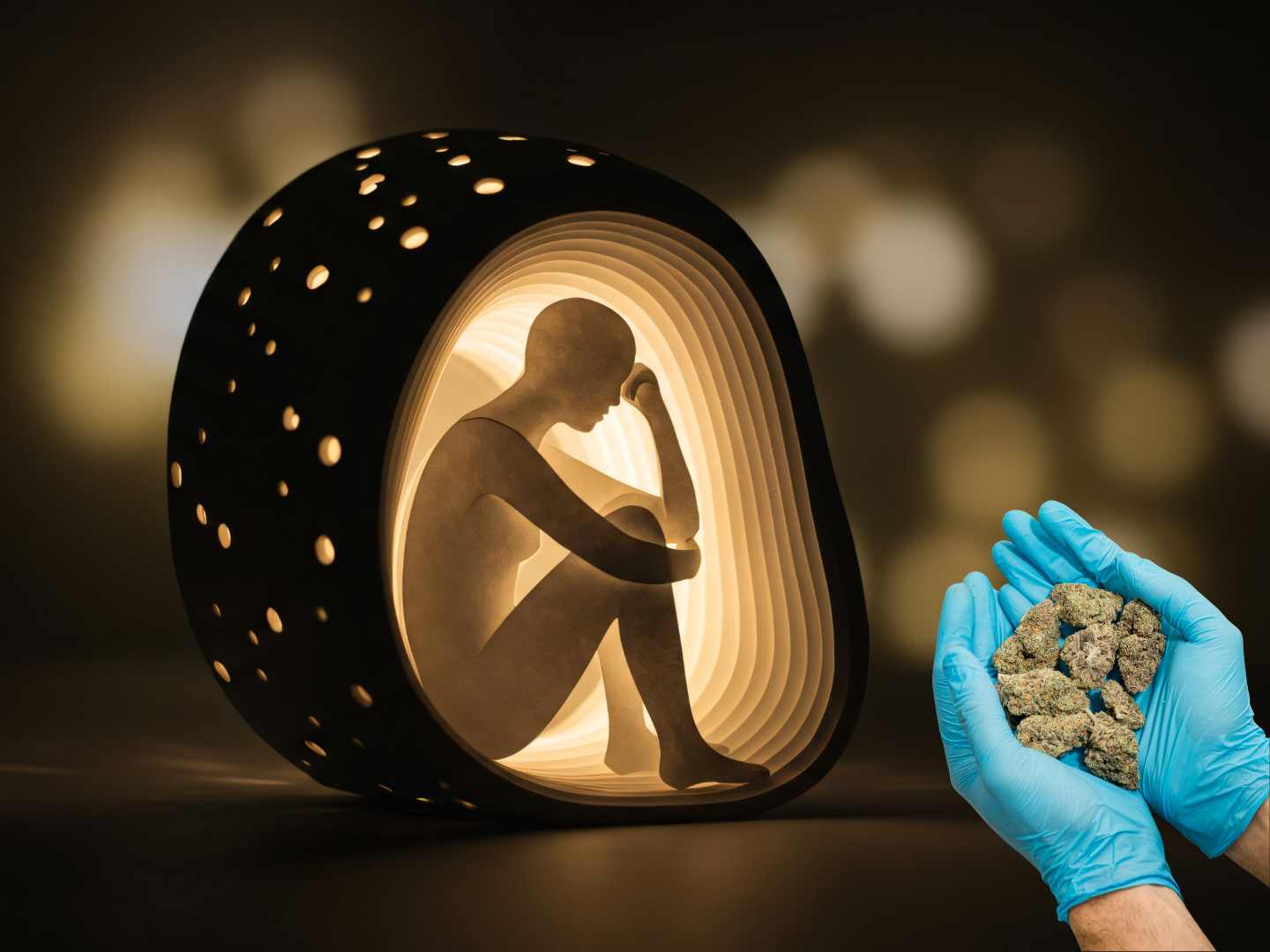
Cannabinoids may influence both anxiety and sleep by interacting with shared regulatory systems in the brain.
Evidence shows mixed but promising results, with about 45 percent of studies reporting improvements in both domains.
CBD is the most commonly studied cannabinoid and may reduce anxiety and support sleep without intoxication.
Research variability in dosing, product composition, and study design limits clear clinical conclusions.
Effects are context-dependent, meaning outcomes vary based on dose, individual biology, and cannabinoid profile.
Cannabinoids, especially CBD, may help reduce anxiety and improve sleep in some individuals, but current evidence is inconsistent and not standardized. Benefits appear linked to how cannabinoids regulate stress and arousal systems rather than acting as direct sedatives or anxiolytics.
Researchers conducted a scoping review to evaluate whether cannabinoids may help with both anxiety symptoms and sleep disturbances. The goal was not to test a single product, but to assess a wide range of studies across clinical trials, observational research, and case series.
“Cannabinoids are not single-purpose tools. They interact with systems that regulate both mood and sleep.”
This matters because anxiety and sleep are not separate problems. They are deeply interconnected.
Anxiety disorders and sleep disturbances frequently overlap. A large proportion of individuals with anxiety also experience difficulty falling or staying asleep.
“Anxiety and sleep disruption are not independent conditions. They are expressions of the same dysregulated system.”
This overlap is driven by shared biological mechanisms, including heightened arousal, stress hormone imbalance, and altered neural signaling. The brain systems that regulate alertness and emotional processing are closely linked (https://www.ncbi.nlm.nih.gov/pmc/articles/PMC3766913/).
Because of this connection, many people turn to cannabis products hoping to address both issues simultaneously.
Across the studies included in the review, several patterns emerged:
Many interventions focused on cannabidiol rather than full-spectrum cannabis products. Some clinical and observational studies reported improvements in anxiety symptoms. Several studies also noted better sleep quality, particularly when sleep disturbances were linked to stress.
“About 45 percent of studies reported improvements in both anxiety and sleep, but consistency across research is limited.”
These findings are encouraging but not definitive. Study designs varied widely, and many relied on self-reported outcomes rather than objective measures.
“Early evidence shows signal, not certainty.”
One of the main limitations is the lack of standardization. Many studies did not clearly define cannabinoid composition, dosage, or administration method.
“Cannabinoid research often lacks precision in dosing and composition, making outcomes difficult to compare.”
Some studies used CBD alone. Others used mixed cannabinoid formulations. Many tracked general cannabis use without specifying chemical profiles.
This variability makes it difficult to determine which cannabinoids are responsible for observed effects or what dose might be effective.
The endocannabinoid system regulates stress response, emotional processing, and sleep-wake cycles. Cannabinoids interact with this system and influence neurotransmitter activity.
“The endocannabinoid system does not induce sleep. It regulates the systems that make sleep possible.”
CBD has been shown to interact with serotonin receptors, particularly 5-HT1A, which are involved in anxiety regulation (https://pubmed.ncbi.nlm.nih.gov/30155635/). It also influences adenosine signaling, which plays a role in sleep pressure and relaxation (https://www.ncbi.nlm.nih.gov/pmc/articles/PMC4604171/).
“CBD influences anxiety by modulating serotonin signaling and sleep by affecting adenosine pathways.”
These mechanisms provide a biological explanation for why some individuals report reduced anxiety and improved sleep.
However, the current evidence does not establish clear cause-and-effect relationships or optimal treatment protocols.
For individuals considering cannabinoids for anxiety or sleep, expectations should remain grounded.
Some people report benefit, particularly with CBD-dominant products. Research supports potential anxiolytic and sleep-related effects, but results are mixed and not standardized.
“Cannabinoids may improve how anxiety and sleep feel. They do not guarantee consistent outcomes.”
Dosing remains unclear, and individual response varies widely based on factors such as stress levels, sleep history, concurrent medications, and product quality.
Higher doses of THC may increase anxiety or disrupt sleep architecture in some individuals, while CBD may offer calming effects without intoxication (https://www.ncbi.nlm.nih.gov/pmc/articles/PMC6326553/).
Patients should approach cannabinoid use with intention and caution.
Start with products from reputable manufacturers that provide third-party testing. Consider CBD-dominant formulations, especially if sensitive to THC. Discuss cannabinoid use with a clinician, particularly if taking medications for anxiety or sleep.
“Cannabis is not a one-size intervention. It is a variable input into a complex system.”
Medical cannabis remains an evolving area of research. What works for one individual may not translate to another.
Cannabinoid science is shifting from anecdote to mechanism. The connection between anxiety and sleep highlights the importance of system-level regulation rather than isolated symptom management.
“Anxiety and sleep are not separate problems to solve. They are systems to regulate.”
The endocannabinoid system provides a framework for understanding how cannabinoids may influence both domains. Whether that influence becomes clinically reliable remains an open question.
Can CBD help with both anxiety and sleep at the same time?
CBD may influence both anxiety and sleep by modulating stress and neurotransmitter pathways. Some individuals report improvements in both areas, but results are inconsistent and not yet standardized.
Is THC helpful or harmful for sleep and anxiety?
THC can have mixed effects. Lower doses may promote relaxation, but higher doses may increase anxiety or disrupt sleep patterns. Individual response varies significantly.
Matthew Myro Rothman is Chief Science Officer and VP of Marketing at EM2P2 and CannaLnx, where he helps bridge medical cannabis, healthcare infrastructure, patient education, and emerging technology. A lifelong musician, writer, philosopher, and cannabis science expert, Matthew spent more than 15 years working in cultivation, consulting, and medical cannabis operations throughout California before returning to Ohio to help shape the future of intelligent cannabis medicine. He holds a graduate degree in Philosophy, Cosmology, and Consciousness from California Institute of Integral Studies and writes extensively on cannabis science, consciousness, wellness, and human performance.
Please note: You are not currently logged in. Only members can contribute comments. If you would like to contribute click the button below.
