
Beyond Terpenes: The Unseen Compounds That Smell
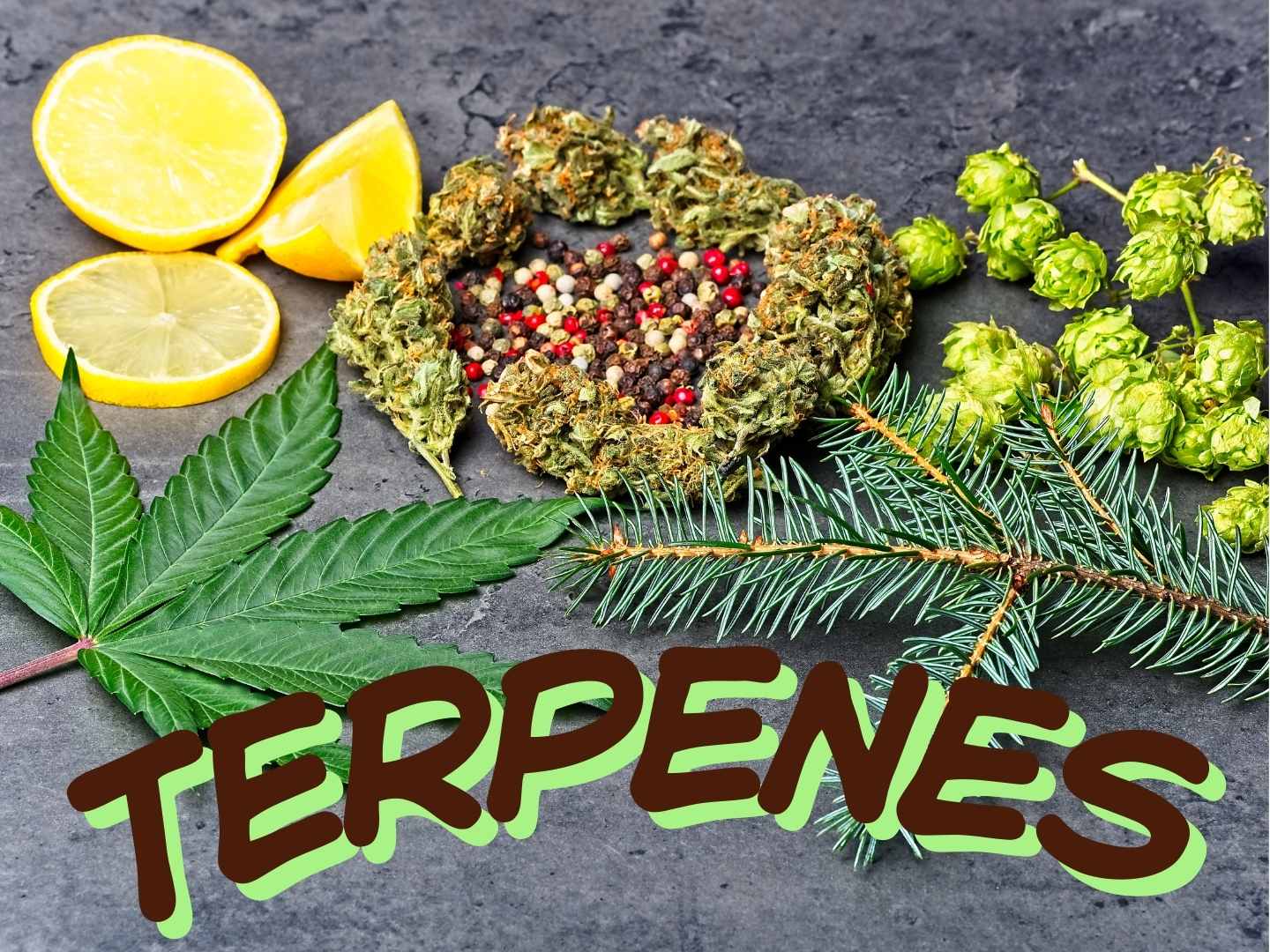
Cannabis aroma is driven by a small set of odor-active compounds, many of which were previously unidentified in dried flower.
Terpene profiles alone do not reliably predict how cannabis will smell or be perceived.
Aroma perception is selective, meaning a few compounds shape the entire sensory experience.
New aroma lexicons provide a more precise, science-based language for describing cannabis.
Aroma is emerging as a meaningful variable for consumer experience, product design, and data-driven tools like CannaHealth.
New research shows cannabis aroma is shaped by dozens of previously unrecognized compounds, not just terpenes. This means smell is a more complex and potentially useful signal for predicting user experience than current labeling suggests.
When you walk into a dispensary and catch that familiar scent, you are not just smelling myrcene or limonene. You are encountering a layered chemical signal that the industry is only beginning to decode.
“Cannabis aroma is not defined by terpenes alone. It is driven by a complex network of odor-active compounds.”
As someone working at the intersection of fitness, nutrition, mindfulness, and real-time vitals through CannaHealth, this shift matters. It reframes aroma from a marketing detail into a measurable input.
A study published in the Journal of Agricultural and Food Chemistry applied food-science methods to analyze dried cannabis flower. Using gas chromatography-olfactometry, researchers identified 52 odor-active compounds that directly influence what we perceive as smell.
Remarkably, 38 of these compounds had not been previously reported in dried cannabis flower.
“Aroma perception is selective. Only a small fraction of compounds actually drive what we smell.”
The compounds identified extend beyond terpenes and include esters, sulfur-containing molecules, phenolics, volatile acids, and furanones. For example, butanoic and hexanoic acids contribute to sweaty or cheesy notes, while 2-acetylpyrazine produces a popcorn-like scent.
These findings align with broader olfactory science showing that human scent perception is shaped by specific high-impact molecules rather than total chemical abundance (https://www.ncbi.nlm.nih.gov/pmc/articles/PMC7416524/).
“Smell is not about quantity. It is about impact.”
At the same time, researchers at Oregon State University developed a 25-term aroma lexicon for cannabis flower. A trained sensory panel evaluated 91 samples and generated over 8,000 descriptors, eventually narrowing them into a standardized vocabulary.
The most common descriptors were herbal, citrus, and woody, but terpene content alone did not predict these perceptions.
“Terpenes do not reliably predict aroma perception. Human experience depends on compound interaction.”
Only one terpene, terpinolene, showed a consistent relationship with specific scent descriptors. This reinforces a key insight: aroma is an emergent property, not a direct readout of terpene concentration.
Olfactory perception integrates multiple volatile signals into a single sensory output, a process governed by receptor-level interactions in the brain (https://www.ncbi.nlm.nih.gov/pmc/articles/PMC6562196/).
“Aroma is not a list of compounds. It is a constructed sensory experience.”
For consumers, aroma may be the most immediate and intuitive signal available. It is also one of the few variables consistently linked to subjective enjoyment.
“Aroma is not just preference. It is a proxy for experience.”
If we are building intelligent tools that map cannabis effects to real-time biometrics, aroma becomes a meaningful input. What you smell may correlate with how your body responds, even if the mechanism is not fully mapped yet.
For breeders and producers, this research expands the target. It is no longer enough to optimize for THC percentage or terpene levels. Post-harvest processes such as curing, drying, and storage may significantly influence odor-active compounds.
For labeling and marketing, the implications are clear. Simplistic models based on terpene lists or strain names are insufficient.
“Strain names are narratives. Aroma profiles are data.”
This is where things get interesting.
We are moving toward a model where aroma analytics, sensory profiling, and biometric feedback converge. The endocannabinoid system regulates physiological responses to cannabinoids, including mood, stress, and perception (https://www.ncbi.nlm.nih.gov/pmc/articles/PMC3997295/).
“The endocannabinoid system regulates how the body responds. Data reveals how those responses vary.”
Imagine tracking how a “woody-herbal” profile influences heart rate variability, sleep quality, or recovery metrics. Over time, patterns emerge. Those patterns can inform recommendations that are grounded in physiology rather than guesswork.
This is not speculative. It is the natural evolution of data-rich wellness systems.
We are moving beyond THC percentages and strain clichés. Cannabis aroma is emerging as a sophisticated axis of experience, biology, and product design.
“The future of cannabis is not stronger products. It is smarter understanding.”
For those building systems like CannaHealth, this represents a shift toward intelligent tools that integrate sensory data with physiological feedback.
The scent of cannabis is no longer just an introduction. It is information.
Do terpenes determine how cannabis smells?
Terpenes contribute to cannabis aroma, but they do not fully determine it. Research shows many other odor-active compounds significantly shape scent perception.
Can cannabis aroma predict how it will feel?
Aroma may correlate with subjective experience, but it is not a precise predictor. Effects depend on multiple factors, including cannabinoids, dose, and individual physiology.

Matthew Myro Rothman is Chief Science Officer and VP of Marketing at EM2P2 and CannaLnx, where he helps bridge medical cannabis, healthcare infrastructure, patient education, and emerging technology. A lifelong musician, writer, philosopher, and cannabis science expert, Matthew spent more than 15 years working in cultivation, consulting, and medical cannabis operations throughout California before returning to Ohio to help shape the future of intelligent cannabis medicine. He holds a graduate degree in Philosophy, Cosmology, and Consciousness from California Institute of Integral Studies and writes extensively on cannabis science, consciousness, wellness, and human performance.
Please note: You are not currently logged in. Only members can contribute comments. If you would like to contribute click the button below.
