
CBD Shows Promise in Dentistry
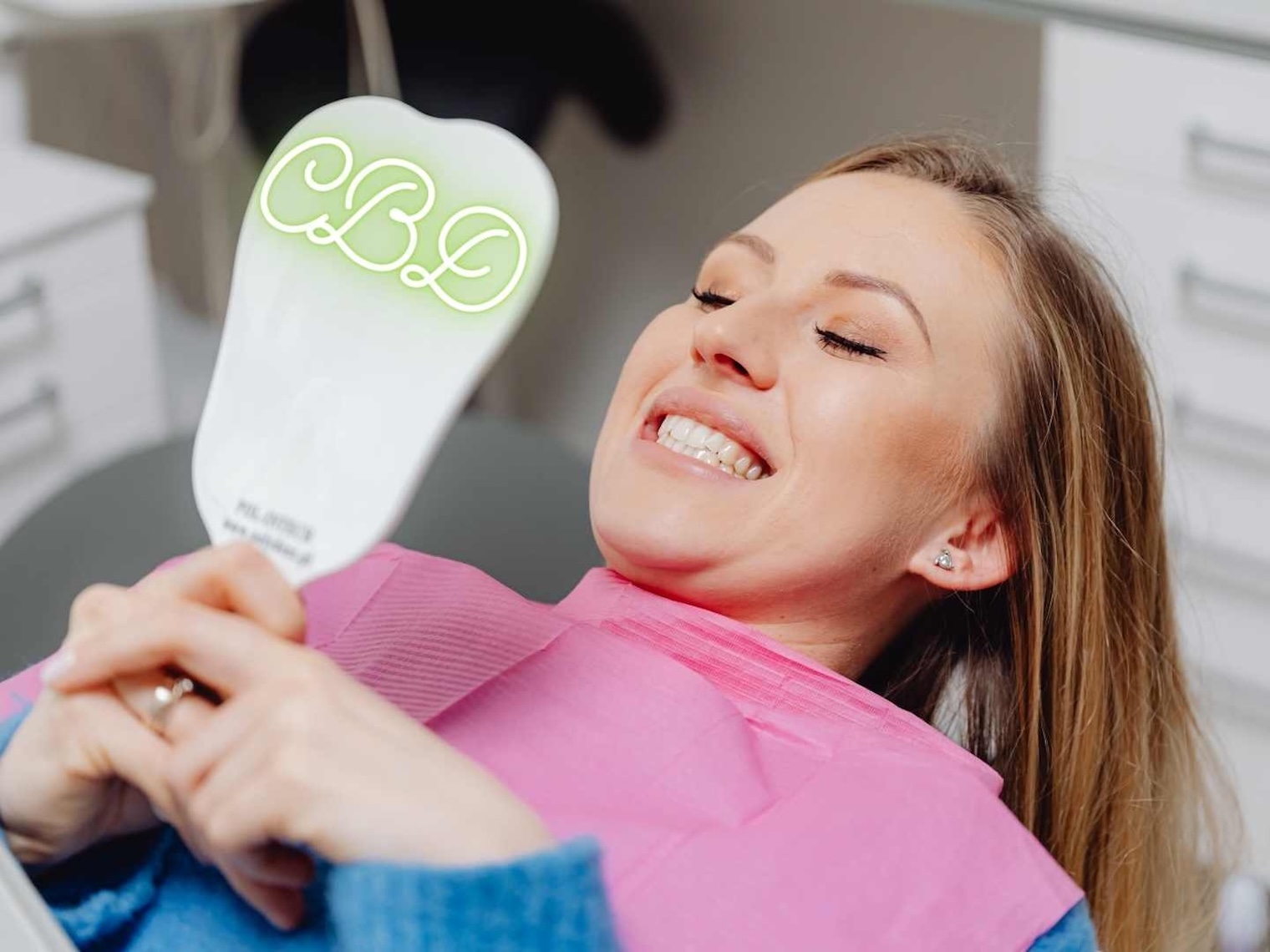
CBD shows antimicrobial and antifungal activity against key oral pathogens in laboratory settings.
The oral microbiome is a complex ecosystem, and disrupting harmful biofilms is central to preventing disease.
CBD may influence both microbial growth and inflammation, making it a dual-interest compound in dentistry.
Current evidence is almost entirely preclinical, with no large human trials confirming clinical benefit.
Standardization of dosing, formulation, and delivery remains a major gap in translating research to practice.
CBD has demonstrated the ability to inhibit oral bacteria and fungi in lab studies, suggesting potential use in dental care. However, there is no clinical evidence yet showing it improves oral health outcomes in humans.
Cannabidiol is typically discussed in the context of anxiety, pain, or sleep. But emerging research is opening a different door, one that leads directly into the oral microbiome and its role in disease .
“CBD is not just a neurological compound. It interacts with microbial and inflammatory systems.”
This shift matters because oral health is not isolated. It reflects broader systemic balance.
The mouth is home to hundreds of microbial species living in dynamic equilibrium. When that balance shifts, disease follows.
“The oral microbiome is not a static environment. It is a regulated ecosystem.”
Conditions like dental caries, periodontal disease, and candidiasis emerge when harmful bacteria or fungi dominate. Traditional antimicrobial agents can reduce these organisms, but they often disrupt the broader microbial balance and carry side effects such as staining or taste alteration.
This has led researchers to explore alternatives that are both effective and less disruptive.
Researchers conducted a scoping review of studies examining CBD’s effects on oral microorganisms. They screened more than 1,200 articles and identified 10 that met inclusion criteria, most of which were laboratory-based.
The studies focused on pathogens central to oral disease, including:
Streptococcus mutans, a key contributor to tooth decay
Porphyromonas gingivalis, associated with periodontal disease
Candida albicans, a fungal species linked to oral thrush
CBD was tested for its ability to inhibit growth and disrupt biofilms.
Across these studies, CBD demonstrated antimicrobial activity against both bacteria and fungi.
“CBD does not sterilize the oral environment. It appears to suppress specific pathogenic organisms.”
In some cases, CBD reduced bacterial growth and colony formation. In others, it disrupted biofilms, which are structured microbial communities that protect pathogens from treatment.
“Biofilms are not just clusters of microbes. They are protective structures that make infections harder to treat.”
The degree of effectiveness varied based on concentration, formulation, and experimental conditions.
CBD’s broader biological effects may also contribute. It has anti-inflammatory properties that could influence oral conditions where inflammation and microbial imbalance interact (https://www.ncbi.nlm.nih.gov/pmc/articles/PMC7023045/).
“Inflammation and infection are not separate processes. They reinforce each other.”
CBD’s antimicrobial effects are still being mapped, but several mechanisms are under investigation. These include disruption of microbial cell membranes and interference with biofilm formation.
Studies suggest cannabinoids can alter bacterial membrane integrity and metabolic activity, contributing to growth inhibition (https://www.ncbi.nlm.nih.gov/pmc/articles/PMC7409629/).
“Antimicrobial activity is not just about killing microbes. It is about altering their ability to survive and organize.”
CBD may also influence host immune response, indirectly shaping the microbial environment.
This body of research is early-stage. Most studies were conducted in vitro, meaning in controlled lab environments rather than in human mouths.
“In vitro findings show possibility. They do not confirm clinical reality.”
The oral cavity is far more complex, influenced by saliva, diet, immune function, and continuous microbial interaction.
There is also significant variability across studies in dosing, formulation, and testing methods.
“Without standardization, comparison becomes interpretation rather than conclusion.”
No large-scale clinical trials currently demonstrate that CBD improves measurable dental outcomes in humans.
Despite limitations, the concept is gaining traction. Researchers are exploring CBD in mouth rinses, gels, and dental materials designed to target harmful biofilms while preserving microbial balance.
“The future of oral care may focus on modulation rather than elimination.”
Key questions for future research include:
Optimal concentrations for antimicrobial effect
Interaction with the broader oral microbiome
Translation of lab findings into clinical outcomes
Integration with existing dental therapies
CBD shows measurable antimicrobial and antifungal activity against oral pathogens in laboratory settings.
“CBD’s potential in dentistry lies at the intersection of microbiology and inflammation.”
But the gap between laboratory promise and clinical application remains wide. Human studies will determine whether this potential becomes a practical tool in oral health care.
For now, the signal is clear. The evidence is still developing.
Can CBD be used to treat gum disease or cavities?
There is no clinical evidence that CBD treats gum disease or cavities in humans. Laboratory studies suggest antimicrobial effects, but real-world outcomes have not been established.
Is CBD safe for oral health products?
CBD appears to have a favorable safety profile in general, but its use in oral health products requires more research. Proper dosing, formulation, and long-term effects are not yet fully understood.
Matthew Myro Rothman is Chief Science Officer and VP of Marketing at EM2P2 and CannaLnx, where he helps bridge medical cannabis, healthcare infrastructure, patient education, and emerging technology. A lifelong musician, writer, philosopher, and cannabis science expert, Matthew spent more than 15 years working in cultivation, consulting, and medical cannabis operations throughout California before returning to Ohio to help shape the future of intelligent cannabis medicine. He holds a graduate degree in Philosophy, Cosmology, and Consciousness from California Institute of Integral Studies and writes extensively on cannabis science, consciousness, wellness, and human performance.
Please note: You are not currently logged in. Only members can contribute comments. If you would like to contribute click the button below.
