
CBD Heals Bones—High-Dose THC Hurts: New Review Deciphers Cannabinoids’ Role in Spinal Fusion and Fracture Repair
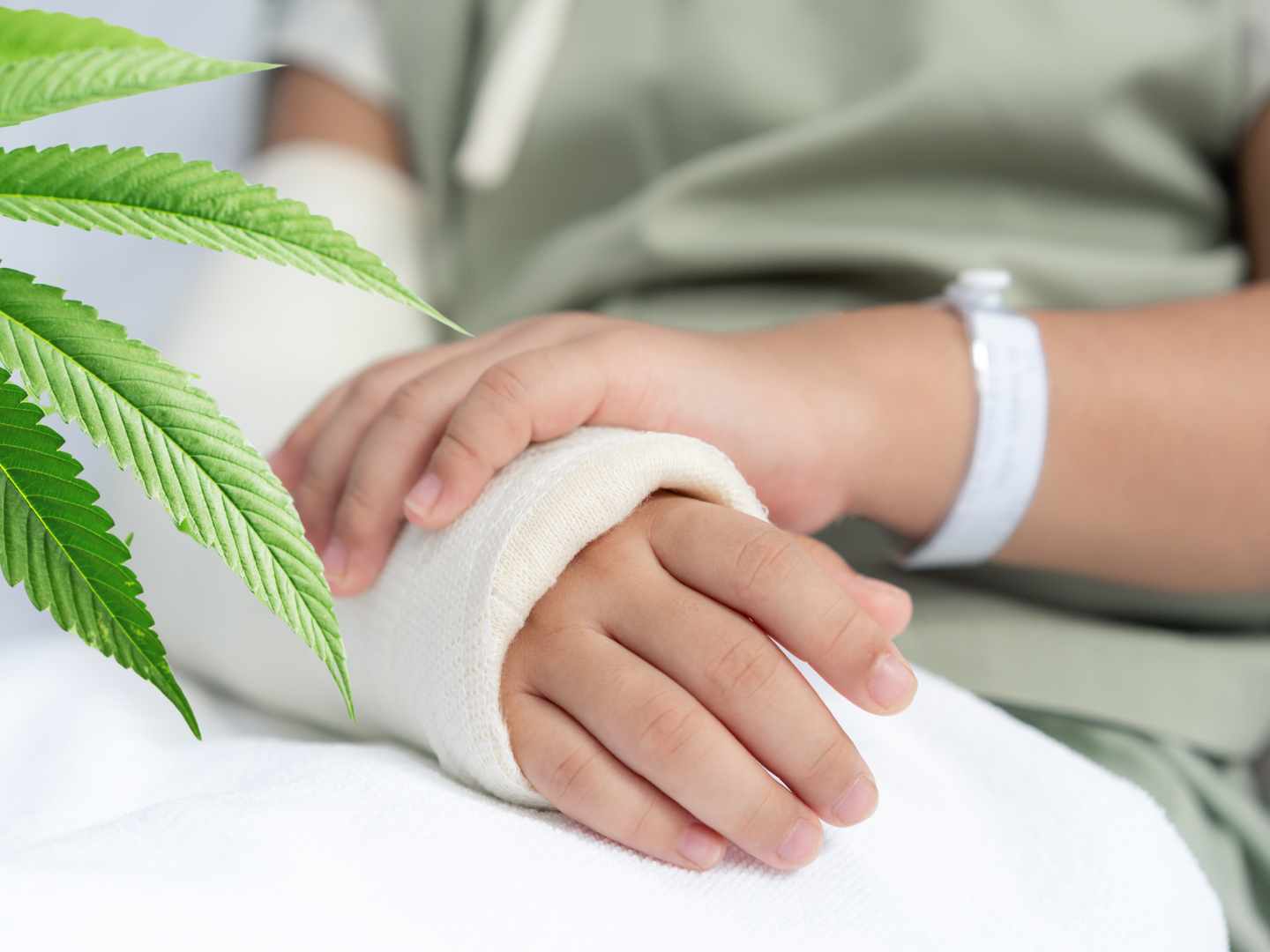
CBD and CB2 receptor activation show consistent signals for enhancing bone formation and fracture repair in preclinical models.
Chronic, high-dose THC is associated with impaired bone healing, reduced mineralization, and lower bone density.
The endocannabinoid system regulates bone remodeling through osteoblast and osteoclast activity.
Effects are dose-dependent and context-specific, meaning cannabinoid impact varies by usage pattern and individual biology.
Current evidence is largely preclinical, requiring human trials before clinical recommendations can be finalized.
CBD may support bone healing by activating CB2 receptors and improving bone remodeling, while chronic high-dose THC may impair bone density and fusion outcomes. These findings are based primarily on preclinical research and require confirmation in human studies.
Sometimes science reveals connections that feel almost counterintuitive. Cannabinoids influencing bone healing is one of those moments.
“The skeleton is not static. It is a living system regulated by signaling networks, including the endocannabinoid system.”
The endocannabinoid system plays a direct role in bone metabolism. CB2 receptors, in particular, are expressed in bone tissue and regulate the balance between osteoblasts, which build bone, and osteoclasts, which break it down (https://www.ncbi.nlm.nih.gov/pmc/articles/PMC2769340/).
“Bone health is not just density. It is the balance between formation and resorption.”
Animal studies show that absence of CB2 signaling leads to increased bone turnover and osteoporosis-like conditions. When CB2 is activated, bone formation improves and structural integrity increases.
CBD appears to engage this system in a meaningful way.
“CBD does not directly build bone. It enhances the biological environment that allows bone to regenerate.”
In preclinical models, CBD has been shown to:
Increase osteoblast activity
Improve fracture healing strength
Reduce the RANKL to OPG ratio, a key marker of bone remodeling
The RANKL/OPG system regulates how aggressively bone is broken down and rebuilt (https://www.ncbi.nlm.nih.gov/pmc/articles/PMC5440523/).
“RANKL promotes bone breakdown. OPG limits it. The ratio determines the direction of remodeling.”
By shifting this ratio, CBD may support more efficient bone repair without disrupting overall healing processes.
THC introduces a different dynamic.
“THC is not inherently harmful to bone. Its effects depend on dose and duration.”
Short-term or low-dose exposure appears neutral in many models. However, chronic or high-dose THC has been associated with:
Reduced bone mineral density
Impaired mineralization
Slower cartilage maturation during healing
Clinical observations link heavy cannabis use with decreased bone density and increased fracture risk (https://pubmed.ncbi.nlm.nih.gov/27593602/).
“Chronic exposure changes biology. Acute exposure reveals it.”
In surgical contexts, heavy cannabis use has been associated with increased risk of failed spinal fusion and revision procedures.
The interaction between cannabinoids and bone is not uniform.
“Cannabinoid effects are not universal. They are shaped by biology, dose, and timing.”
Variables that influence outcomes include:
Age and hormonal status
Genetic variation in ECS signaling
Frequency and type of cannabinoid exposure
Bone healing is already a complex process involving inflammation, cellular differentiation, and tissue remodeling. Cannabinoids intersect with each of these phases differently.
While human data remains limited, the emerging pattern suggests a cautious framework.
“Heavy THC use should be considered a modifiable risk factor in bone healing.”
CBD-dominant use appears less concerning, but still requires clinical awareness.
For now, best practices include:
Screening for cannabis use before orthopedic procedures
Monitoring bone density and healing progress
Considering cannabinoid exposure alongside other risk factors like smoking
“Risk in medicine is rarely binary. It is cumulative and context-dependent.”
The field is moving toward more precise questions.
“What matters is not whether cannabinoids affect bone. It is how, when, and in whom.”
Future research needs to address:
Human clinical outcomes
Optimal CBD to THC ratios
Long-term skeletal effects
Interaction with standard orthopedic treatments
The goal is not to generalize cannabis effects, but to define them with specificity.
This review draws a rare level of clarity in a complex space.
“CBD aligns with bone repair mechanisms. Chronic high-dose THC may disrupt them.”
That does not translate into simple rules, but it does establish directional insight.
“Biology rarely offers absolutes. It offers patterns that guide better decisions.”
For now, the signal is clear enough to inform caution and curiosity in equal measure.
Does CBD help bones heal faster?
Preclinical studies suggest CBD may support bone healing by improving osteoblast activity and regulating bone remodeling pathways. However, human clinical evidence is still limited.
Can THC weaken bones or affect healing?
Chronic, high-dose THC use has been associated with lower bone density and impaired healing in some studies. Occasional or low-dose use appears less impactful, but more research is needed.
Matthew Myro Rothman is Chief Science Officer and VP of Marketing at EM2P2 and CannaLnx, where he helps bridge medical cannabis, healthcare infrastructure, patient education, and emerging technology. A lifelong musician, writer, philosopher, and cannabis science expert, Matthew spent more than 15 years working in cultivation, consulting, and medical cannabis operations throughout California before returning to Ohio to help shape the future of intelligent cannabis medicine. He holds a graduate degree in Philosophy, Cosmology, and Consciousness from California Institute of Integral Studies and writes extensively on cannabis science, consciousness, wellness, and human performance.
Please note: You are not currently logged in. Only members can contribute comments. If you would like to contribute click the button below.
