
Cannabis and Cluster Headaches: A High‑Risk, High‑Reward Frontier
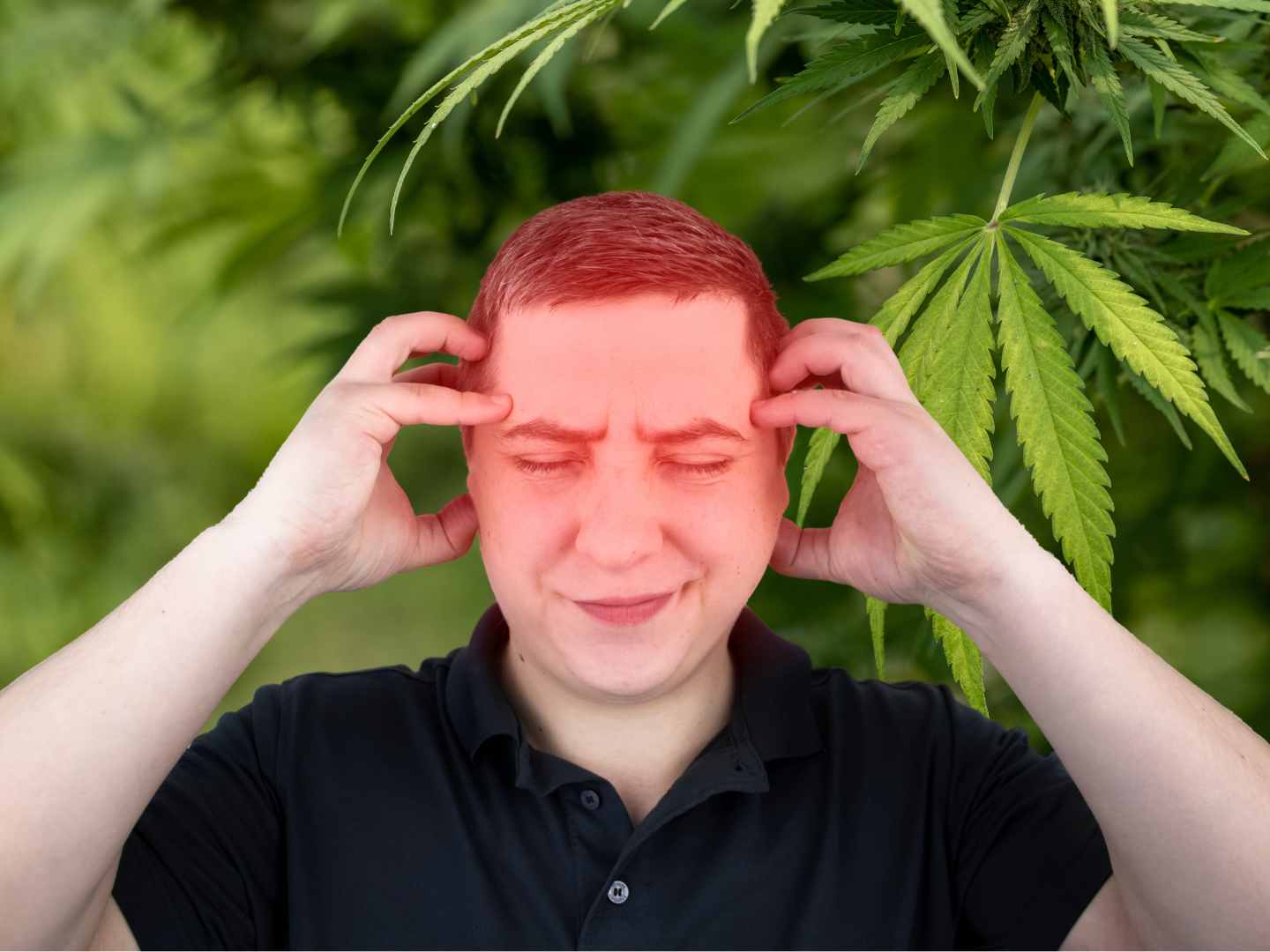
Cluster headaches are neurologically distinct from migraines, with shorter, more severe attacks driven by hypothalamic and trigeminal-autonomic pathways.
Cannabis has biological plausibility in cluster headache because cannabinoid receptors are involved in pain modulation, autonomic signaling, and hypothalamic regulation.
Patient reports are mixed: some describe rapid relief, while others experience no benefit or worsening symptoms.
Current evidence is mostly observational, anecdotal, and case-based, with no strong randomized trial evidence establishing cannabis as a cluster headache treatment.
THC-dominant products may be more relevant for rapid symptom interruption, while CBD-dominant approaches may support anxiety, recovery, and sleep, but this remains unproven.
Cannabis deserves careful study for refractory cluster headaches, but not hype or casual self-experimentation.
Cannabis may help some people with cluster headaches, especially in refractory cases, but the evidence is still early and inconsistent. Its potential comes from cannabinoid effects on pain signaling, hypothalamic regulation, and the trigeminal-autonomic system, but controlled clinical trials are needed before cannabis can be considered an established treatment.
Cluster headaches are in a league of their own. Often called “suicide headaches” because of their unbearable severity, these attacks typically last 15 minutes to three hours and arrive in daily cycles. They are not migraines. They are shorter, sharper, more rhythmic, and often accompanied by tearing, nasal congestion, eyelid swelling, or eye redness on one side of the head.
“Cluster headache is not a migraine variant. It is a distinct trigeminal-autonomic disorder with its own biology.”
That distinction matters because treatment strategies do not always overlap cleanly. Oxygen therapy, triptans, verapamil, lithium, and corticosteroids help some patients, but others remain trapped in relentless pain cycles. For that group, interest in medical cannabis is not recreational curiosity. It is survival-driven exploration.
Cluster headache appears to involve the hypothalamus, the brain region responsible for circadian rhythms, autonomic regulation, and internal timing. Functional imaging studies have repeatedly implicated hypothalamic activation during cluster headache attacks (https://pubmed.ncbi.nlm.nih.gov/10519338/).
“The hypothalamus is not just a clock. It is a command center for rhythm, pain, and autonomic response.”
The endocannabinoid system intersects with these pathways. CB1 receptors are widely expressed in the brain and influence pain transmission, neurotransmitter release, and autonomic signaling (https://www.ncbi.nlm.nih.gov/pmc/articles/PMC5877694/).
Cannabinoids may theoretically affect cluster headache by modulating hypothalamic activity, trigeminal nerve signaling, and inflammatory pain pathways.
“Cannabinoids do not simply numb pain. They alter the signaling systems that determine how pain is generated and processed.”
That gives cannabis biological plausibility, but plausibility is not proof.
Patient-reported data is uneven but impossible to ignore.
A French survey of 139 cluster headache patients found that nearly half had tried cannabis. Among those users, some reported relief, many described variable or uncertain effects, and a meaningful subset reported negative outcomes (https://pubmed.ncbi.nlm.nih.gov/29935827/).
“Cannabis response in cluster headache is not predictable. It ranges from rapid relief to no effect to worsening.”
A dramatic case report described a patient who experienced relief within minutes of smoking cannabis and similar improvement after a 5 mg oral dose of dronabinol. Case reports do not establish clinical guidance, but they can identify signals worth studying.
This is the strange terrain of cannabinoid medicine: a few patients may experience profound benefit while the broader data remains incomplete.
Clinical consensus remains cautious for good reason. A 2025 review of cannabinoids in headache disorders concluded that cannabinoids may reduce headache frequency, pain intensity, and sleep disruption for some patients, but concerns remain around cognitive impairment, dependency, psychiatric effects, and medication-overuse headache (https://pubmed.ncbi.nlm.nih.gov/38777032/).
“Evidence for cannabis in cluster headache is promising enough to study, but not strong enough to standardize.”
That gray zone is where most cannabinoid research currently lives. The biology is plausible. Patient stories are compelling. The clinical evidence is still thin.
Cannabinoids also interact with calcitonin gene-related peptide (CGRP) pathways, which are central in migraine and increasingly relevant in cluster headache research (https://www.ncbi.nlm.nih.gov/pmc/articles/PMC6318787/). Some researchers have suggested cannabinoids may eventually complement CGRP-targeted therapies, but this remains theoretical.
Delivery method matters.
Cluster headaches escalate quickly, so any abortive treatment needs rapid onset. Inhaled cannabis may act faster than oral products, which could explain why some patients report benefit from smoked or vaporized cannabis during attacks.
“An abortive cluster headache treatment must move fast because the attack moves fast.”
Longer-acting oral, sublingual, or transdermal products might theoretically support prevention, recovery, or sleep during cluster cycles, but this has not been proven.
Cannabinoid ratio also matters. THC-dominant products may be more relevant for acute pain interruption because THC strongly activates CB1 receptors. CBD-rich formulations may support anxiety, inflammation, and post-attack recovery without intoxication, but their direct role in cluster headache remains speculative.
“THC may be more relevant to acute pain signaling, while CBD may be more relevant to recovery and nervous system regulation.”
The inconsistency is not surprising. Cluster headache itself is biologically complex, and cannabis is not one thing. It is a pharmacological ecosystem.
Outcomes may depend on:
THC-to-CBD ratio
Dose and route of administration
Timing during the attack
Episodic versus chronic cluster pattern
Medication interactions
Baseline anxiety and sleep status
Individual endocannabinoid tone
“Cannabis is not a single intervention. It is a variable input into a highly sensitive neurological system.”
That is why two patients can use the same product and have opposite outcomes.
This is one of the headache disorders where urgency and biological plausibility collide. Patients need better tools. Researchers have enough evidence to justify serious trials.
Future studies should test cannabis-based formulations as both abortive and preventive therapies. They should compare inhaled, sublingual, and oral delivery methods, measure attack frequency and intensity, and track cognitive, psychiatric, and dependency-related outcomes.
“The next step is not more speculation. It is controlled, well-designed clinical research.”
Until then, clinicians should approach cannabis for cluster headache with both caution and openness.
Cannabis is not an established treatment for cluster headaches. But it is not a fantasy either.
The combination of hypothalamic biology, cannabinoid receptor activity, patient-reported relief, and refractory treatment need makes this a legitimate frontier.
“Cannabis deserves study in cluster headache because the need is urgent and the biology is plausible.”
For now, the wisest position is neither hype nor dismissal. It is careful, informed exploration guided by medical oversight, realistic expectations, and rigorous science.
Cluster headaches leave little room for casual answers. Cannabis may not be the answer, but it has earned the right to be questioned properly.
Some patients report rapid relief from cannabis during cluster headache attacks, especially with inhaled forms, but evidence is limited and inconsistent. Cannabis is not currently an established abortive treatment for cluster headache.
THC may be more relevant for acute pain signaling because it activates CB1 receptors, while CBD may help with anxiety, inflammation, and recovery. However, no clinical trials have established the best cannabinoid ratio for cluster headaches.
Matthew Myro Rothman is Chief Science Officer and VP of Marketing at EM2P2 and CannaLnx, where he helps bridge medical cannabis, healthcare infrastructure, patient education, and emerging technology. A lifelong musician, writer, philosopher, and cannabis science expert, Matthew spent more than 15 years working in cultivation, consulting, and medical cannabis operations throughout California before returning to Ohio to help shape the future of intelligent cannabis medicine. He holds a graduate degree in Philosophy, Cosmology, and Consciousness from California Institute of Integral Studies and writes extensively on cannabis science, consciousness, wellness, and human performance.
Please note: You are not currently logged in. Only members can contribute comments. If you would like to contribute click the button below.
