
Cannabidiol as an Antifungal Game-Changer? Reconsidering Cannabis Against Infection
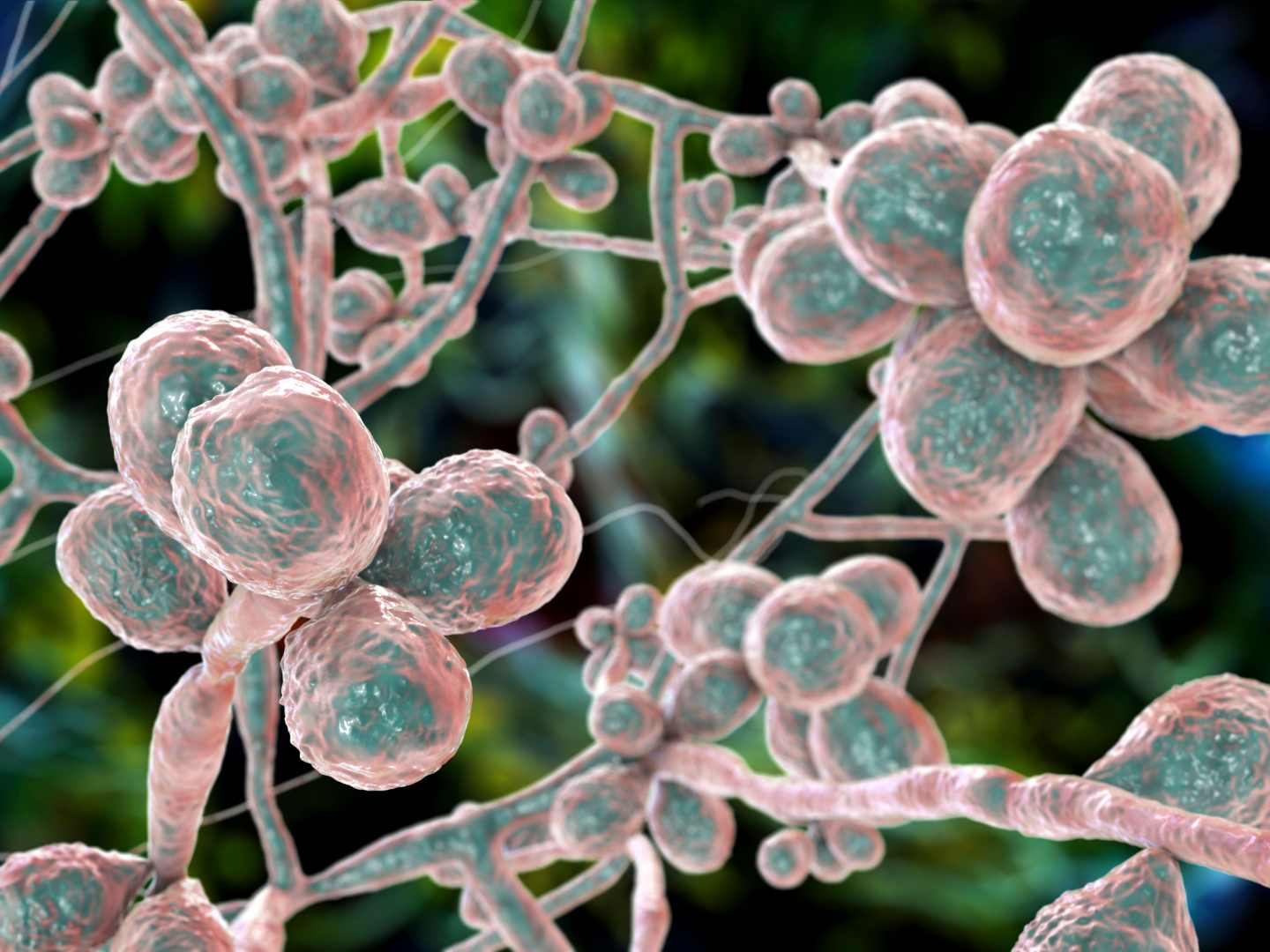
New research found CBD and CBDV demonstrated direct fungicidal activity against dangerous fungal pathogens, including Cryptococcus neoformans.
CBD killed certain fungal cells faster than amphotericin B in laboratory testing, suggesting cannabinoids may have powerful antimicrobial potential.
Cannabinoids disrupted fungal biofilms, which are one of the primary mechanisms behind antifungal resistance and persistent infection.
Biofilms are not simple microbial clusters. They are fortified biological defense systems that shield pathogens from drugs and immune attack.
Researchers identified multiple mechanisms of action, including disruption of fungal membranes, ergosterol synthesis, mitochondrial pathways, and virulence signaling.
These findings are still preclinical, but they position cannabinoids as promising candidates for future antifungal therapies in a world facing growing drug resistance.
A new study published in PLOS Neglected Tropical Diseases found that CBD and CBDV directly killed dangerous fungal pathogens and disrupted drug-resistant biofilms. The findings suggest cannabinoids may have a future role not just in inflammation and neurology, but in antifungal medicine itself.
If you still think CBD is only an anti-inflammatory or neuroprotective compound, it’s time to widen the lens.
A new study published in PLOS Neglected Tropical Diseases found that CBD, and especially CBDV, demonstrated potent antifungal activity against clinically significant pathogens including Cryptococcus neoformans and several common dermatophytes.
That matters because fungal infections are becoming an increasingly serious global health problem, particularly among immunocompromised individuals and hospitalized patients.
And unlike bacterial infections, the antifungal pipeline is alarmingly thin.
“Fungal pathogens are not fringe medical problems. They are an escalating global threat with limited treatment options.”
This research suggests cannabinoids may eventually become part of the solution.
Researchers tested purified CBD and CBDV against several fungal species using standard laboratory antifungal assays, including minimum inhibitory concentration (MIC) and minimum fungicidal concentration (MFC) testing.
The results were striking.
Both cannabinoids acted in a fungicidal manner, meaning they directly killed fungal cells rather than merely slowing their growth.
“Fungistatic compounds suppress fungi. Fungicidal compounds destroy them.”
CBD eliminated Cryptococcus neoformans remarkably quickly, in some cases within 30 minutes. Amphotericin B, one of the gold-standard antifungal medications used clinically, required substantially longer to produce comparable effects.
The cannabinoids also disrupted fungal biofilms and dispersed mature biofilm structures already established on surfaces.
That finding may be even more important than the rapid fungal killing itself.
Biofilms are one of the biggest reasons fungal infections become difficult to treat.
A biofilm is a structured microbial community embedded within a protective extracellular matrix that shields pathogens from drugs, immune attack, and environmental stress.
“Biofilms are not random slime layers. They are organized microbial fortresses.”
Once fungi establish biofilms on tissues or medical devices, treatment becomes dramatically more complicated.
Research from the NIH has shown biofilms substantially increase antimicrobial resistance and contribute to persistent infections across multiple pathogens (https://www.ncbi.nlm.nih.gov/pmc/articles/PMC7127122/).
CBDV appeared particularly effective against mature biofilms even at lower concentrations, making that cannabinoid especially intriguing from a translational medicine perspective.
The researchers did not stop at surface-level observations.
Using proteomic analysis, they investigated how these cannabinoids affected fungal cells internally.
The cannabinoids appeared to:
Disrupt membrane stability
Interfere with ergosterol biosynthesis
Alter mitochondrial and metabolic pathways
Impact capsule formation tied to fungal virulence
Ergosterol is especially important because it functions similarly to cholesterol in fungal membranes.
“Ergosterol is essential for fungal cell integrity and survival.”
Many existing antifungal drugs, including amphotericin B and azoles, target ergosterol pathways directly. The fact that cannabinoids also appear to interfere with these systems makes the findings biologically significant.
The cannabinoids additionally disrupted virulence-related pathways tied to capsule formation in Cryptococcus neoformans, a major fungal pathogen responsible for life-threatening meningitis, particularly in immunocompromised populations.
The CDC identifies cryptococcal disease as a major global fungal health concern, especially among individuals with weakened immune systems (https://www.cdc.gov/fungal/diseases/cryptococcosis-neoformans/index.html).
One of the more compelling aspects of the study involved moving beyond petri dishes.
Researchers tested topical CBD in a Galleria mellonella burn wound model infected with Cryptococcus neoformans. The wax moth larvae treated with CBD survived significantly longer than untreated controls.
“In vitro success is interesting. In vivo survival changes the conversation.”
That does not mean CBD is suddenly ready to replace antifungal medications in humans. But it does demonstrate that the antifungal effects translated into a living biological system rather than remaining confined to isolated laboratory conditions.
That distinction matters enormously in translational medicine.
For years, cannabinoid research has centered primarily on inflammation, pain, epilepsy, anxiety, and neuroprotection.
This study broadens the therapeutic horizon considerably.
“Cannabinoids are not interacting with a single biological system. They are pharmacologically versatile compounds.”
CBD already demonstrates documented anti-inflammatory and immunomodulatory activity through cytokine regulation and inflammasome modulation (https://www.ncbi.nlm.nih.gov/pmc/articles/PMC7023045/).
Now researchers are uncovering direct antimicrobial and antifungal mechanisms as well.
That dual functionality could become especially valuable because fungal infections often trigger severe inflammatory responses while simultaneously evading immune defense systems.
The idea that cannabinoids might both regulate inflammation and directly target pathogens is scientifically compelling.
As exciting as these findings are, this is still preclinical research.
Human pharmacokinetics, dosing strategies, long-term safety, absorption dynamics, systemic delivery, and tissue penetration remain unresolved.
“Promising preclinical data is not the same thing as approved medicine.”
Questions still needing answers include:
Can cannabinoids achieve therapeutic antifungal concentrations in humans?
Which delivery methods work best?
Will resistance eventually emerge?
How stable are these compounds in clinical formulations?
Could topical, oral, or device-coating applications be viable?
Those are major translational hurdles.
Still, the signal is strong enough that further investigation feels warranted rather than speculative.
Cannabis science keeps refusing to stay inside neat conceptual boxes.
First cannabinoids were viewed primarily as psychoactive compounds. Then came anti-inflammatory and neurological research. Now the conversation is expanding into antimicrobial and antifungal medicine.
“CBD is not merely calming inflammation. It may directly challenge microbial survival itself.”
That is a profound shift.
In a world facing rising antifungal resistance and limited therapeutic innovation, cannabinoids may represent a surprisingly valuable frontier.
Not hype.
Not wellness marketing.
But potentially legitimate pharmacology emerging from a plant science many people still underestimate.
Early laboratory research suggests CBD and CBDV may directly kill certain fungal pathogens and disrupt fungal biofilms. However, human clinical trials are still needed before cannabinoids can be recommended as antifungal treatments.
The study found activity against several fungal pathogens, including Cryptococcus neoformans and common dermatophytes. These fungi can cause serious infections, particularly in immunocompromised individuals.
Matthew Myro Rothman is Chief Science Officer and VP of Marketing at EM2P2 and CannaLnx, where he helps bridge medical cannabis, healthcare infrastructure, patient education, and emerging technology. A lifelong musician, writer, philosopher, and cannabis science expert, Matthew spent more than 15 years working in cultivation, consulting, and medical cannabis operations throughout California before returning to Ohio to help shape the future of intelligent cannabis medicine. He holds a graduate degree in Philosophy, Cosmology, and Consciousness from California Institute of Integral Studies and writes extensively on cannabis science, consciousness, wellness, and human performance.
Please note: You are not currently logged in. Only members can contribute comments. If you would like to contribute click the button below.
