
Legal Cannabis Does Not Mean More Teen Cannabis

Youth cannabis use has declined nationally during the same period that adult-use legalization has expanded across the United States.
State-by-state surveys compiled by the Marijuana Policy Project show lower current youth cannabis use in every adult-use state with comparable pre- and post-legalization data.
Peer-reviewed studies provide a more cautious conclusion: adult-use legalization has not been associated with an overall increase in adolescent cannabis use.
Legalization and youth access are not the same thing. A regulated adult market can expand legal access for adults while restricting the channels through which minors obtain cannabis.
The evidence does not prove that legalization caused youth use to decline. Pandemic-era behavioral changes, prevention programs, broader substance-use trends, and other factors complicate that conclusion.
The larger lesson may be that cannabis policy should be evaluated by measurable outcomes rather than assumptions about what legalization is supposed to do.
Adult-use cannabis legalization has not produced the increase in adolescent marijuana use that many expected. Youth cannabis use has instead declined nationally, while peer-reviewed research generally finds no increase associated with legalization and some evidence of modest reductions.
For decades, one of the most intuitive arguments against legalizing cannabis for adults was also one of the simplest: if cannabis becomes easier for adults to obtain, teenagers will probably use more of it too.
It made sense.
It just hasn't shown up clearly in the data.
A new analysis from the Marijuana Policy Project compiles state and federal youth surveys and reports something striking. Among states with adult-use legalization and available comparable data, current high-school cannabis use is lower than it was before legalization. Nationally, the CDC's Youth Risk Behavior Survey reports that past-30-day marijuana use among high school students fell from 23.1 percent in 2011 to 12.9 percent in 2025.
Meanwhile, the 2025 National Survey on Drug Use and Health found that past-year marijuana use among adolescents ages 12 to 17 declined from 10.9 percent in 2021 to 8.7 percent in 2025.
That does not mean legalization caused the decline.
But it does mean we need a better mental model for what legalization actually does.
Legalization is often imagined as an on/off switch for availability.
Cannabis is prohibited. Then cannabis becomes legal. Therefore, cannabis becomes more available.
For adults, that is broadly true. For teenagers, the system works differently.
Legalization changes who is allowed to provide cannabis, under what conditions, and to whom.
An illicit cannabis seller does not have a license to lose for selling to a 17-year-old. A regulated dispensary does. Legal markets introduce identification requirements, surveillance, employee training, compliance testing, penalties, and the possibility of losing an extraordinarily valuable business license.
That creates an important distinction.
Adult access and youth access are not the same variable.
A state can simultaneously make cannabis easier for a 45-year-old to purchase and harder for a 15-year-old to purchase through the same market.
That does not eliminate diversion from adults, illegal sellers, social sourcing, or other ways adolescents obtain cannabis. Nor does it prove that regulation explains falling youth use.
It simply reveals why the assumption that adult legalization must increase adolescent consumption was always less obvious than it appeared.
This is where we need to separate an interesting pattern from a causal conclusion.
The Marijuana Policy Project analysis compares youth-use rates before and after legalization across individual states. The numbers are notable. Colorado high-school past-month use fell from 22.0 percent in 2011 to 9.7 percent in 2025. Washington reported substantial declines across eighth, tenth, and twelfth grades. Massachusetts went from 24.5 percent in 2015 to 12.0 percent in 2025.
Ohio, which legalized adult use much more recently, went from 17.0 percent in 2023 to 11.4 percent in 2025.
But before-and-after comparisons cannot tell us what caused those changes. Youth substance use is affected by culture, education, enforcement, social media, perceptions of risk, vaping trends, family behavior, economic conditions and, rather inconveniently for clean statistical stories, a global pandemic.
Peer-reviewed research therefore asks a narrower question: when states legalize cannabis, does adolescent use change relative to what happens elsewhere?
A 2024 study in JAMA Psychiatry examined Youth Risk Behavior Survey data from 1993 through 2021. Researchers found no evidence in the national data that recreational marijuana laws were associated with increases in either current or frequent adolescent marijuana use. Some analyses using state-level data actually suggested modest decreases.
Another 2024 study in JAMA Pediatrics, covering nearly 900,000 students, reached a similar conclusion. Recreational cannabis legalization was not associated with an overall increase in adolescent cannabis use, and longer exposure to legalization was associated with greater odds that adolescents reported no cannabis use.
There was an important wrinkle. Among adolescents who did use cannabis, retail availability was associated in some analyses with greater frequency of use.
That deserves attention.
Population prevalence and high-risk use are different public-health questions.
A policy could leave the number of adolescent users unchanged or even reduce it while producing different outcomes among the smaller group that continues using cannabis. Good public health surveillance has to watch both.
None of this changes the developmental concerns surrounding adolescent cannabis use.
The adolescent brain is still developing, and earlier or heavier cannabis exposure has been associated with meaningful health and behavioral risks. The appropriate conclusion from these legalization studies is not that adolescent cannabis use no longer matters.
It is that regulating adult cannabis markets does not appear to have produced the population-level surge in teenage consumption that was widely feared.
Those are very different claims.
Good cannabis policy requires holding two ideas at once: adults can have legitimate access while youth exposure remains a legitimate public-health concern.
That distinction becomes especially important as cannabis continues its awkward migration from prohibition into several overlapping worlds: adult consumption, regulated commerce and medicine.
There is another lesson buried in these numbers.
Legalization creates infrastructure.
Once cannabis moves into regulated systems, governments can impose age restrictions, track licensed businesses, establish product standards, collect taxes, fund prevention programs and measure outcomes. None of those systems is perfect. Illicit markets continue to exist. Regulatory quality varies dramatically between states.
But prohibition does not make cannabis disappear. It largely determines which system governs its distribution.
Regulation is not the absence of control. It is an attempt to replace invisible control with visible rules.
That matters well beyond adolescent access.
Medical cannabis faces a parallel challenge as it moves closer to mainstream healthcare. Healthcare needs considerably more than legal access to a product. It needs clinical guidance, standardized information, longitudinal outcomes, product chemistry, adverse-event monitoring and systems capable of connecting what a patient consumed with what happened afterward.
That distinction is crucial.
Legalization creates permission. Healthcare requires infrastructure.
The same principle that makes youth-use data valuable applies to cannabinoid medicine more broadly: we should stop arguing primarily from what we expect cannabis policy to do and start building systems capable of measuring what actually happens.
For most of the past century, cannabis policy has existed in a strange environment where assumptions frequently arrived before evidence.
Legalization was supposed to produce some outcomes. Prohibition was supposed to prevent others. Advocates and opponents often began with competing predictions and then waited for reality to choose sides.
We now have something earlier generations did not: more than a decade of large-scale natural experiments across states with very different cannabis policies.
The results are rarely as tidy as either side might prefer.
Adult cannabis use has increased. Legal markets have expanded. Cannabis products have become more potent and diverse. Some cannabis-related health indicators deserve serious attention.
And yet adolescent cannabis use has not followed the simple trajectory many predicted.
That should make us curious rather than triumphant.
The most mature cannabis policy is not the policy most certain of itself. It is the policy designed to learn.
That means continuously connecting regulation with outcomes, improving surveillance, identifying unexpected harms and benefits, and changing course when evidence demands it.
Cannabis is gradually becoming less of an ideological abstraction and more of something measurable.
That may ultimately be one of legalization's most consequential effects.
The next generation of cannabis policy should therefore ask a better question than whether legalization is inherently good or bad. It should ask which regulatory structures produce which outcomes, for which populations, under which conditions.
That is a question science can actually begin to answer.
Cannabis legalization has given researchers something prohibition rarely could: large-scale, real-world evidence about what happens when policy changes. Youth cannabis use offers an important lesson. Expanding regulated access for adults does not necessarily expand access or consumption among adolescents, and current evidence has not demonstrated the feared population-level increase. But the deeper lesson extends beyond legalization. A mature cannabis system should be judged by measurable outcomes rather than assumptions. As cannabis moves toward healthcare, that same philosophy will require better longitudinal data, product information, interoperability and clinical feedback systems capable of turning millions of individual experiences into usable evidence.
Current evidence does not show an overall increase in adolescent cannabis use following adult-use legalization. Multiple large studies have found either no significant increase or modest reductions in some measures, while national youth cannabis use has declined during the legalization era.
Yes, nationally. CDC survey data show past-30-day marijuana use among U.S. high school students declined substantially between 2011 and 2025. However, this trend does not prove legalization caused the decline because many social, behavioral and policy changes occurred during the same period.
https://pubmed.ncbi.nlm.nih.gov/38656283/
https://pubmed.ncbi.nlm.nih.gov/38619849/
https://yrbs-explorer.services.cdc.gov/
https://monitoringthefuture.org/results/annual-reports/
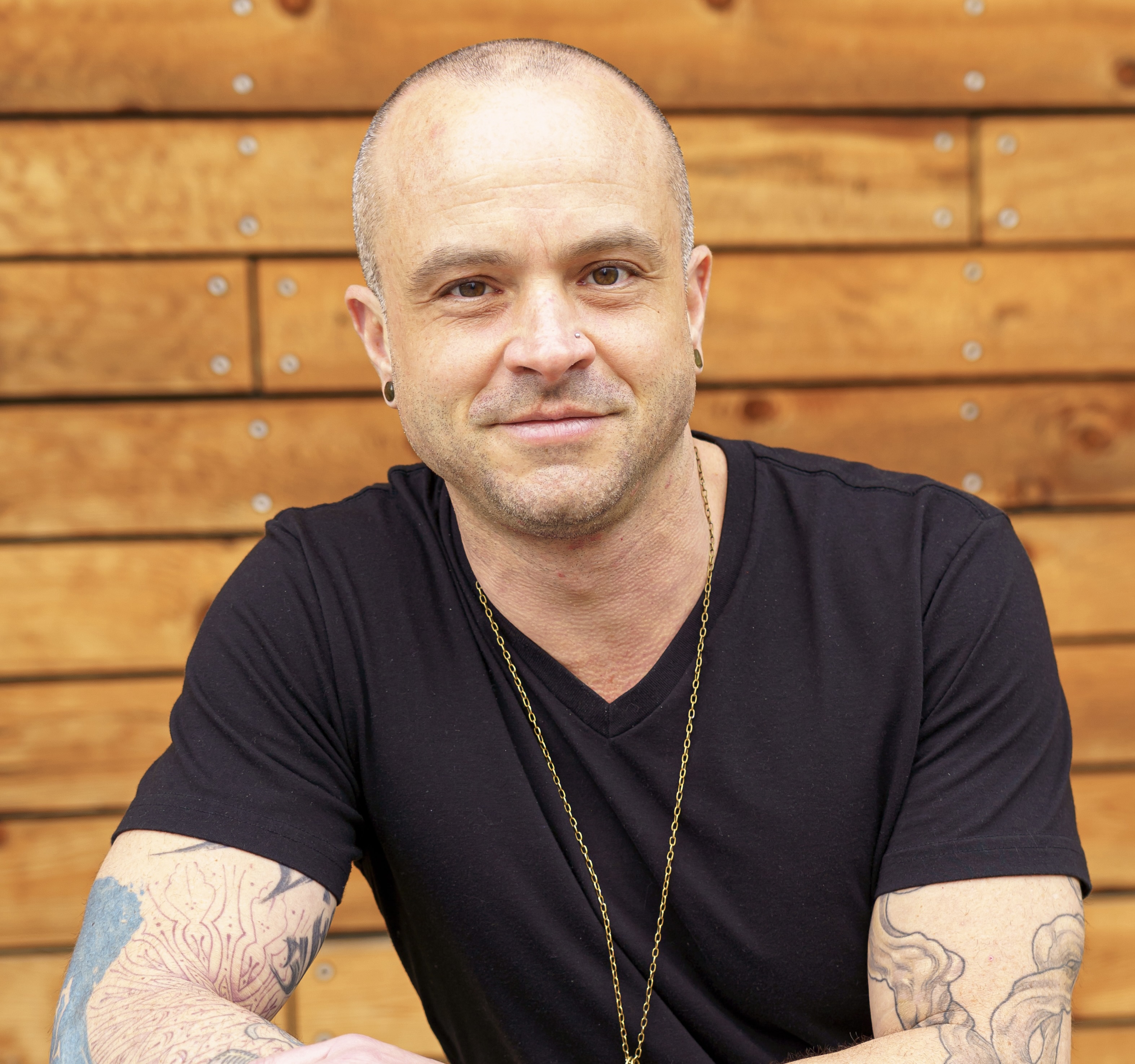
Matthew Myro Rothman is Chief Science Officer and VP of Marketing at EM2P2 and CannaLnx, where he helps bridge medical cannabis, healthcare infrastructure, patient education, and emerging technology. A lifelong musician, writer, philosopher, and cannabis science expert, Matthew spent more than 15 years working in cultivation, consulting, and medical cannabis operations throughout California before returning to Ohio to help shape the future of intelligent cannabis medicine. He holds a graduate degree in Philosophy, Cosmology, and Consciousness from California Institute of Integral Studies and writes extensively on cannabis science, consciousness, wellness, and human performance.
Please note: You are not currently logged in. Only members can contribute comments. If you would like to contribute click the button below.
